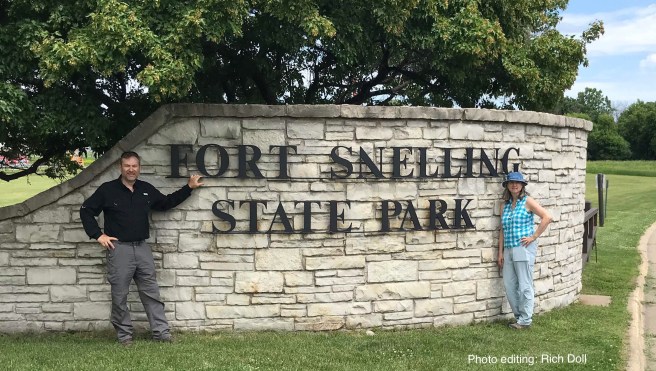
We finally made it to Fort Snelling State Park, the state park of our home towns, the Twin Cities. Kris remembers visiting Fort Snelling back in the day; I don’t have specific memories of it, but it seems likely that my family went there at some point.
It was a relatively cool day when we started out mid-morning: 64 degrees, perfect for hiking. I was debuting my new lightweight hiking pants recommended by a friend (thanks, Lori!). The Fort Snelling hike is 3 miles and winds around the perimeter of Pike Island, the halfway point being the confluence of the Mississippi and Minnesota Rivers. We didn’t actually get anywhere near the fort of Fort Snelling. Maybe another time.
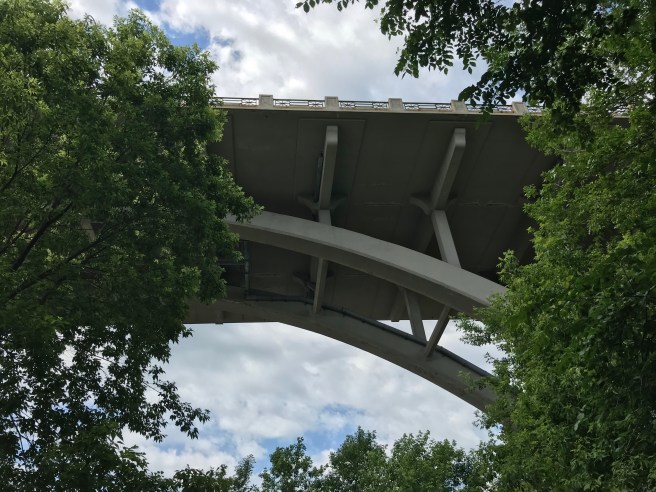
To get to Pike Island, you cross a nice foot bridge, which is almost directly under the Mendota Bridge. It is named for Zebulon Pike, who purchased the island from the Mdewakanton Dakota Indians in September 1805.
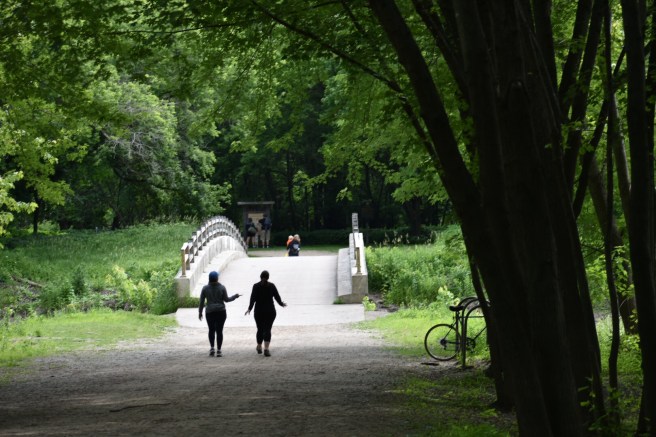
Unlike Myre Big Island SP, Fort Snelling had almost no maps or hiking club signs. You’d think this wouldn’t even be an issue on an island – how far wrong can you go? However, there are 3 hiking trails on the island and at the start it wasn’t completely clear which of the 3 paths we should take. We chose one and started off. Although we saw no Hiking Club signs, it soon became clear we were on the right track.
Fort Snelling has seen a lot of flooding and storm damage, the reason we weren’t able to do this hike last year. As you go along, it’s not uncommon to see downed trees and trees closer to the water’s edge with roots systems exposed by flood erosion.


There were a lot of people hiking at the park, not unusual for a park located in a large metropolitan area. What was unusual was the relatively unfriendliness of the hikers we passed. They seemed unwilling to return greetings if we said hello while passing. Some did, but not with any warmth or the sense of camaraderie that fellow hikers usually display. We wondered if this was due to big-city culture, virus paranoia, or a somberness due to the recent riots in Minneapolis. Maybe it was a combination of all three. Most people weren’t wearing masks (not needed outdoors), but one couple passed us in full mask regalia and practically walked into the brush on the side of the trail in their effort to make sure they were far enough away from us. Oh dear…
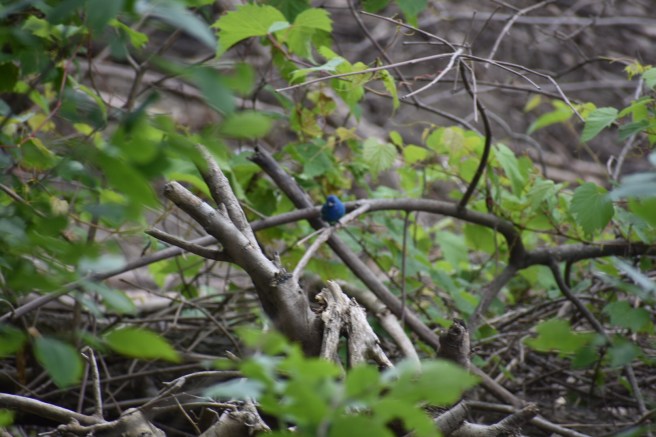
At any rate, the trail was well cleared and easy to walk. We saw a bald eagle flying close to us, but my camera was too late to catch it. I also spotted what I think was an indigo bunting. It’s not a very good photo, but it’s all I’ve got.
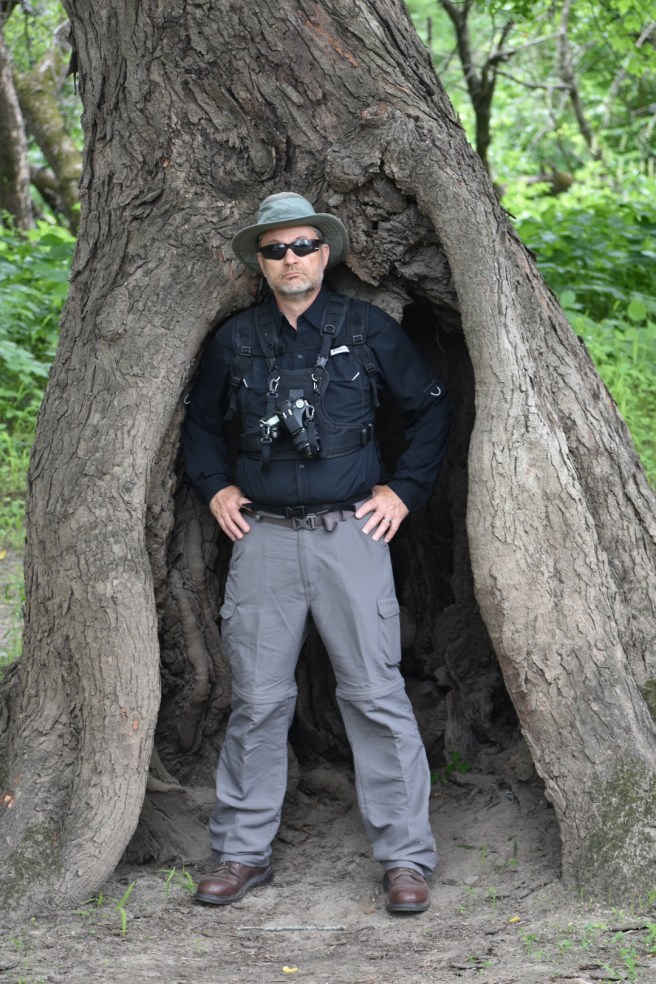
It was interesting to see several large trees with hollowed out bases. What causes this phenomenon? The trees still had lots of healthy leaf growth, so they didn’t appear to be dying.

The confluence of the two rivers was on a sandy point. This was apparently a sacred place for the Mdewakanton Dakota people. Sadly, this island is also the place where 1600 Dakota people were held in an internment camp over a harsh winter before being forcibly moved after the Dakota War of 1862. It’s a haunting history to contemplate while looking out on the place where the rivers meet and become one.

We stopped there for our Clif Bar break, sitting on a bench.
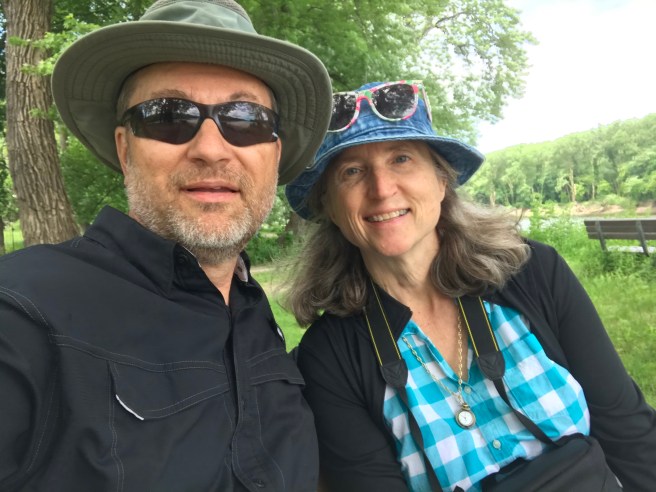
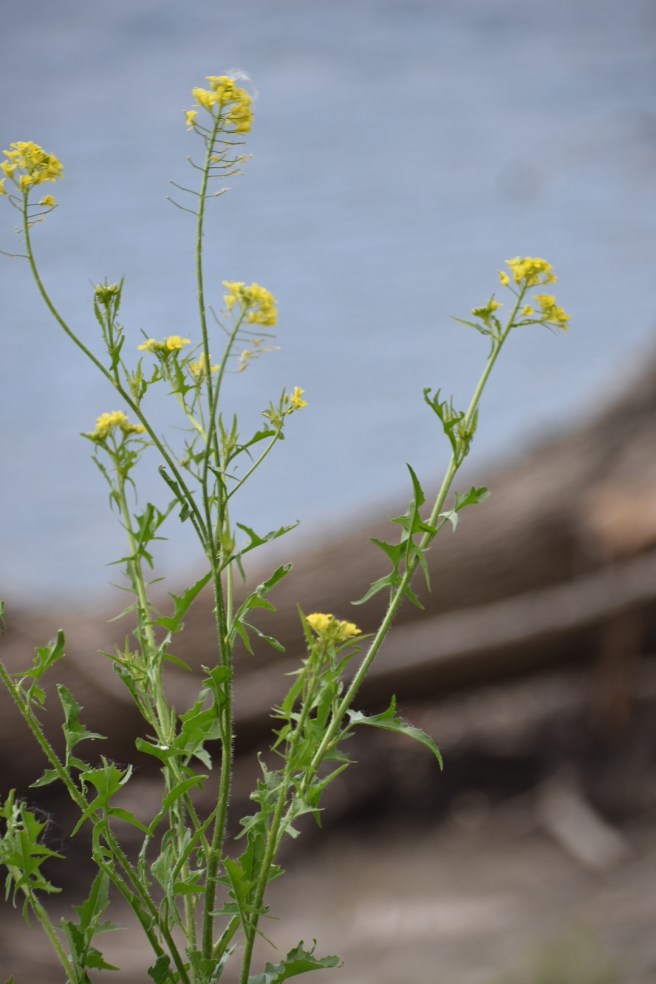
The hike back was over a narrower, sandy trail, but still easy to navigate. We passed by what we thought was some wild parsnip. This is an invasive plant which “can kill you or make you wish you were dead,” to quote something I read online. The roots are edible, but the plant produces a compound that causes “intense burning, rash, severe blistering and discoloration on contact with the skin on sunny days.” We gave it wide berth.
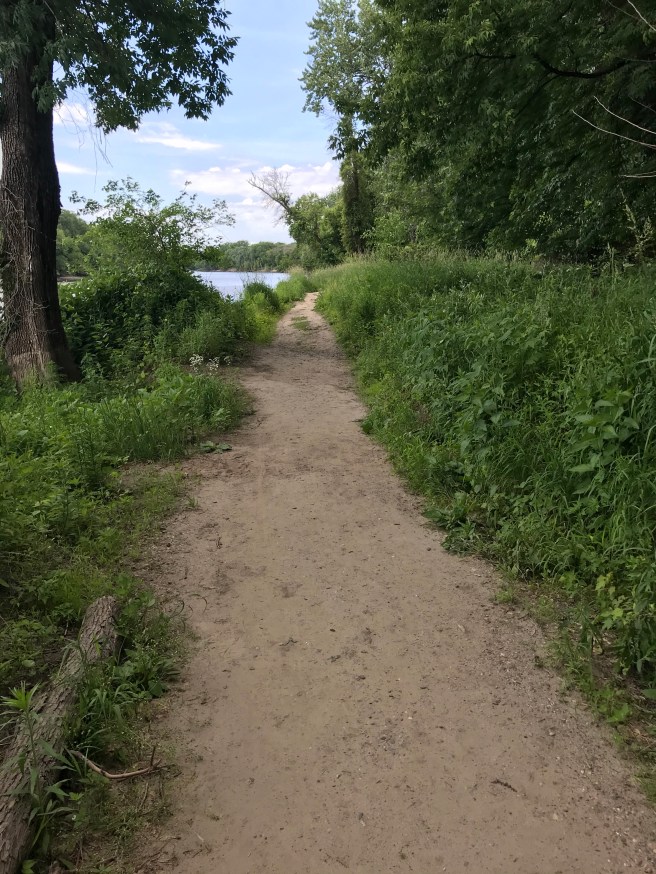
The usual noises of a park – the bird and insect sounds, the wind rustling through the trees, the river waters running – were punctuated by the noises of the city: trains, traffic on the highway, airplanes overhead. Two worlds colliding. Two rivers merging.
The three-mile hike took us 90 minutes to complete. I’d like to go back sometime to see the fort.
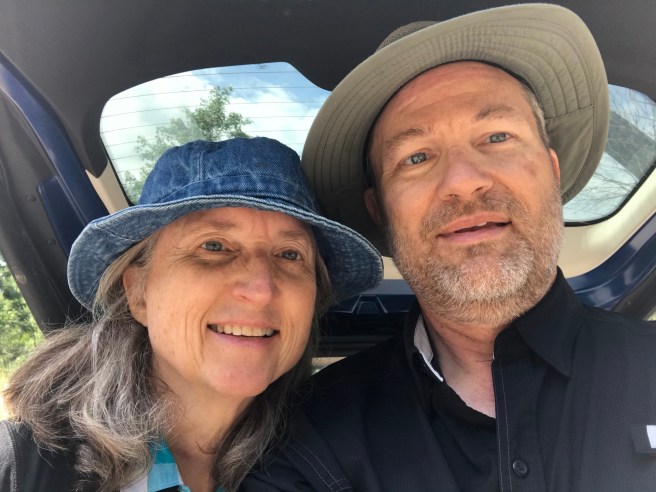
Knee Score: 1-2. Even terrain, nice paths.
I’ll probably delete this in the morning.
Next Hike: Minnesota Valley SRA

 Lynniebeemuseoday