
Previous: Grave Musings 5 Rice County Poor Farm
Lakewood Cemetery in Minneapolis is filled with notable names that we’ve come to associate with buildings, schools, streets and avenues, product brands, and even cities and towns. Names like Walker, Pillsbury, Washburn and Fridley. But over time, we have forgotten the men and women behind the names and the lives they lived. So let me tell you one of those stories, about the family for whom Fridley, Minnesota, is named. It starts out like any old dull refrain from history, but becomes surprisingly sensational.
Abram M. Fridley was born in 1817 in New York State and moved to Minnesota in 1851 in his mid-30’s. He was a farmer and eventually became a Minnesota State Representative. He must have been quite some guy to have had a township named after him, which later became the city we know as Fridley. Abram prospered enough to erect a huge monument in Lakewood, one of its largest.
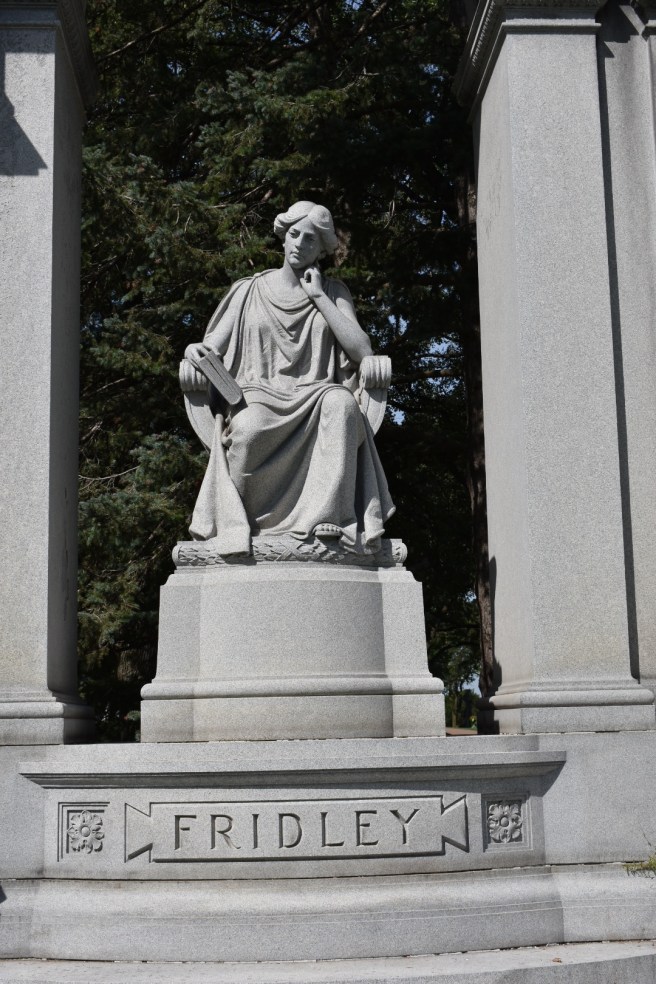
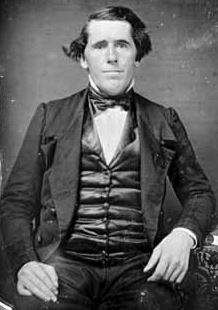
But we’re not interested in Abram, other than the fact that he was great grandfather to Mary Fridley, born in 1879, and who died at age of 27 in 1914. Cause of death: she fell from a steep bluff at a park while trying to get her dog. Her husband Frederick Price was nearby tinkering under the hood of their 1913 Cadillac with his friend, Charles Etchison, since the car had stalled. Tragic, simply tragic.
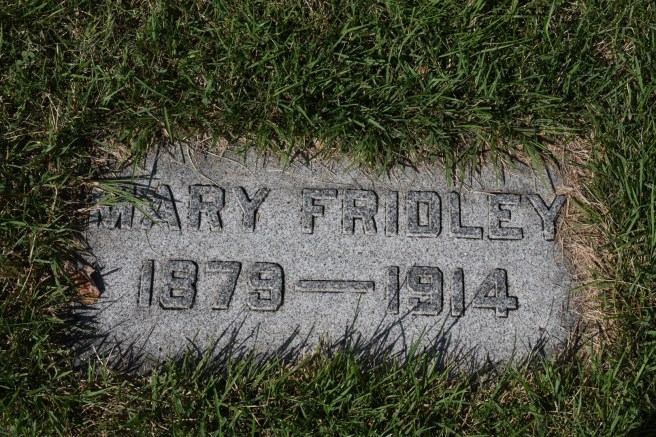
The young widower inherited a tidy sum at the death of his wife: $23,000 – a small fortune at the time. But apparently that wasn’t enough money to console old Freddie. A year after the accident, he decided to sue the Minneapolis Park Board for their negligence in not having a guard rail where Mary had fallen. One can almost see him working up a face that combined grief with indignation at the injustice of it all.
What would you do if you were the Park Board? Why, of course, you’d conduct an investigation into the death as part of mounting a proper defense. A funny thing happened during the investigation, however. The expert that the Park Board hired determined that petite little Mary (weighing less than 100 pounds) had fallen farther out than would be expected from a mere fall. Propulsion had to have been involved.
Fred suddenly decided that he didn’t actually want to sue the Park Board after all. Let’s call the whole thing off, he said, in essence, by dropping the lawsuit. Fred wasn’t very smart. His greed had set things in motion that he couldn’t stop.
Mary’s father, David, started to smell a rat and hired his own private investigator, John P. Hoy, a former police detective. Hoy quickly found out that Frederick had never legally divorced his first wife and had been living with yet another woman since the night young Mary died. Price was indicted on charges of first-degree murder on December 1, 1915 and the case went to trial.
A break in the case came when Charles Etchison crumbled under the pressure and guilt and testified against Price in a packed courtroom during the much publicized trial. As reported by the Herald Democrat on January 11, 1916 with the colorful headline “Haunted by Horror of Murdered Woman,” Etchison told all. Price had murdered his wife for the inheritance and had paid Etchison to keep silent about what happened. The truth was that the three of them had been out for a night ride in the car. Price stopped the car and when Mary stepped out on the running board, he “gave her a horrible push and sent her crashing over the cliff. He threw her dog after her.”
It gets worse, sorry. Mary didn’t die. They heard faint cries from below and Price ran down to the bottom of the cliff, beckoning Etchison to follow. He grabbed Mary by the hair and dragged her to make it look like she’d fallen farther. Then he took a large rock and hit her in the head, finishing her off. The article says “In a few minutes, the flickering spark of life had left the woman.” I don’t think newspaper articles are written like that anymore. The dog ran off, uninjured, for those of you who are concerned about his fate in this grisly tale.
Price was convicted of first-degree murder and sentenced to life in prison. Ironically, when he died in prison, his remains were cremated at Lakewood Cemetery.
Such are the ways of everyone who is greedy for unjust gain; it takes away the life of its possessors. – Proverbs 1:19
I wanted to find a photo of Mary Fridley, but I think I’d have to go to a historical society or look through newspaper archives, neither of which I have access to. I looked on the internet to no avail. I did find a little snippet that indicated that Price was a traveling salesman who had two previous marriages and a criminal past by the time he lured unsuspecting Mary to the altar. Tragic. Simply tragic.
Graveyards are interesting places with sometimes unexpected stories.
Next: Grave Musings 7 Epitaphs
Start at beginning: Grave Musings 1 Maple Lawn I
I’ll probably delete this in the morning. Poor Mary…

 Lynniebeemuseoday
What a riveting tale! Well done.
LikeLiked by 1 person
Glad you enjoyed it!
LikeLike
Wow, I didn’t see that coming.
LikeLiked by 1 person
I’m surprised it hasn’t been made into a movie!!
LikeLike
You did not identify the fetching lady in marble— I assume that was not supposed to be Mary Fridley but rather some symbolic concept like Lady Liberty, Lady Justice, or Lady Sci Fi Fantasy Reader? (Looks like she is reading a Brandon Sanderson novel).
LikeLiked by 1 person
😂 You’re right, it’s not Mary Fridley. Lady Sci Fi Fantasy Reader sounds most probable of the options you mentioned.
LikeLike
Sounds like this would have made a great Perry Mason episode.
LikeLiked by 1 person