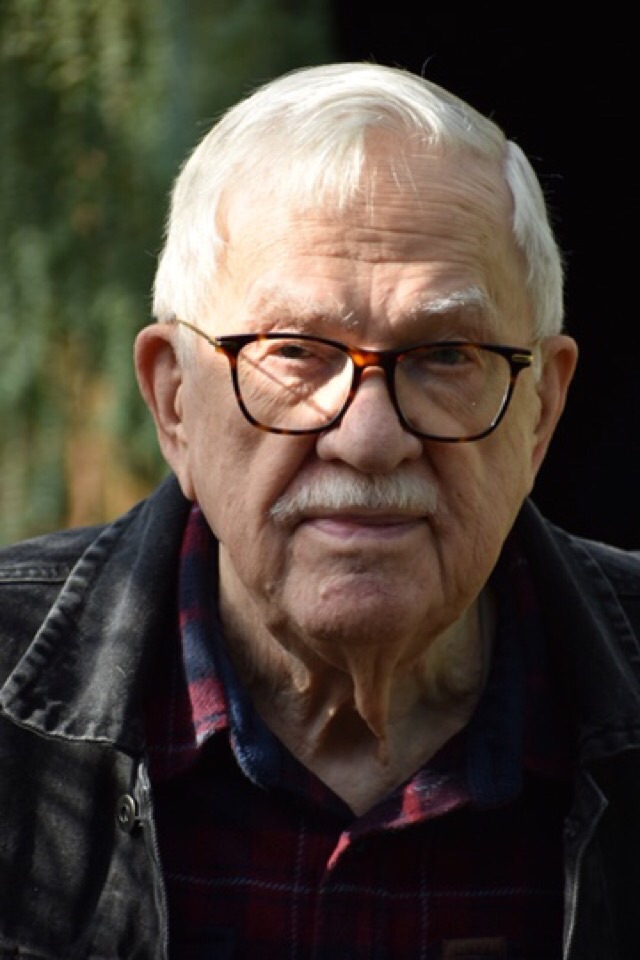
We went to the Minnesota Landscape Arboretum recently and I took lots of photos, so many photos. Most of them were of the flowers and such, but my favorite shot by far was the one I took of my father-in-law, Art. I felt inspired to write a poem for him to go with it, so here they both are.
In nineteen hundred and twenty-eight Amid the Great Depression A boy was born on a January date And made a Great Impression.
Ole was his father’s name, Clara was his mother. Seven sisters he could claim, But he only had one brother
He did odd jobs at an early age Weeding celery, carrying papers, At the railroad later he earned his wage Doing gandy dancing capers.
At Bridgeman’s, dishes he was bussing, At the Orpheum Theater, he ushed. He did some boxing (without any cussing) And in general, he never rushed.
After high school, in the Navy he served Then went to broadcasting school Next on his list, Marine Corps Reserve, Where he was nobody’s fool.
First came love, then came marriage When to Armie, he proposed. Four children took turns in that baby carriage And for photos they all posed.
He DJ’d at a radio station And served on the Centennial Commission The GOP was another occupation, He even sold Hondas on commission.
The kids grew up, left home, got married – And “Grandpa” was soon his new role Ten more babies he held and carried And their laughter filled up his soul.
He retired from Honda, but went on working For the Vikings and the Twins Like always, he did his job well, never shirking, Watching many losses and wins.
There were joys and there were sorrows; His wife and son passed away. But looking forward to better tomorrows He quietly went on his way.
At ninety-six, he’s still much adored For his kind and generous heart And as a family, we all thank the Lord For this wonderful man named Art.
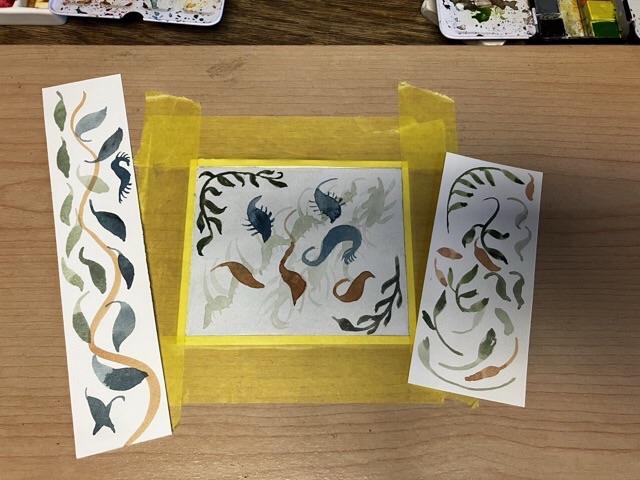
I saw a great tutorial on Pinterest that showed the most elegant way to paint leaves using a simple maneuver with the paintbrush. I set about eagerly to give it a try, thinking I would make a lovely leaf corner border for a quote that I wanted to write out. I did a couple practice ones and let fly.
Not pleased with the result, I started doing more practice leaves. The more I did, the less they looked like leaves, and the more they looked like the kind of stuff I used to see through the microscope in biology class. I like the color combination, though. Back to the drawing board.
Here’s one that turned out better, from a few months ago.
I was visiting a friend in Duluth during our college years. I had taken a bus there and somehow had gotten to the college without any fanfare. Perhaps she found a way to get me a ride. Nevertheless, when it was time to leave for home, I was on my own and decided to take a taxi. I had never been in a taxi in my life and this felt like a great step toward becoming independent and worldly wise.
The taxi came and when I got in, I told the driver to take me to the Greyhound Bus Station please, as if I had been in taxis all my life. Yawn. Then I noticed the meter. I had only $5.00 to my name and to my shock, the meter was ticking upward at a fast pace and even in my gross naïveté, I could tell that $5.00 wasn’t going to get me to the station. I got hot and cold all over trying to figure out what I would do when he dropped me off in the middle of nowhere. I dropped my casual air and nervously told the drive how much money I had. “How close will that get me to the station?” I asked with a slight quaver in my voice. “Not very close,” he said, sounding a little exasperated.
Even now I can remember the inward state of panic that came over me at the thought of having to wander this city alone without any money even to make a phone call and having no idea how to get to the bus station. How could I have been so incredibly stupid, I was asking myself. All sense of adventure was gone and I began bracing myself for the inevitable ordeal.
But I had not counted on the taxi driver’s kindness. “I’m going to drop you off at the station anyway,” he said, “because I can’t just leave you at the side of the road somewhere. But you shouldn’t count on that – I know other drivers that would drop you off and not think twice about it. You need to be more careful.” I nearly cried at this unexpected show of mercy and I thanked the man profusely and often. I have no doubt that he was a father; he not only treated me as if I were his daughter, he also gave me fatherly counsel and advice. Bless the man!
I had thought to become more worldly wise, but instead I gained a different kind of wisdom, the kind that comes with being humbled and shown undeserved mercy.
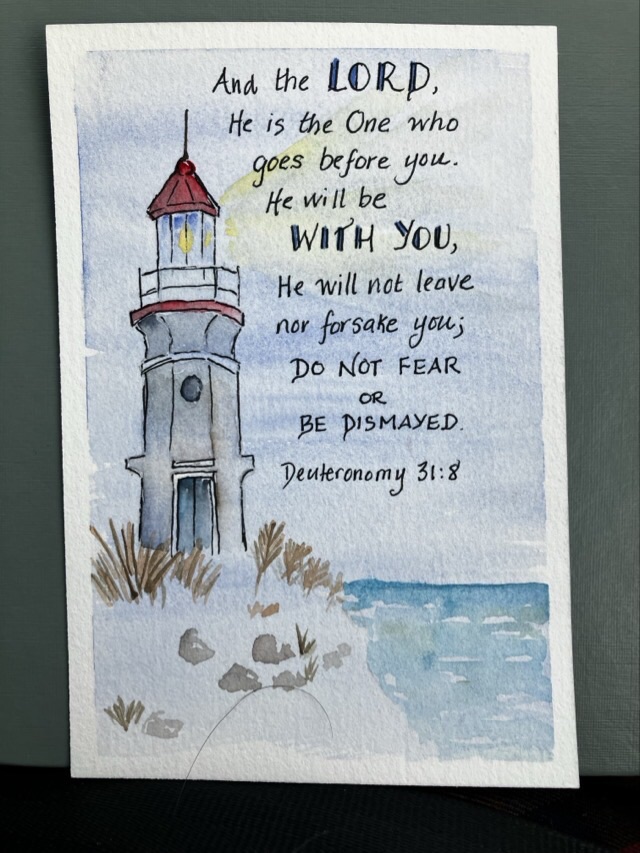
“When pride comes, then comes shame; But with the humble is wisdom. Proverbs 11:2
Truly True Stories has been brought to you by Lynniebeemuseoday.
As a rule, I’ve never been very fond of winter hats, mostly for vanity reasons. Actually 100% for vanity reasons: they make a mockery out of whatever you had going on with your hair and then it’s a done deal for the rest of the day. I wore them, but only out of necessity.
Then came the day I bought a winter-ish hat up in Grand Marais, probably ten years ago now. It wasn’t suitable for walking around on cold windy days, but I could wear it for places I went to by car. To my utter astonishment, this hat was a real fashion statement. If I wore it, someone invariably commented on how much they liked it and where did I get it, etc. This still happens, all these years later. One lady even asked me to take it off so she could take a closer look at it and figure out how to make one herself. She took a photo as well. I wonder if she was successful? I accidentally left it at a movie theater once and was in a near panic that someone would make off with it. I called the theater and they found it and held it for me. Phew!
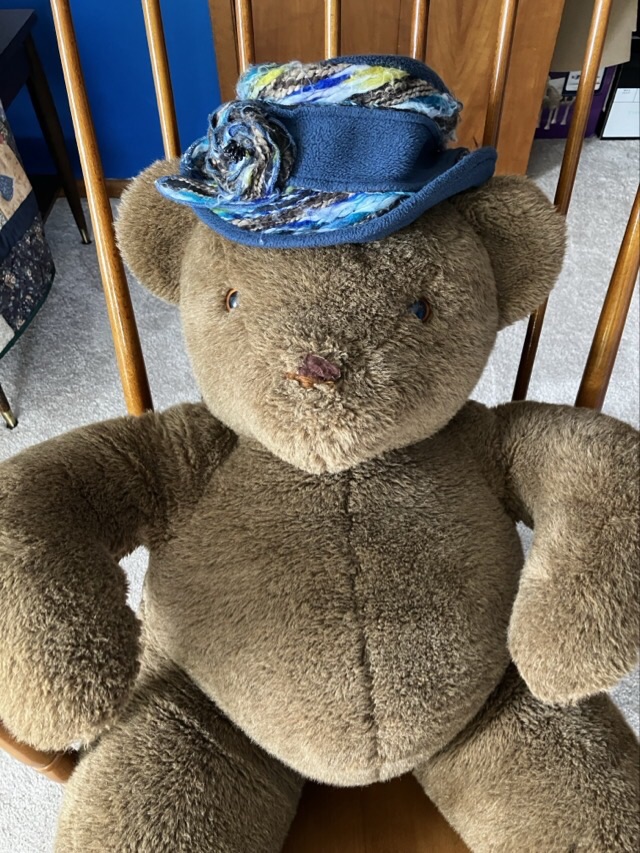
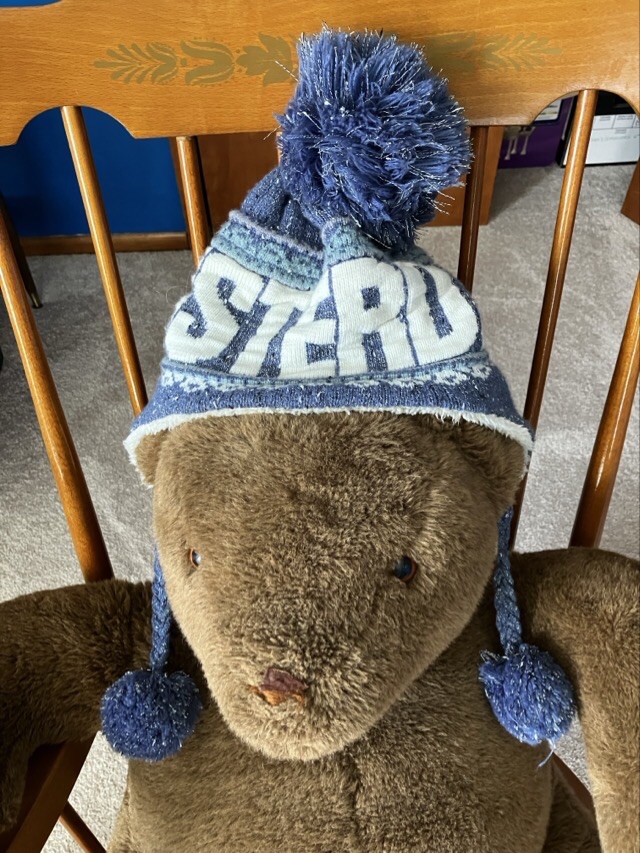
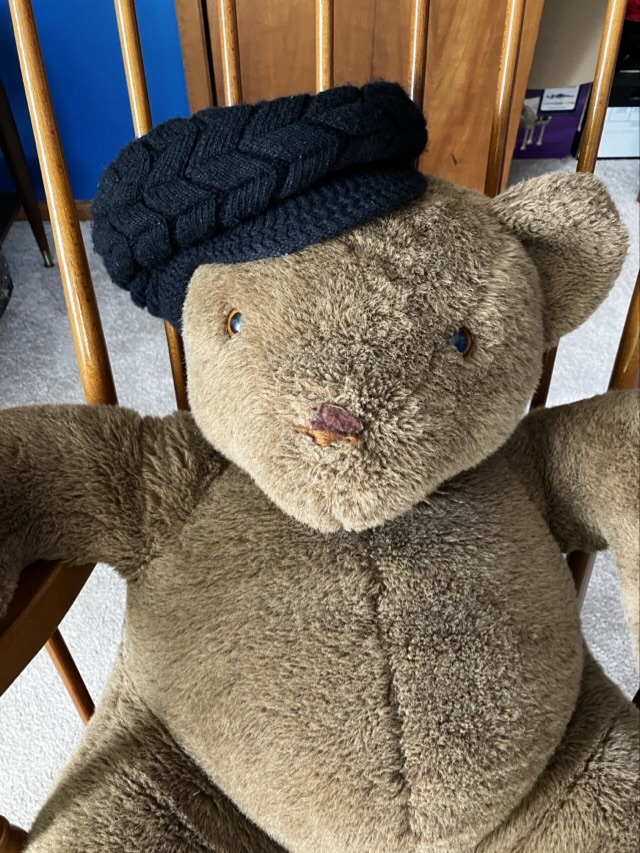
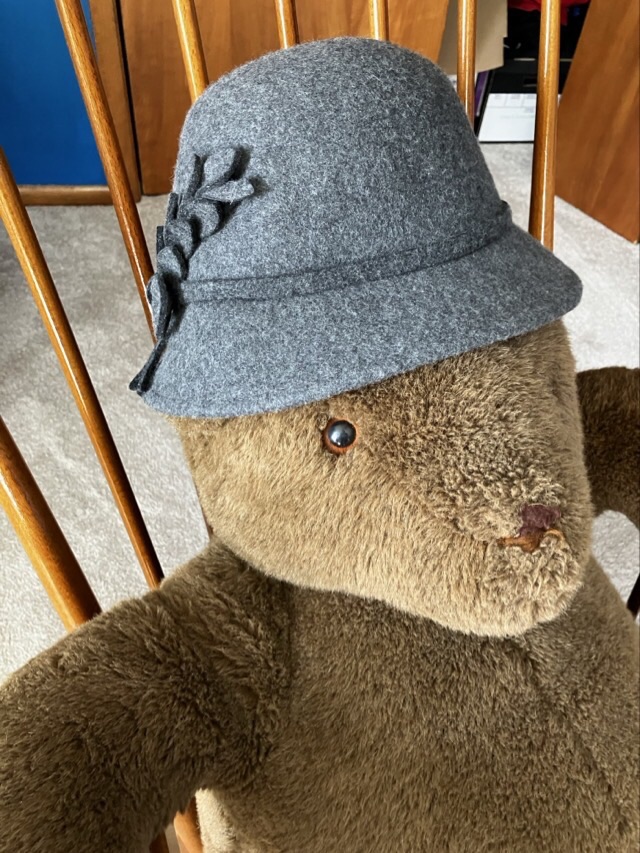
So now I had a whole new appreciation for the world of winter hats, which coincided nicely with the fact that I began getting them as gifts, each one occupying a special place in my winter world. Assuming you want to see them, I’ve asked my good friend Cuddles to model them for you.
This is the Original Hat. In addition to being a fashion statement, it has never made a mockery of my hair.
The Amsterdam Hat! My husband actually brought that back from Amsterdam after he’d been there on a business trip. This is my go-to hat for walking outside. If it’s cold enough to wear this hat, I don’t care what it does to my hair. I cram it on and wrap a scarf around my face for extra measure.
The Black Tam, a gift from one of my sons. It’s a jaunty hat, as you can see, and Cuddles wears it well. This one also commits no hair offenses.
The Tweed Cap. I bought it to replace a favorite plaid cap of mine that was purchased in Grand Marais at the same time as the Original Hat above. I bought that one for my daughter, but she left it behind when she went to college and I appropriated it for myself. Sadly, that one was stolen when our car was broken into (among many other things). It’s more of a fall/spring hat for sure.
The Cloche Hat, a Christmas gift from my husband in 2023. The Cloche is beautifully made and a joy to wear – it’s for dressy occasions as you can imagine, and I always feel very classy when I wear it.
Let’s give a round of applause to Cuddles for being such a great sport about the Hat Parade.
There were two sisters who lived in the valley, just south of the fork in the river and west of the big tree. Their names were Johoshabeath and Mehitabel, but most people just called them Hosha (long “o” sound, please) and Hitty, and so shall we. They sprang from the same root and looked a lot alike; when they were younger, they were often mistaken for being twins. When they grew to adulthood their lives took similar paths: they got married, had children and stayed active in their little community.
However, although they both encountered hardships, Hosha took them in stride with a healthy cheer, while Hitty began to be characterized by what we might call “a spirit of envy.” Hitty could not see other people being happy without feeling a sense that her life had been unremittingly unfair. On a walk through the neighborhood, she would see an old friend in her house and think, “Why don’t we have a house like that? Ours isn’t nearly so nice.” At the grocery store, she’d see someone buying an expensive cut of meat and say to herself, “It must be nice to be so wealthy as to afford that kind of food.” She’d go home and watch a romantic comedy by herself and sigh, “I wish my husband was like that fellow – what a wonderful marriage we’d have if only he were the right kind of man.” Observing a well-behaved family in church, she thought, “Too bad my children aren’t like those children. It would sure make my life easier if they were.” And so on.
Hosha and Hitty met for lunch regularly and one day, Hosha noticed that Hitty appeared to be just a smidge shorter. “Hitty, how are you feeling these days? You seem a little …um…diminished in stature.” Hosha knew how sensitive Hitty was to perceived insults, so she tread carefully.
Hitty replied, “It’s funny you should ask – I’ve been feeling so achy lately. It’s like my very bones are making noise and complaints. Isn’t that odd? But of course, you always look the picture of health, dear Hosha. It must be nice to feel great all the time.”
Of course Hosha did not feel great all the time, but her theology was sound enough to give her confidence when bearing up under the aches and pains of getting older. She said nothing to Hitty, not wanting to appear “holier than thou.” When Hosha saw Hitty a month later, she gasped in shock, for Hitty was now a full two inches shorter and was looking a little bent where she should be straight. “Hitty,” she admonished, “You need to get to the doctor right now. I’ll drive you to the clinic!”
The doctor rolled up his sleeves and put Hitty through all manner of medical tests and scans. “Don’t you fret, Hitty – we’ll figure this out in no time!” he said with a confidence that had no basis in reality. When all the data was in, he was as puzzled as he’d ever been. “Hitty, I don’t know what’s going on, but your heart is weak and your bones appear to be rotting. It’s the strangest thing I’ve ever seen. It’s not cancer, it’s not any other bone disease I’ve ever heard of. Go home and rest and I’ll see what I can find out about possible diagnosis, treatment and cure.”
With this, Hosha drove Hitty home and listened to Hitty’s constant carping about wishing she could have what others had, the things that made their lives happy and hers so miserable. Finally Hosha could stand it no longer. “Hitty, the only thing that prevents you from being happy is your own insidious envy of others. If you’d spend more time being thankful for what you have instead of yearning for things you don’t have, you might be surprised at the result.”
Hitty was supremely insulted at this hurtful and insensitive speech and retreated into silence for the rest of the way home. She said a stiff goodbye to Hosha and hobbled painfully into her house. But as they say, pain concentrates the mind wonderfully, and over the next few days, she could not forget Hosha’s words. She began to be aware of just how often she gave her thoughts over to envy and each time she did, she felt new twinges of pain. At last, she came to the end of herself and cried out, “Lord, help!” And with those two words, everything changed and yet nothing did. She had the same house, the same husband, the same children, the same budget and the same pains, but envy was leaving her heart and being replaced with contentment moment by moment, day by day.
Two months later, she returned to the doctor, who was dreading her visit, having found nothing to help her. She no longer looked bent where she should be straight and she was no longer hobbling. He took new x-rays and marveled at the difference, beaming as if his skill had wrought this miraculous change. “I can’t believe I’m looking at the same person as before,” he said, “your heart is perfectly sound and those bones look as healthy as they can be! Whatever have you been doing?” She smiled and said, “I evicted a tenant that had stayed overlong and done much damage. You could call it repentance.”
On the way home, she stopped at Hosha’s house and embraced her with joy.
“A sound heart is life to the body, But envy is rottenness to the bones.” Proverbs 14:30
This has been Fiction Friday with Lynniebeemuseoday.
One day around Christmas the guys were sitting around talking about football and their fantasy football teams. Since I don’t belong in that world, I wrote a poem while they were talking, because that’s what I do.
Football. Pigskin Helmets crunching Bodies colliding Crowds yelling Replays and chatter Run, grunt, pass, play, Touchdown! Or not.
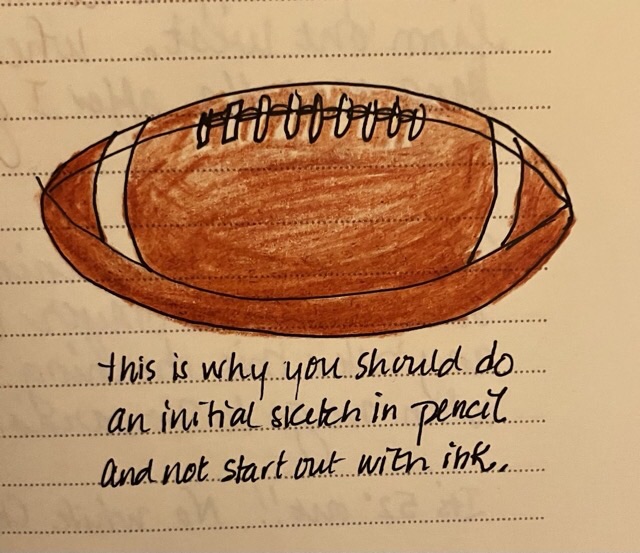
And then I drew a flat football. I have regrets.
I wrote a flat blog post. I have regrets which may or may not result in deleting in the morning.
I bought a gel pen that’s waterproof and immediately sat down to do a hasty drawing for a watercolor painting to see if it worked. There’s not any artistic nuance involved, but it got the job done – success!
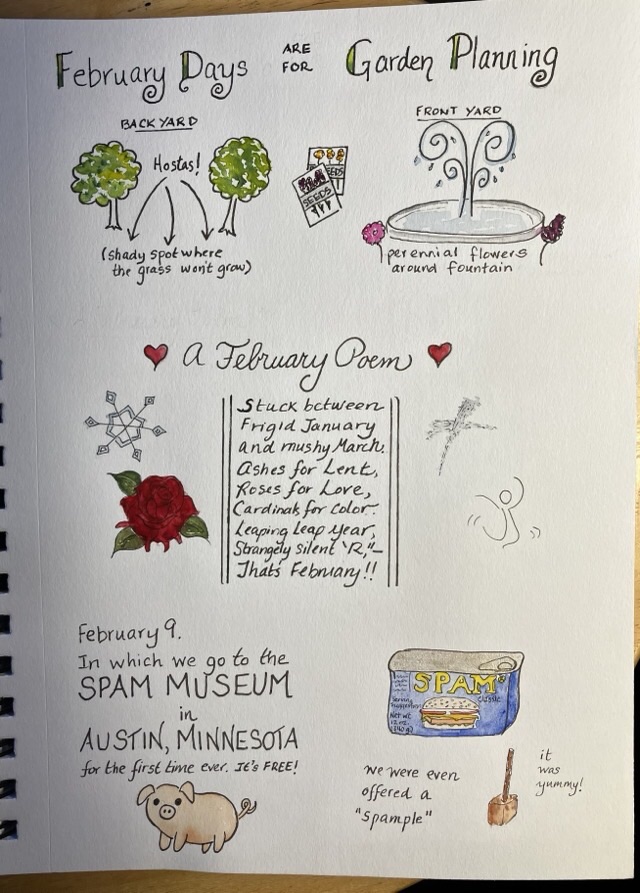
And I finished the second page of February for the project I’m working on: “A Year at Providence Place.”
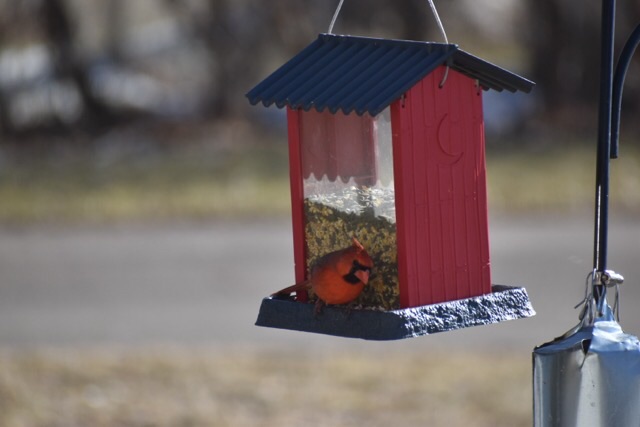
Seeing a cardinal perched on our bird feeder today, I went running for my camera. “You’ve taken a million photos of cardinals,” my husband observed. “Yes, and I’ll probably keep taking them,” I replied. Cardinals carry invisible signs that say “Take a photo of me!” put there by their Creator. All I’m doing is obeying.
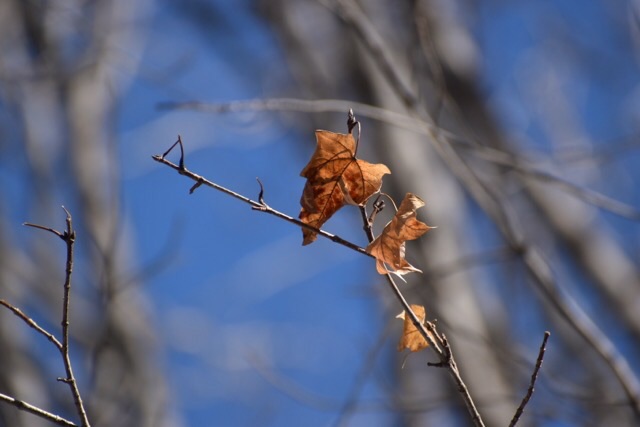
I went for a walk on this lovely, sunny day and brought my camera with me, just in case. When you have your camera eyes on, you always see something worthy of photographing. You can quote me on that. First up, dried-up leaves. I find the colors in this photo quite arresting. Do you?
As I walked through the cemetery, I had a thoughtful conversation with a squirrel. Here’s how it went: Me: I see you. Squirrel: No you don’t. Me: Yes, I do. Squirrel: Impossible. I’m not looking at you, therefore you can’t see me. Me: Nevertheless…
Squirrel, turning to look at me: I see you and I’m horrified. Me: Okay, bye now.
A sextet of mallards made an appearance. Each male had a female and vice versa. Young love…can baby mallards be far behind?
The earth is the Lord’s, and the fulness thereof; the world and they that dwell therein. Psalm 24:1
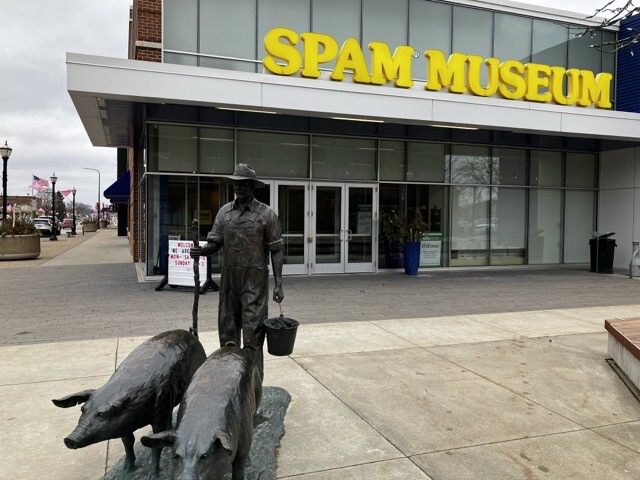
We have a thing in Minnesota called the Spam Museum. That fact, all by itself, is enough to make one chuckle. Hubby and I have wanted to go to the Spam Museum for many years because it’s there. The existence of a Spam Museum raises certain questions in one’s mind and we wanted to answer them. Curiosity and all that. So off we went to Austin, Minnesota for a look-see.
First of all, the Spam Museum is free, which upon reflection of its contents, was a fair price. This is not an insult to the museum, but let’s be frank – walking around the museum is like entering into a large and interactive advertisement for spam. We’re doing the spam folks a favor by going there – and the advertising worked (more on that later).
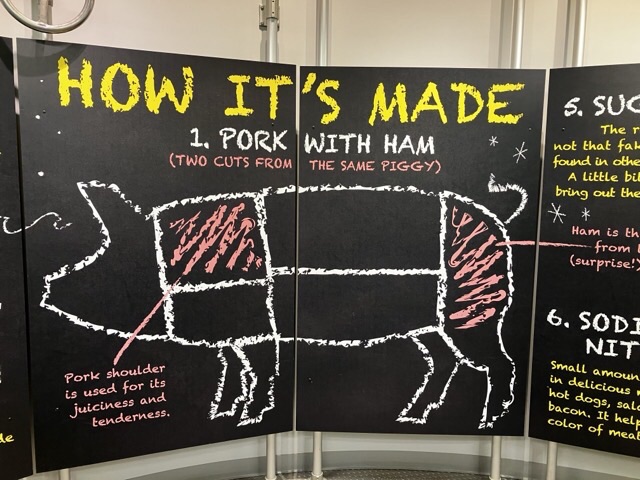
I always thought the the word “Spam” came from the combination of the words “shoulder” and “ham,” and since spam is made from those two parts of the piggy, that seems reasonable, other than the fact that the resulting word would be “sham.” Back in 1936 when spam was created, there was a contest to name it. An actor at a party came up with the name “Spam” and won $100, but no one knows how he came up with it. There’s speculation that it’s a combination of the words “spiced ham.”
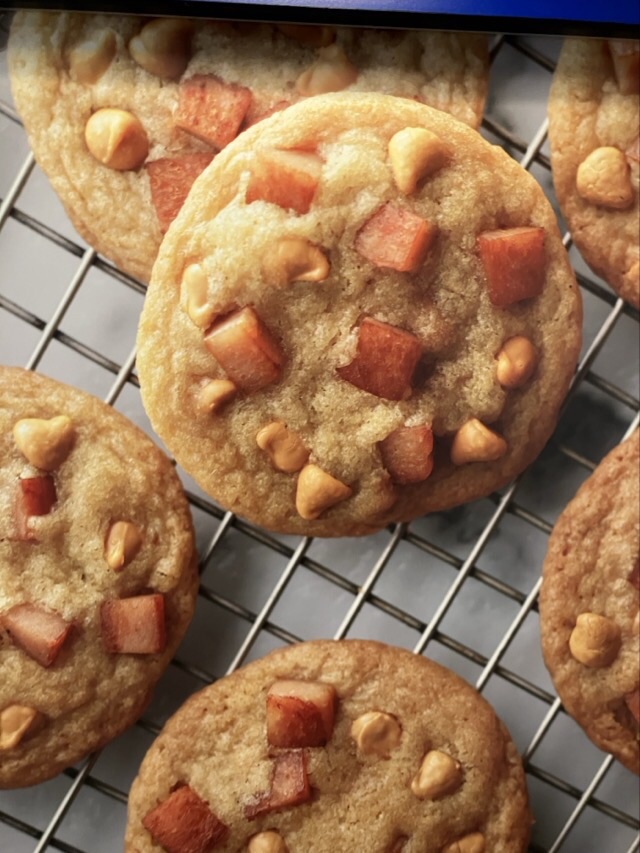
As we walked through reading things, someone came by and offered us a “spample,” cooked spam skewered with a pretzel. Delish! And by the way, I saw a photo of spam cookies that looked surprisingly good to me. Maybe I was just hungry. The phrase “spam cookie” seems like an oxymoron, though.
We meandered through the small museum, looking at all the creative ways that different countries eat spam. The highest per capita consumption of spam is in Hawaii, by the way. The history section of the museum mostly details how extensively it was used during war times as food for soldiers (and for those at home). It was a cheap way to get meat that wouldn’t spoil. President Dwight D. Eisenhower wrote a letter to Hormel Foods in celebration of their 75th anniversary and commented “I ate my share of SPAM, along with millions of soldiers. I’ll even confess to a few unkind remarks about it. As a former Commander-in-Chief, I officially forgive you of your only sin – sending us so much of it.” Ha ha!
When you enter the museum you read a little brochure that tells you that you’ll have an opportunity to can some spam yourself! This sounded like an exciting proposition, but it turned out to be fake news. In reality, there was a little station for kids (and kids-at-heart) to don aprons, put a spam-like bean bag in a plastic can, cover it, pretend to cook it in a fake oven, and then squeeze a cloth label around the can. You could time yourself to see how fast you could do it. My second time was way better than my first, but I couldn’t get Kris to try to beat my record.
Onward to the entertainment section where a television was running the famous Monty Python skit about spam. I laughed so hard. That’s where we took our selfie, of course.
We went to the gift store where they sold boxed variety sets of spam, along with every manner of spam clothing and spam souvenirs. I bought a sticker, but we decided we could buy spam cheaper at a grocery store, so we stopped by one on the way home and picked up four cans. If you’ve never had it, give it a try! (I sort of feel like Hormel should pay me for this blog post, which almost amounts to another ad for SPAM).
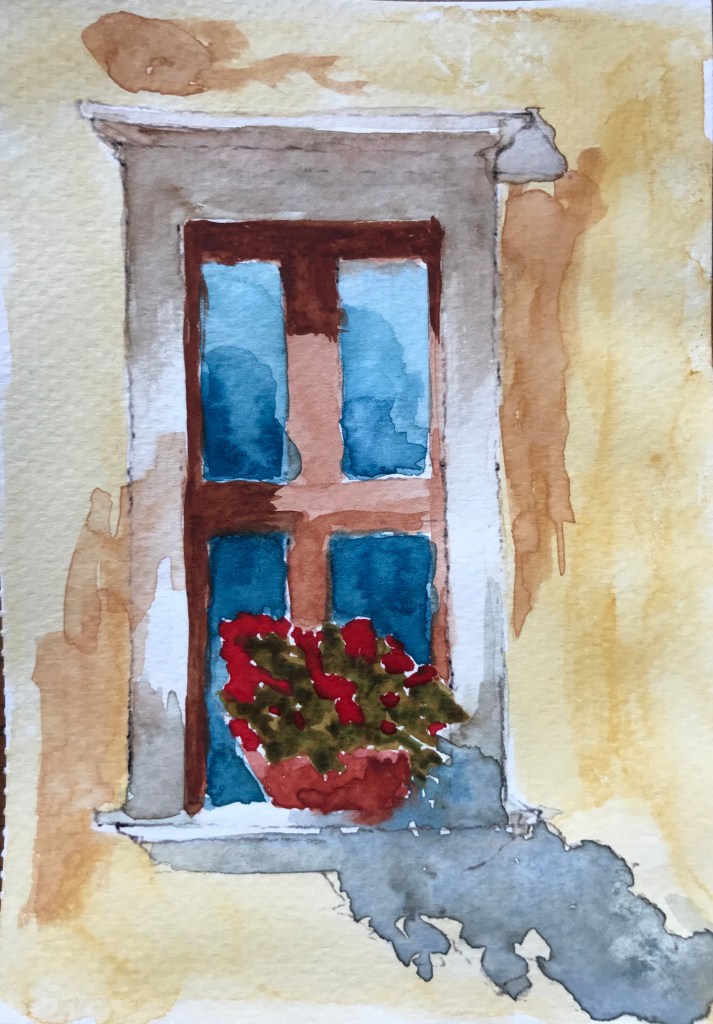
I ran out of fiction writing time this week, so I’m re-running a short story I wrote a couple years ago. Hope you enjoy it again, or for the first time if you’ve haven’t read it before. I had written the story to accompany one of my first watercolor paintings from the Watercolor Italy book.
He passed by this window every day at the same time, in the late afternoon when the lowering sun brought deep shadows to the window panes. Normally, he burrowed into whatever book he was listening to and paid no attention to his surroundings, but one day he was arrested by the thought that the window was calling to him. He stopped and looked around – was anybody else similarly affected? People streamed past him, moving out of his way like water rushes around a boulder in the river.
He looked at the window. Nothing special. How very odd, he thought, and went on his way, the boulder becoming part of the river again, the incident forgotten.
But the next day as he walked by the window, it called again. Distinctly. Irresistibly. He stopped and looked at it, carefully this time. The glass panes were dark and nothing could be discerned beyond them. He pressed “pause,” on the book to which he’d been listening and began to listen for something or someone else. Perhaps he had been mistaken.
“What?” he inquired politely, hoping the passers-by would assume he was on the phone.
“I SEE YOU.”
In that moment, the window became a mirror and he knew what it was to be seen, really seen. Guilt and shame flooded his soul as his eyes were opened to the oppressive mysteries of his heart. He felt a nightmarish nakedness, bereft of hiding places. Before him as on a public billboard were all the lies he’d told, people who loved him that he’d ignored and hurt, women he’d used up and discarded, seeds of life that he’d planted, never caring whether they lived or died, those degrading websites he kept visiting, the sheer unremitting self-centeredness of his life. Even the “good” things he’d done were tainted by grimy self-interest. And how had he responded to all of the good fortune that he’d enjoyed,the simple pleasures of his life, and the beauty and wonder of the world around him? He’d been bored and unsatisfied, always wanting more. He tried to find his face in that dreadful mirror, but a skull stared back at him.
This was untenable! He’d always thought himself a fairly good fellow, somewhat innocuous and certainly not evil. (After all, there was always Hitler to compare oneself with when one was in danger of seeing the evil in themselves.) But in this one, awful moment, he knew what he was. He was depraved. He was lost. He was dead.
“Stop!” he cried out, not caring if the world heard him. “I don’t want to be seen!”
The mirror became a window again; the man pressed “play” on his book and went on his way, agitated and stricken. He tried to forget and failing that, tried denial. He found other ways to walk home from work, but the window kept calling his name. One might even say it harassed him. He tried cleaning up his life, but quickly realized that this was easier said than done and the blackness of his soul weighed more heavily on him every day. Finally, he could stand it no longer. He had to go back, to find out what could be done about this predicament in which he’d found himself.
When he came before the window, he couldn’t even look at it. The window beckoned. Sweetly. Irresistibly.
“COME AND BE CLEANSED.”
And this time, when he looked up at the window expecting to see again the dreadful mirror of his life, he saw a cross.
And he was cleansed.
I’ll probably beckon this post to the delete bin in the morning.
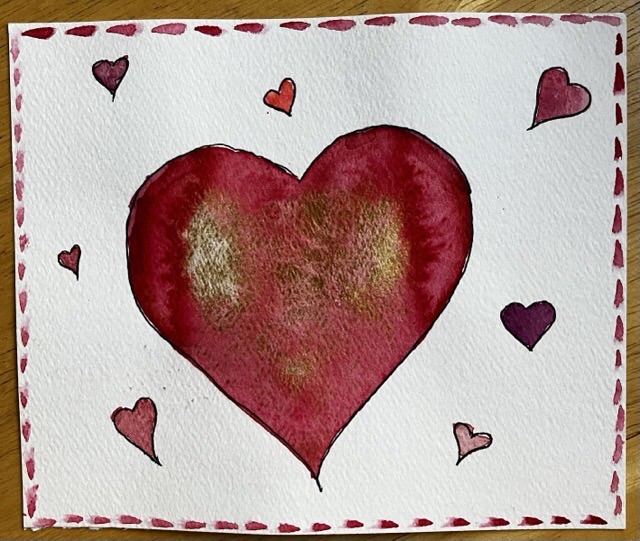
Roses are red Chocolates are brown You’re the best husband In any town.
Chocolates are brown, Violets are blue, Yours is a love That is truly true.
Violets are blue, Red is my heart, I’ll love you, dear Until death do us part.
Note: I really wanted to return to the phrase “roses are red” to complete the symmetry of the poem, so originally this was the last stanza: Violets are blue Roses are red, I’ll love you dear, ‘Til one of us is dead.
That last line kind of ruined the mood, though, so I changed it up, with minor regrets.
This poem and post are dedicated to my husband, the one whose love is truly true.










 Lynniebeemuseoday