
In our continuing quest to visit one attraction in Minnesota per month in 2024, we made our way to Fort Snelling for the month of June. If you’d like to check out previous Minnesota Meanderings, here you go: Spam Museum, Bell Museum of Natural History and Como Park Zoo and Conservatory.
I’ll start you out with a little history, which is more than I had when we visited. Those of you whose eyes glaze over at the mention of dates and data should just skip on ahead. The fort was built in 1819 at the confluence of the Mississippi River and Minnesota Rivers. Initially it was Fort Saint Anthony, but when its construction was completed in 1825, it was renamed Fort Snelling after its designer and first commander Josiah Snelling. There’s some controversy about whether or not Zebulon Pike was authorized to create the treaty that ceded the land from the Dakotas to the U.S. Military in 1805. Nevertheless, the fort got built and was used as a military installation until its decommissioning in 1946, after which much of its acreage was lost to the construction of roads and the Mendota Bridge. The Army Reserve 205th Infantry Brigade had its headquarters at the fort from 1963 to 1994. There’s really three parts to Fort Snelling now: the state park (at which we did a hike in 2020), the Fort Snelling military cemetery, and the National Historic Landmark where the fort buildings have been repaired or reconstructed for tourists like you and me to get a glimpse into the past.

Those of you who read the whole paragraph: bravo! Those of you who skipped it – well, I’ve been known to do the same thing so no judgment from me.
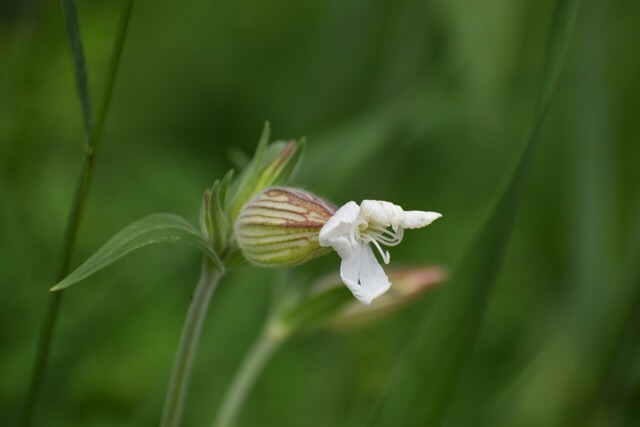
On our way from the parking lot to the visitor center, we got a little sidetracked by identifying the wildflowers along the path. We’re creating a perennial flower garden in our back yard so all of these things are of new interest to us now.

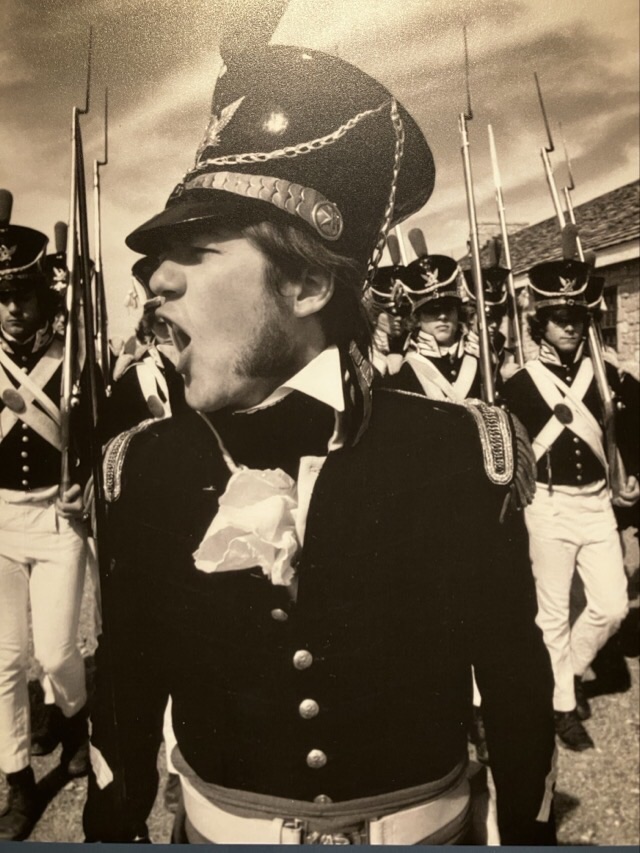
Once in the building we paid the fee for our visit and took a rapid walk through the visitor center where I took a photo that I felt might benefit from a caption provided by yours truly.


Now it was time for the main event: touring the fort grounds themselves.
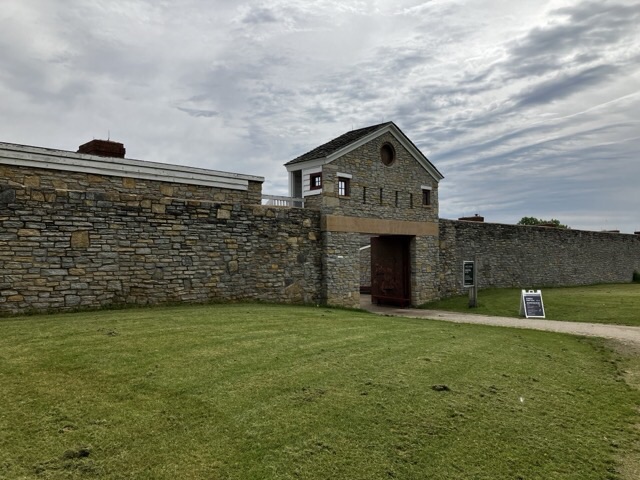
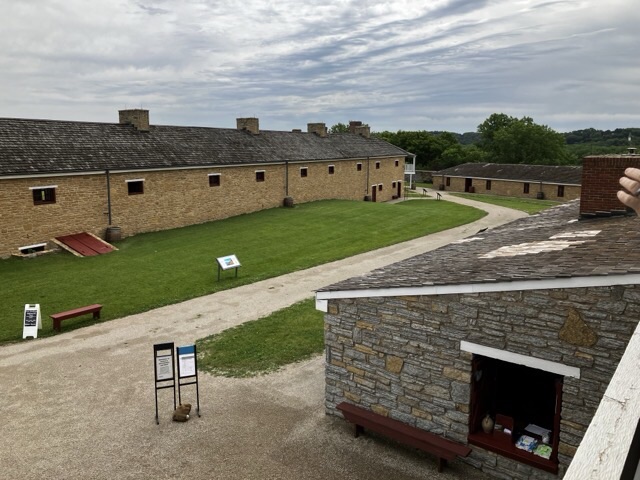
The first stop was the guardhouse, which also housed the first jail in our state (which wasn’t a state yet). We saw evidence that guard duty was taken seriously, i.e. the signs put around necks of those who were caught not fulfilling those duties.
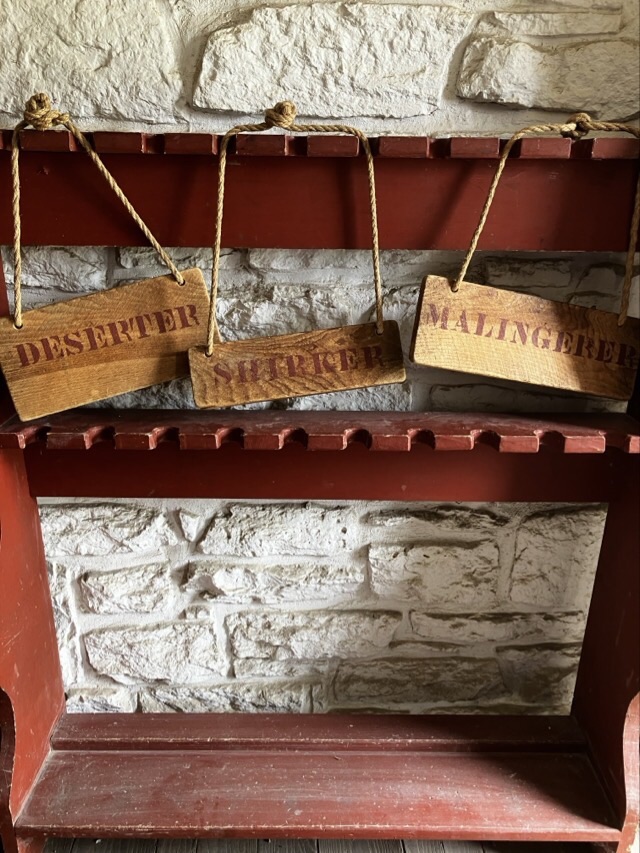
We also read some sample judgments passed on those who were tried by the Regimental Court Martial.
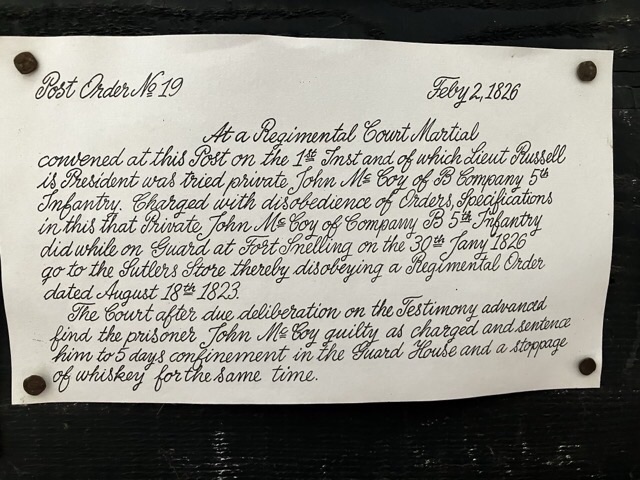
One young man, John McCoy, took a little unauthorized side trip to the Sutler’s Store while on duty. Verdict: Guilty! Sentence: five days in the Guardhouse jail and NO WHISKY for those five days. Ouch! A poem suggests itself to me.
Oh, John McCoy, you troublesome boy
You left your duty to go to the store.
Was it worth being risky?
You lost your whisky!
You let temptation crouch at your door.
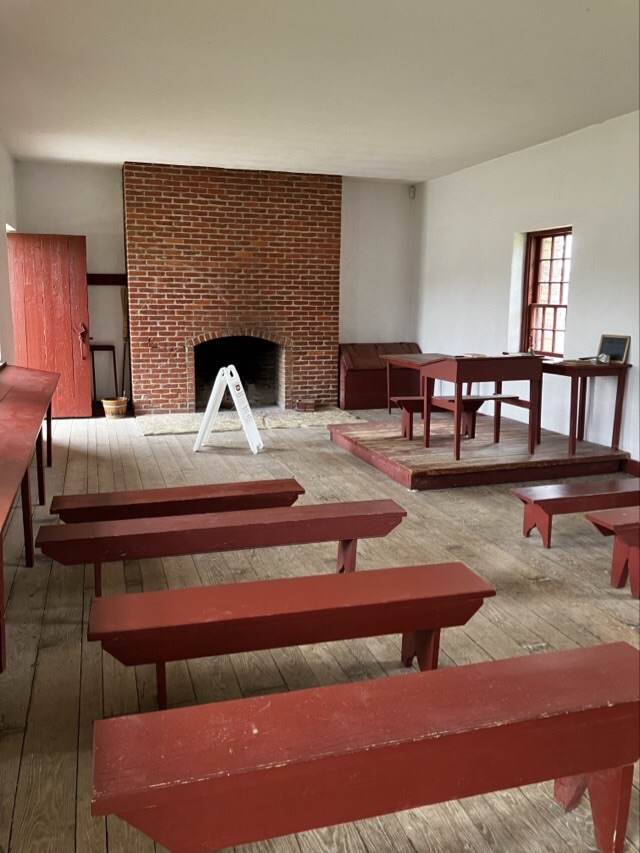
The fort didn’t just house soldiers; whole families lived there, so of course there was a school room for the children. Seeing the McGuffy Reader brought back memories of our homeschooling years – we had a whole set of those!
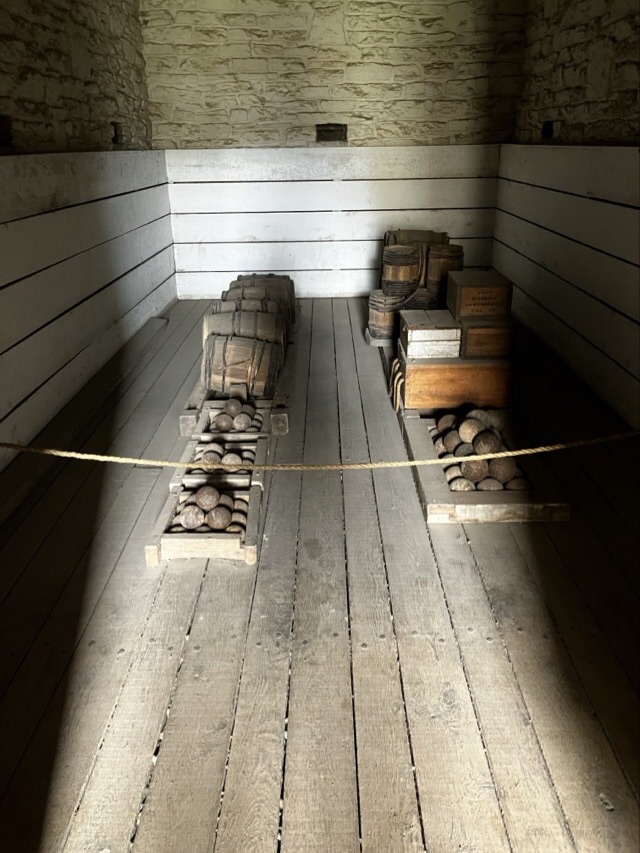
Next, the small, dark and brooding ammunitions storage area – The Magazine – in which (once our eyes adjusted to the dark) we could see piles of cannon balls and barrels of gunpowder (just a guess – I didn’t investigate). Reality just hit – this is a fort. Battles were fought. Cannons were fired. Lives were lost. It’s a grim business.
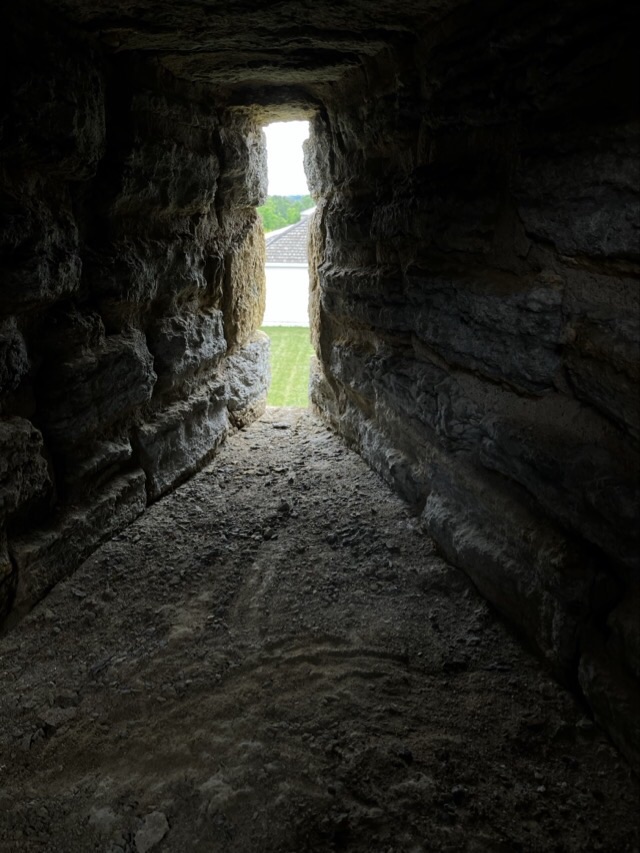
The Round Tower (named after General Angus Round) (ha ha – just kidding) is one of only four structures that is original to the fort. This was a place of defense – in fact, the fort’s last line of defense. Some of the musket slits point outside the fort, and some point toward the inside of the fort. I wonder if they ever faced a danger so great that the fort itself was overrun with enemies that had to be fired upon from the Round Tower.
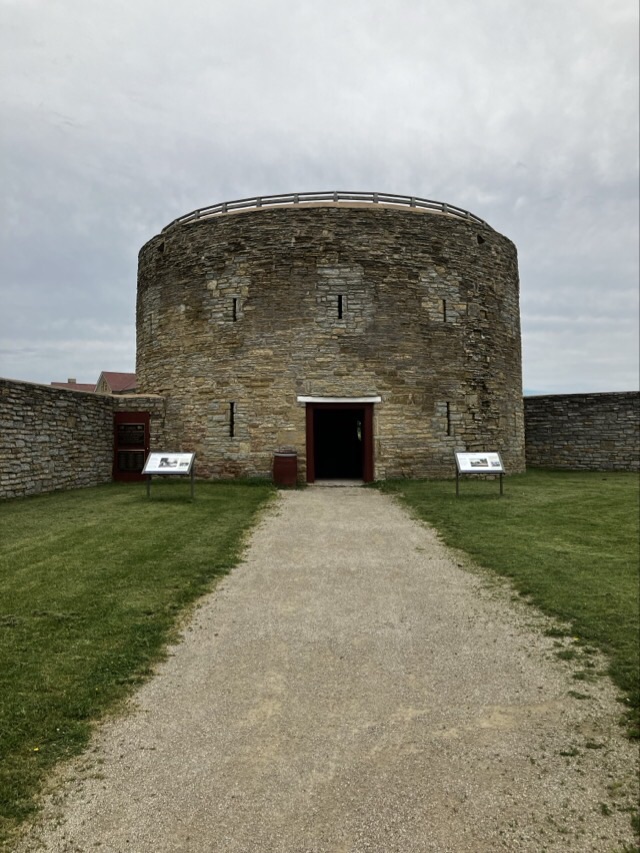
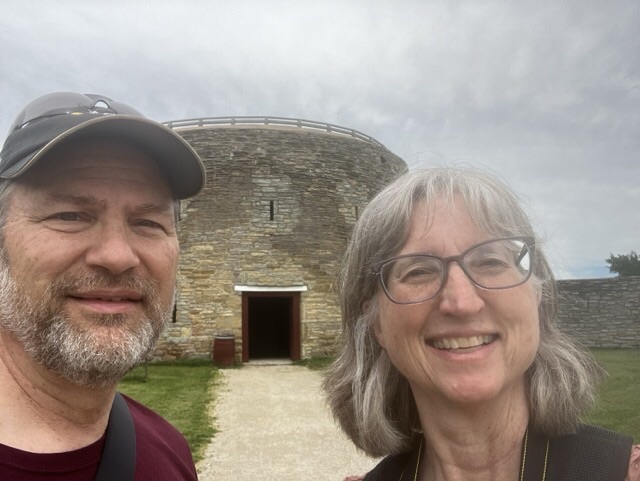
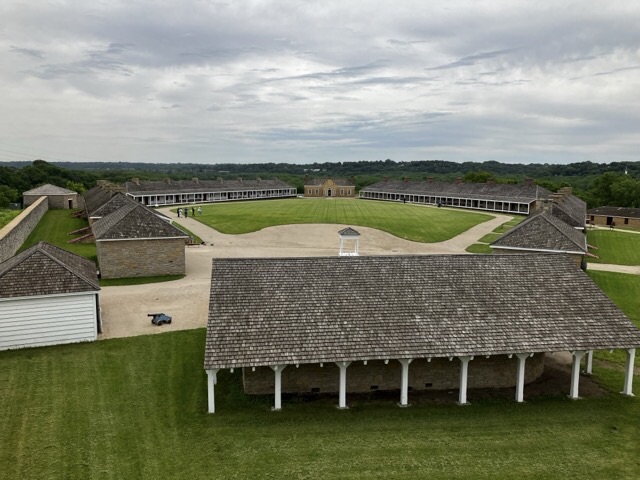
We went up the spiral staircase in the tower and surveyed the fort from the top.
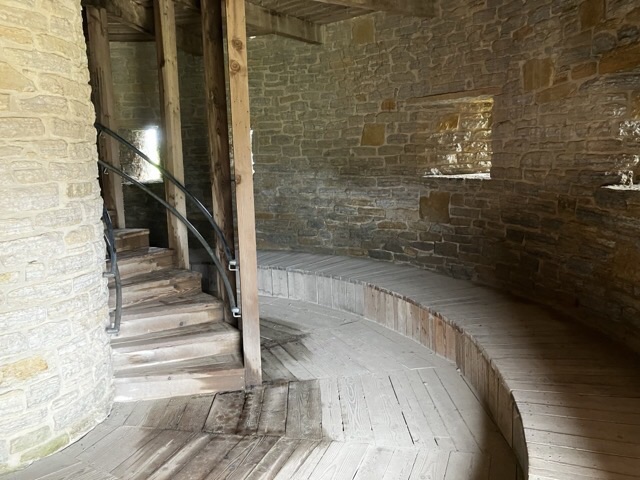
When we went back down, I tried to imagine soldiers, standing with their muskets pointed through those slits which couldn’t have allowed for any degree of firing accuracy.
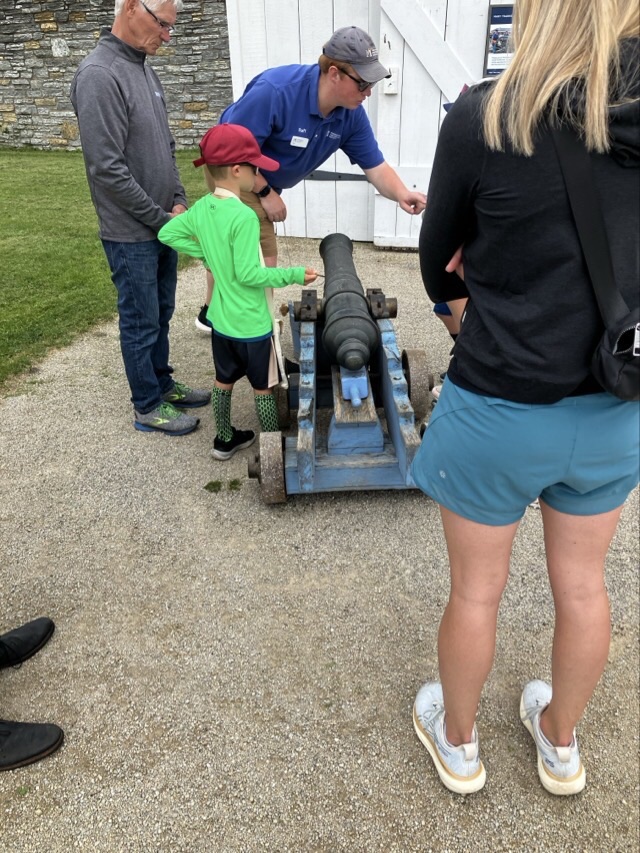
On our way to the next building, we passed by a family getting a demonstration on how to fire a cannon and stopped to enjoy the sight of the children learning their parts in the complex dance required to fire off one of those things. Ah, youth.
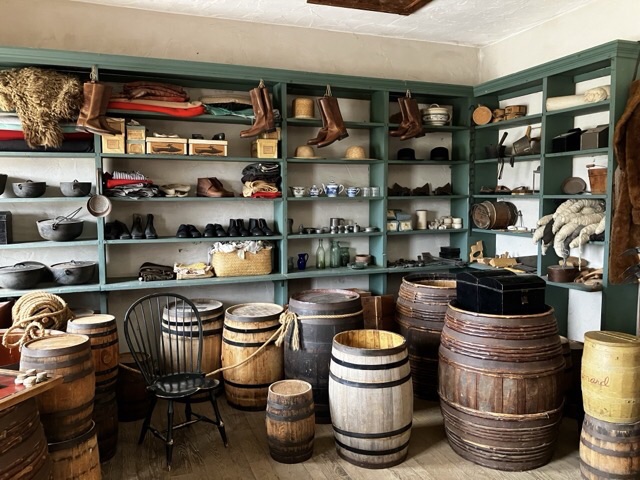
Well, moving on let me tell you, the Sutler’s Store was quite the experience! We could tell right away walking into it that the young man staffing the store was all in. He regaled us with tales about the the history of the store, asked and answered questions, and pretty much kept us entertained while also educating us. He showed us a brick of tea which astonished me on many levels. Tea came in bricks? So crates of THAT was what was being thrown off the ships at the Boston Harbor? Apparently you only shaved off a bit of the brick each time you made tea, so it would last quite a long time. Being a tea lover, I asked him to pose with the brick for a photo. He did me one better and grabbed a top hat to add some verisimilitude and whimsy to the scene, while adopting a somewhat snobby British look. Well done!

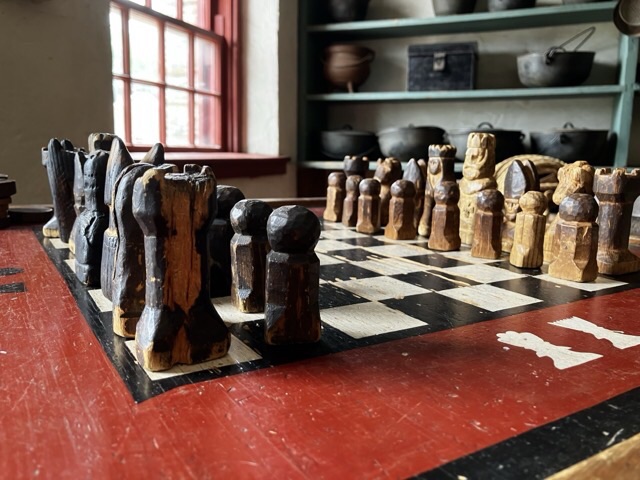
I had to get a photo of a barrel of Jamaican whisky in honor of poor Private McCoy. And other things begged to be photographed as well. Every effort has been made to reconstruct all these places to look as they would have looked back in the 1800’s. Most of the things in the various buildings and rooms were facsimiles of the originals, but were painstakingly made to look like the real deal.

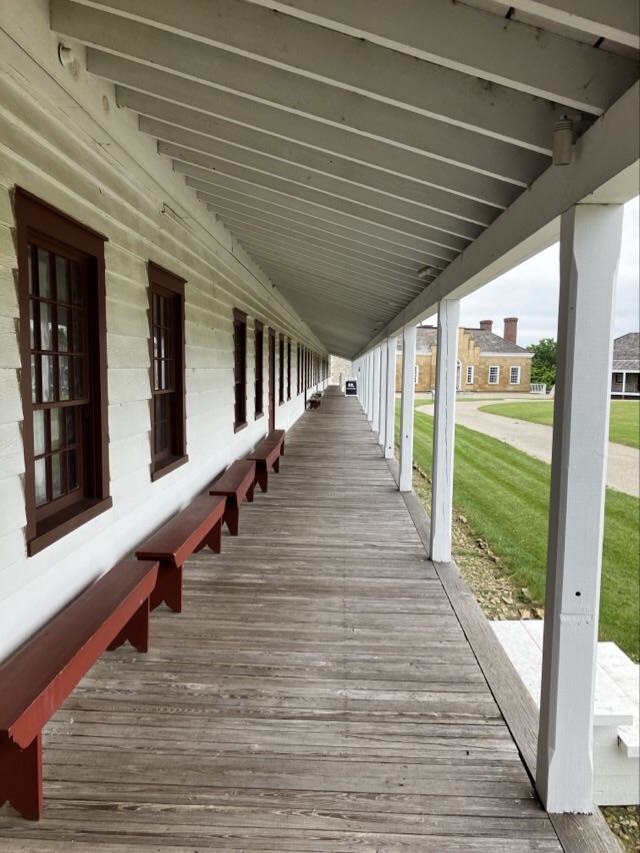
Eventually we tore ourselves away from the Sutler Store and wandered into the married living quarters. The large mannequin in the living quarters began speaking to us causing me to yelp with surprise. We were mystified by the specter of a man wearing the historical women’s dress. In these strange times in which we live, we all acted as if this was perfectly normal.
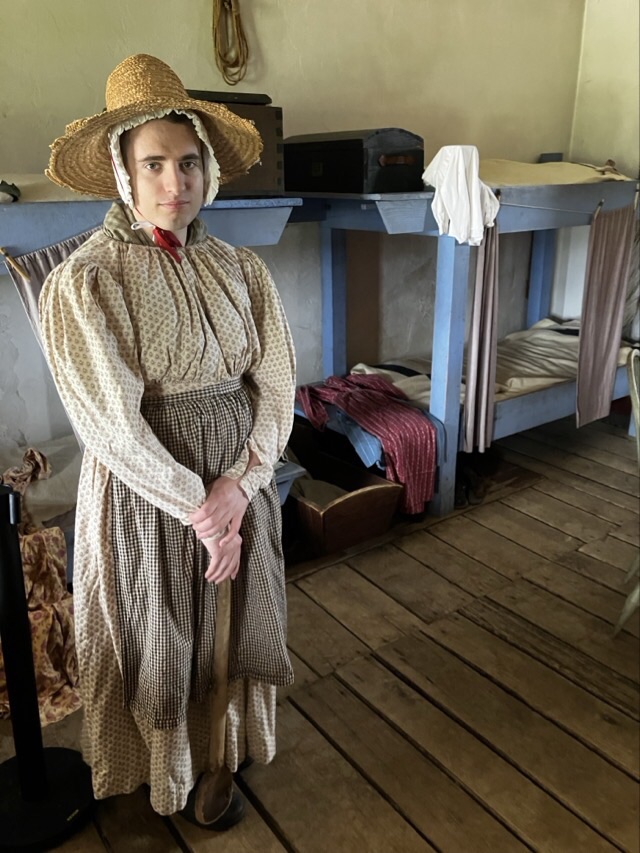
As you can see the room was pretty small. Four bunk beds for housing 2-3 families with perhaps 4-5 children each, so everyone shared a bed. The women worked doing laundry and sometimes made more money than their husbands made as soldiers. Children older than 13 were sent somewhere else to live and work, as there just wasn’t enough space and resources for them.
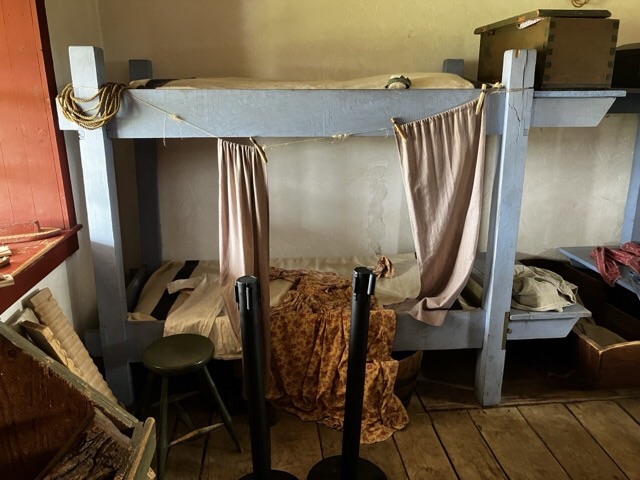
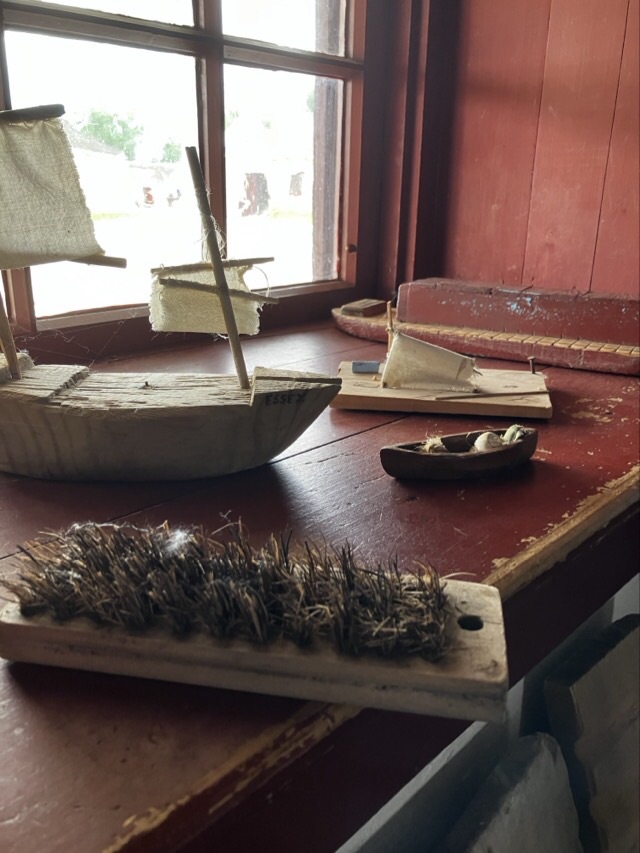
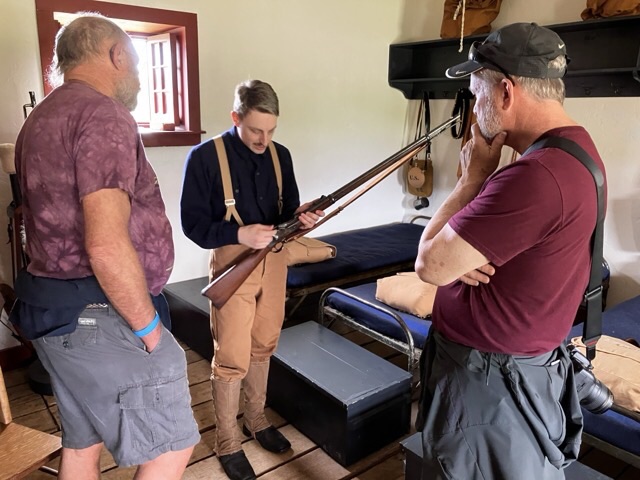
In the next building we entered the soldiers’ barracks and got a demonstration of how to load the muskets. The men of low rank slept two to a bunk while higher ranked soldiers got a bed to themselves. Eventually the powers that be figured out that diseases were being transmitted too easily when the men were sleeping so close together, so they all got their own beds and were a little farther apart.
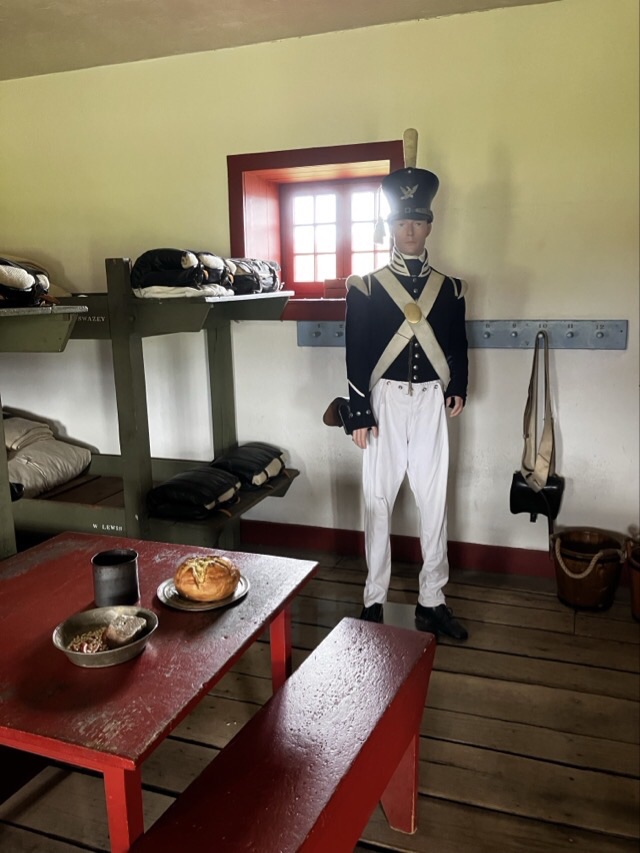
From there we traipsed over to the commandant’s house, which I failed to get a photo of from the outside. This was definitely luxury housing compared to the barracks, but rank comes with privilege, right? The dining room had a table set with plates on which were printed names of slaves that lived at the fort. Although slavery wasn’t practiced much in Minnesota at the time, sometimes officers would come from the south with their slaves, so slavery at the fort was more common than I would have guessed.

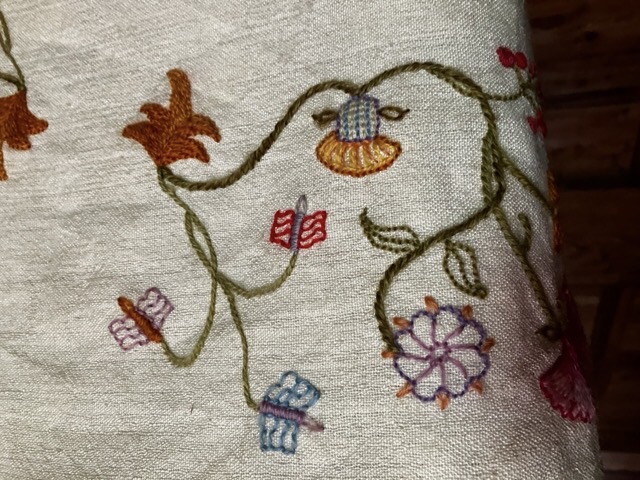
We poked around the house a bit, looking in the rooms and going upstairs to see the mostly empty guest rooms. I saw a bit of crewel embroidery on some bedding that thrilled me. My mom made me learn how to do crewel and I still have the one and only piece that I did, which is always associated in my mind with when my youngest sister was born prematurely.
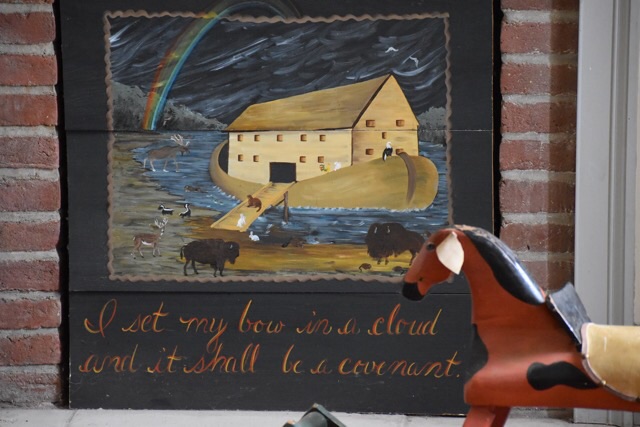
The day was getting warmer by this time and my energy level was beginning to flag a bit. Gone was the animated, engaged and curious woman of an hour ago. Tourist fatigue was setting in. Surely you know what I’m talking about. It is akin to the blog fatigue that you are experiencing due to the length of this one. Oh well, let us gird our loins and continue.
Making our way around the inner circle of the fort, we stopped in at the married officer’s quarters, followed by a room in which you could see displays of what archeologists had dug up on the grounds and pieced together. These are the cracked and soiled remains of a long ago community, the things that tell stories about daily life there. They even dug up some charred biscuits and had them behind glass. Oh, the chagrin of the baker who burned those and threw them away, if he/she discovered that these symbols of cookery failure were of great interest to us now. “What? They have THOSE on display?”
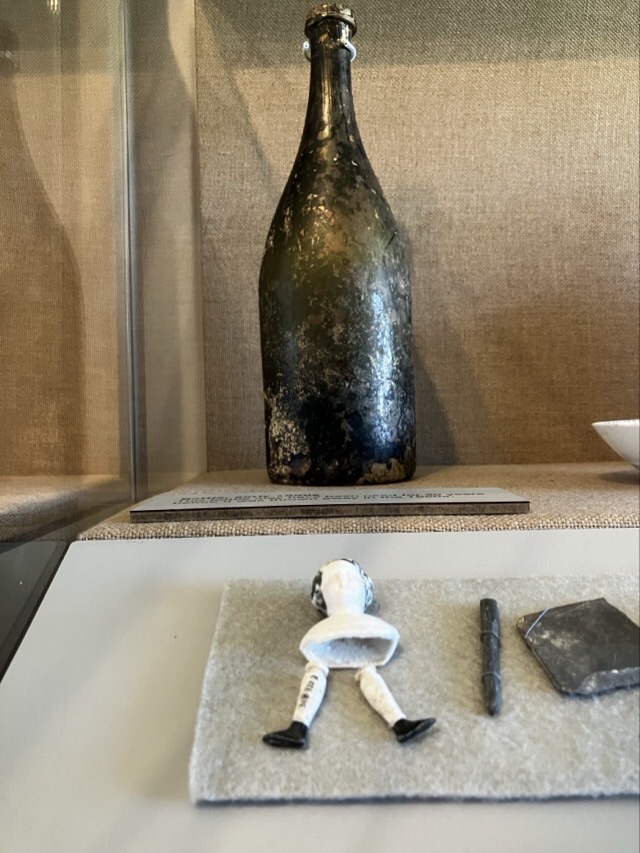
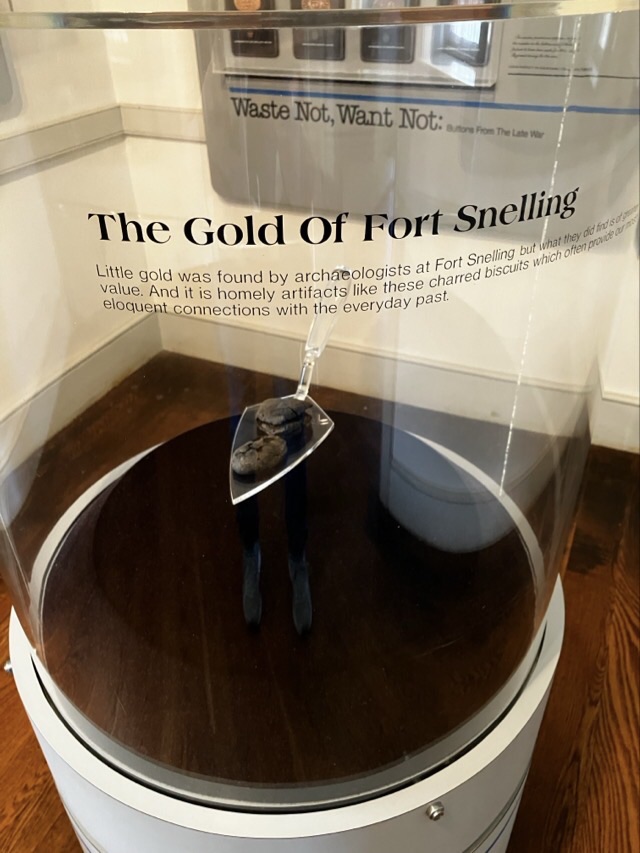
The hospital section was fascinating and horrifying at the same time. The doctors in the 1800’s were still employing rather crude methods based on false assumptions to treat disease and injury. Most of the drugs they administered were worthless or sometimes even harmful. And yet the physicians were supremely confident in their methods at the time. Hmmm…
I was super excited to see that we were getting to the end of things. We swooped through the carpentry room (actually, I swooped through; my husband was more thorough in his investigation). The blacksmith room was right there as well. Kris asked her a lot of questions and I leaned against the door taking photos of sparks from the forge while she worked the bellows. Divide and conquer, right?
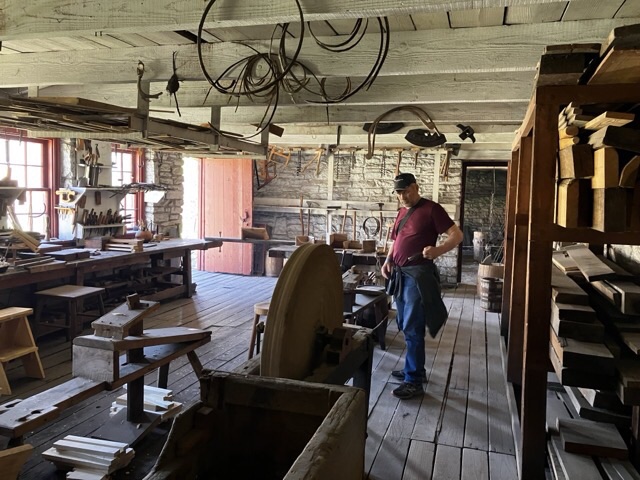

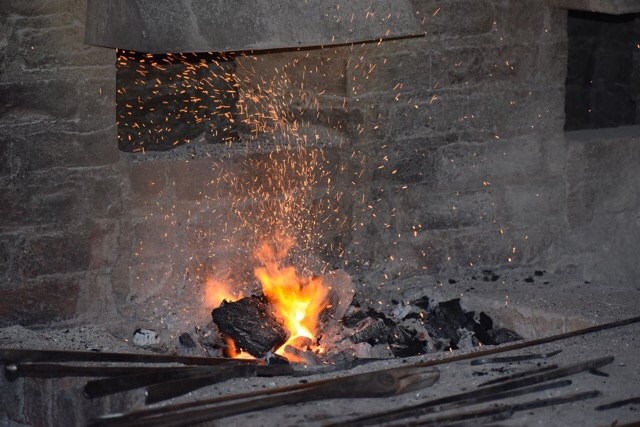

While my husband was looking around to see if we missed anything, I wandered into the Dred and Harriet Scott living quarters which from the outside looked like an empty room. Too late, I spied the young staff woman sitting at a desk in the middle of the room. Without any preamble, she launched into a learned discourse on the lives of these two slaves. I had to re-activate my brain which had been threatening to shut down. She really knew her stuff well, and it ended up being quite interesting. As you probably know, Dred and Harriet Scott sued for their freedom, a case that went all the way to the Supreme Court, but lost. When they finally were set free, Dred Scott died about a year later.
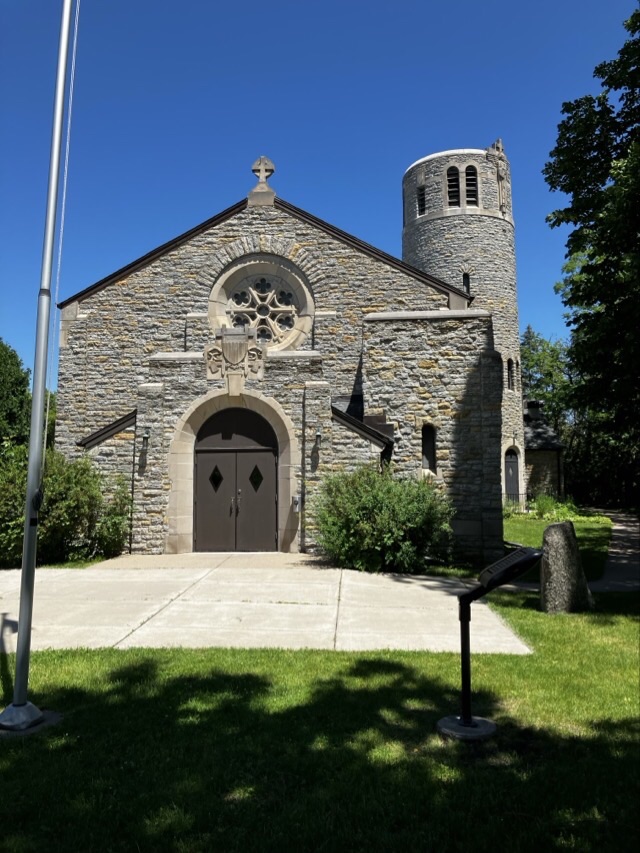
We left the fort area but still had one last place to visit: the chapel. When we got there and discovered that it was locked, I said a silent prayer of thanksgiving.
The only thing left to do was get an ice cream sandwich at the visitor center which brought us back into the Land of Air Conditioning.

We drove over the the Fort Snelling Military Cemetery from there to visit the place where my husband’s mother’s gravestone resides.

Thank you for meandering through the fort with us!
Next: Great Lakes Aquarium
I’ll be melting this one down in the morning.

 Lynniebeemuseoday
5 thoughts on “Monday, July 22, 2024 Minnesota Meanderings: Fort Snelling”