
I know there must be some people out there who don’t want to read or hear anything about politics right now. You’ve come to the right place. Come on in!
I’ve spoken before about inheriting my mother’s sizable collection of CDs and her wonderful Bose CD player. I’m making my way slowly through the CDs, endeavoring to listen, rather than letting them drift into unconscious background music, but the latter is what happens more often than not. Thus was the case when I started playing Cesar Franck’s Symphony in D Minor yesterday morning while I did my daily Bible reading. It would pain Cesar to know that I was paying no attention whatsoever to the composition that he spent so much time on back in the 1800s.
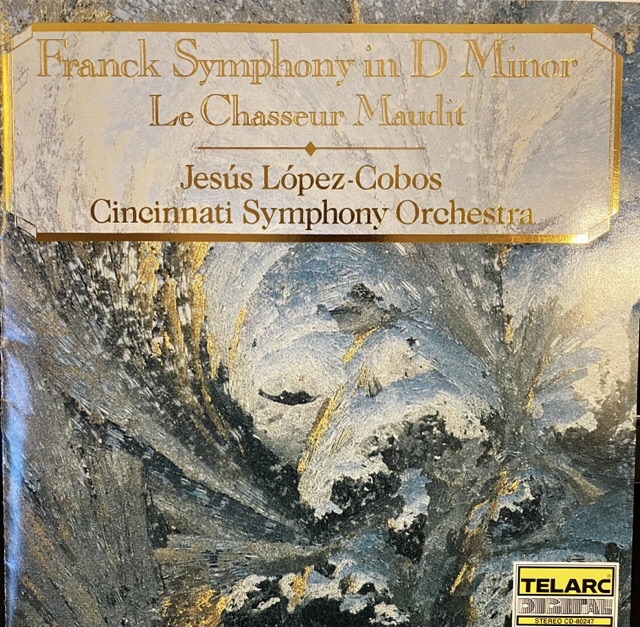
But then, hark! What is this sound of a horn calling? My attention was harnessed at last and I looked to see where we were. The symphony, it turns out, was over and a new piece had started: “Le Chasseur maudit,” i.e. “The Accursed Huntsman.” Ah, of course – those were hunting horns I had heard.
The piece is what’s known as a symphonic poem and was inspired by a poem written by a German fellow named Gottfried August Burger. Stick with me, even though this seems boring. It’s not!
I was sufficiently interested by this time to look up the poem by old Gottfried, the title of which was translated as “The Wild Huntsman.” It’s a longish poem, which I shall summarize for you in story form (you’re welcome):
The huntsman is a nobleman who decides to go out hunting on a Sabbath morning and brings his whole entourage with him. They hear the church bells calling them to worship, but the nobleman ignores them. Suddenly, two strange horsemen join them: the one on the right is a fair young man on a silver white steed, while the one on the left rides a horse that is “the swarthy hue of hell.” The battle lines are drawn!
The young man on the right entreats the nobleman to abandon the hunt, and to heed the bells which call him to the church. The man on the left tells him to continue, and “to muttering monks leave matin-song, and bells and books and mysteries.” O nobleman, listen to the stranger on the silver white steed! But he does not. And to make the allure of the hunt even sweeter, a white stag appears before him and the hunt is on in earnest.
The hunters come to a small field ripe for harvest. The owner of the field begs for mercy – please don’t run your horses through my field where I have worked under the scorching sun these months. It’s all I have! In spite of the entreaties of the stranger on the white steed, the nobleman ignores him and their hunting party ravages the field in pursuit of the stag.
Next the stag seeks to hide himself among another man’s herd and flocks. The herdsman, too, begs the nobleman to leave his herd alone – he’s tending it for a widow and an orphan and it’s all they have. The stranger on the right pleads on behalf of the herdsman; the one on the left is still cheering the nobleman on his hunt. The nobleman’s dogs mangle the herd and the herdsman trying to get to the stag, which though bloodied, keeps running.
The fair horseman continues to plead for him to quit the hunt and turn around, and at this point, the huntsman tells him, “Not God himself shall make me turn!” Uh oh…All in a moment, the prey, the entourage, the hounds – all are gone, and all is silent. The nobleman cannot even get a sound out of his horn. Judgment has come. A voice thunders from the clouds that the nobleman is a “Scorner of God! Scourge of the poor!” and that “the measure of thy cup is full.” His fate now is to be chased forever through the wood by the hounds of hell.
Some story! Find the musical piece wherever you listen to streaming music and see if you can hear the story through the musical poem that Cesar Franck wrote: the horns, the church bells, the galloping chase, and then mysterious silences followed by the trombones and tubas proclaiming the curse using the same melody as that of the original hunting call. The apostate hunter has now become the hunted. The music builds, crashes and then fades away as the sound of the hunt “recedes into the distance.” (Took that phrase from the liner notes.)
Aren’t you glad you came along? You can return to your regularly scheduled day now.
I’ll probably heed the stranger on the white steed when he tells me to delete this in the morning.

 Lynniebeemuseoday