
Is it possible to lose a cemetery? Is it possible for the graves of several dozen people to be covered by a forest and lost for a time? Yes, yes, those things are possible. It happened just a few miles from where I live.
In 2007, an abandoned cemetery a couple miles east of my fair city was found and restored. A man named Tim Lloyd found it while looking for the burial site of an ancestor of his, great great great grandfather Isaac Barrick, who was a veteran of the War of 1812. His stone was one of the last stones that was discovered as they did the cleanup and restoration of Old Prarieville Cemetery. When I read that story in the newspaper a few years ago, I knew I’d have to visit the cemetery someday. I contacted my two cemetery–loving friends, Lori and Teresa, and we recently set out to explore this old place of rest together.
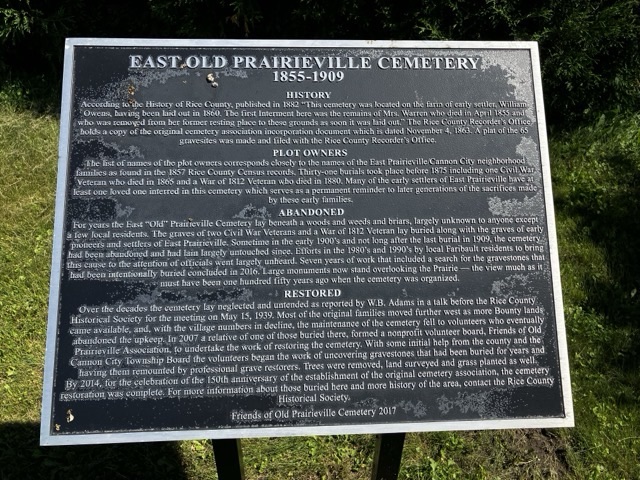
Old Prairieville Cemetery was established in 1855. The first person buried there was Mrs. Warren who died in April 1855. The last burial was in 1909. In days of yore, if there was a cemetery, there was a church nearby. Traditionally old churches always had a graveyard associated with them and indeed, there used to be a congregational church in that location. The Congregationalist sold it to the Methodists in 1876 and the only thing remaining of that church now is the foundation and part of an old iron fence that surrounded it.
This is what the cemetery look like when it was rediscovered in 2007.
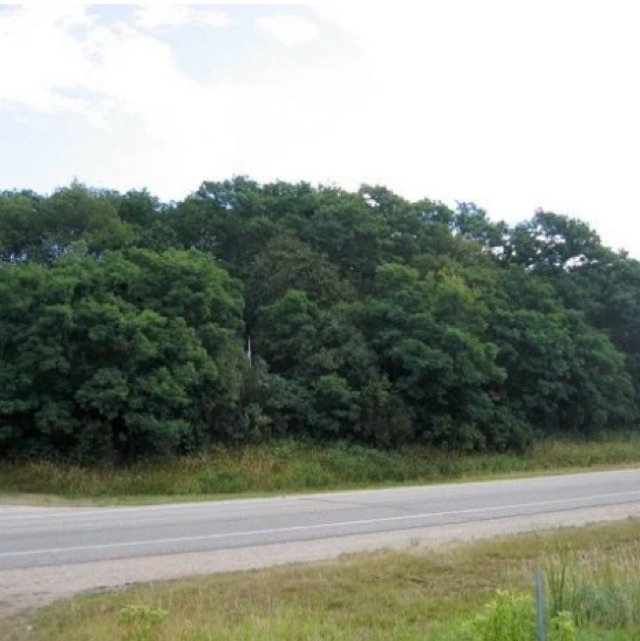
Which makes the recovery work all that much more amazing. That was a LOT of trees to remove!

You may ask why it’s so important. Why should anyone care if moldering gravestones stay buried and forgotten? The fact is that we are each of us eternal souls, each one of us made in the image of God, each one of us created and brought into this world for some purpose. The stones are just stones, but the names on those stones represent real people who lived real lives and left real legacies, whether for good or for bad. We may forget them, but the Lord knows them all by name and He knows all their stories.
Gone are the living, but the dead remain
And not neglected, for a hand unseen,
Scattering its bounty, like a summer rain,
Still keeps their graves and their remembrance green.
Henry Wadsworth Longfellow,
excerpt from “The Jewish Cemetery at Newport
Lori, Teresa and I went to this rediscovered old cemetery and did what we usually do – we walked around looking at names and epitaphs, worked out what some of the engravings said – not as easy as you’d think with old stones like these that had been reclaimed by the dirt from which they came. We noted how often in those days the length of someone’s life when they died was given in great detail: “54 years, 1 month and 15 days,” or “76 years, 11 months, 12 days.” Nowadays we just plunk a couple of years on the stone and let you do the math.
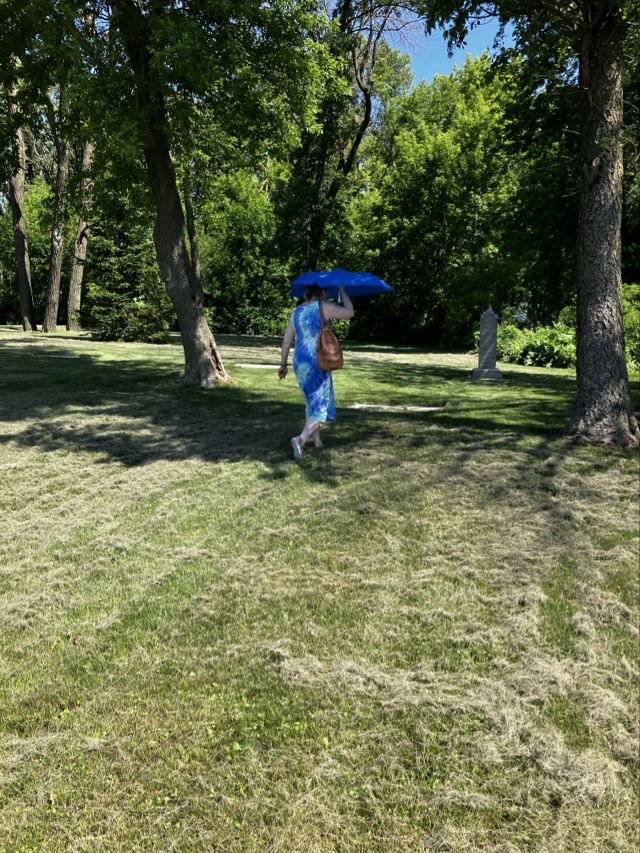
So let me share some of these with you, with the hopes that you’ll see beyond the names and wonder about the people they were. My observations and/or notes will be under the photos.

Francis F. Strunk was just 1 year, 6 months and 4 days old when he passed away on October 17, 1865. The inscription on the stone is a slightly altered verse from the hymn “They Are Not Lost, But Gone Before”:
Dear is the spot where children sleep
And sweet the strains their spirits pour
O, why should we in anguish weep
They are not lost but gone before.
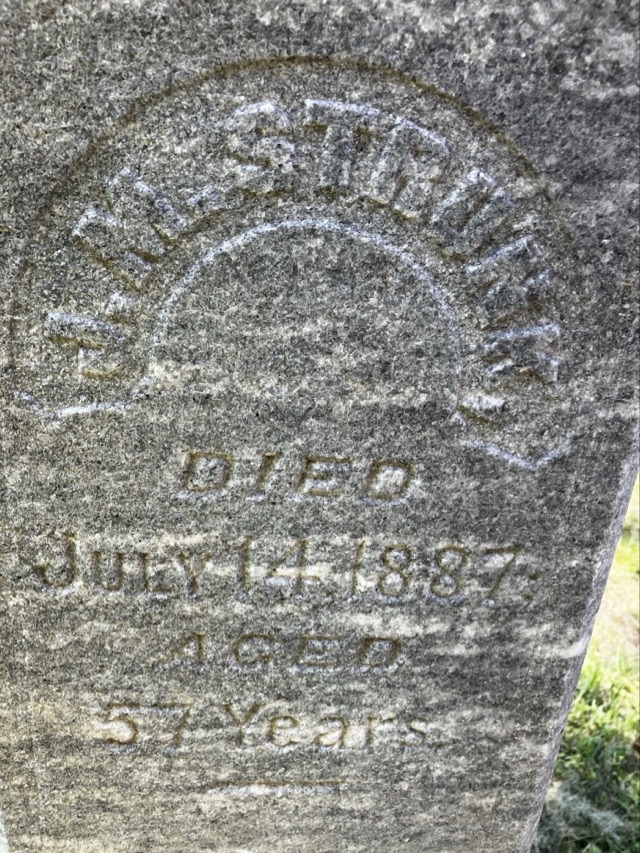
Francis’s father, Jonas M. Strunk, had a stone in the cemetery as well. He died at age 57 in 1887, 27 years after burying his son:
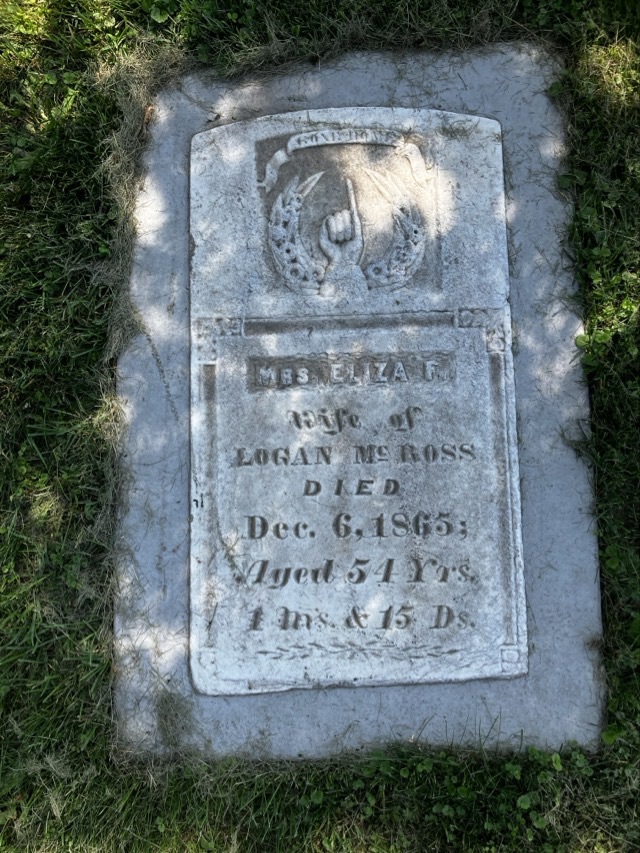
Mrs. Eliza F. McRoss, died just a couple months after little Francis on December 6, 1865. Note the hand with a finger pointing upward at the top of her stone, and the words above it: “Gone home.” This is a fairly common symbol seen on gravestones of that era, reflecting the abiding faith that “our citizenship is in heaven.” (Philippians 3:20). This world is not truly our home.
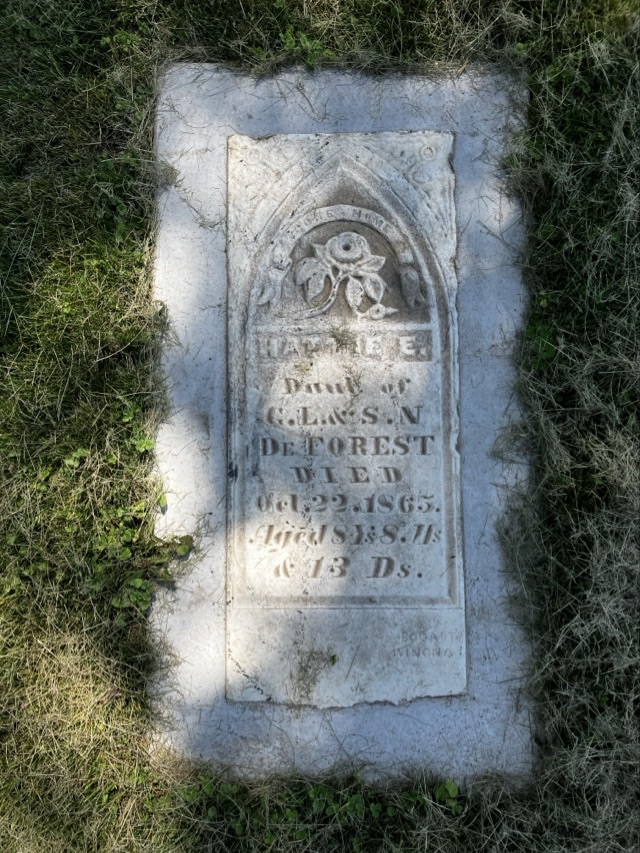
Hattie E. DeForest died on October 22, 1865, just days after Francis Strunk. She was 8 years, 8 months and 13 days old. The DeForests lost another daughter, Clara, about a month later:

She was 10 years and 1 month old. It seems likely that some ill disease swept through the community, taking their children. Hattie and Clara both have roses on their stones, under the same words “Gone Home.” How empty the Deforest household must have seemed with the loss of Clara and Hattie! The parents are only listed as G.L. and S.N. You have to read the grief between the lines.
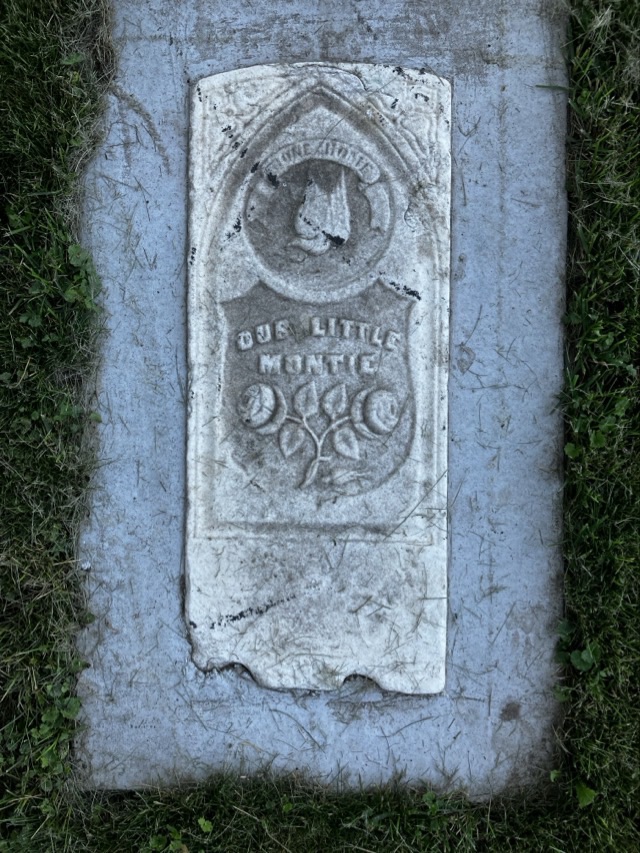
“Our little Montie.” No date, no age, but there’s a great deal of pathos in those three words. Montie’s stone contains the same words “Gone Home,” but underneath it is a dove, a symbol of purity and peace.
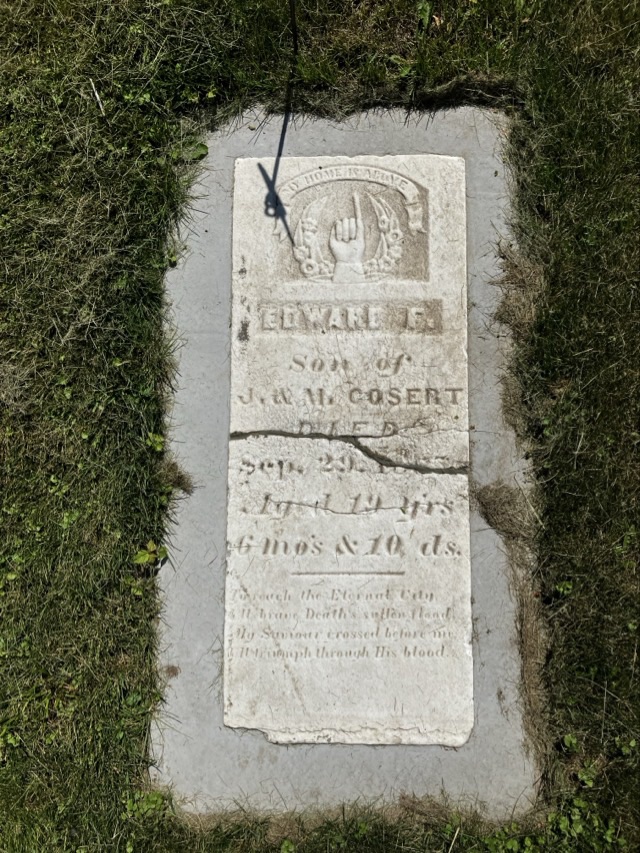
Edward F. Cosert, aged 19 years, 6 months and 10 days when he died in 18__. The stone is too cracked to see the year. The hand with the pointing finger points to the words “My home is above.” His epitaph reads:
To reach the Eternal City
I’ll brave Death’s sullen flood.
My Savior crossed before me,
I’ll triumph through His blood.
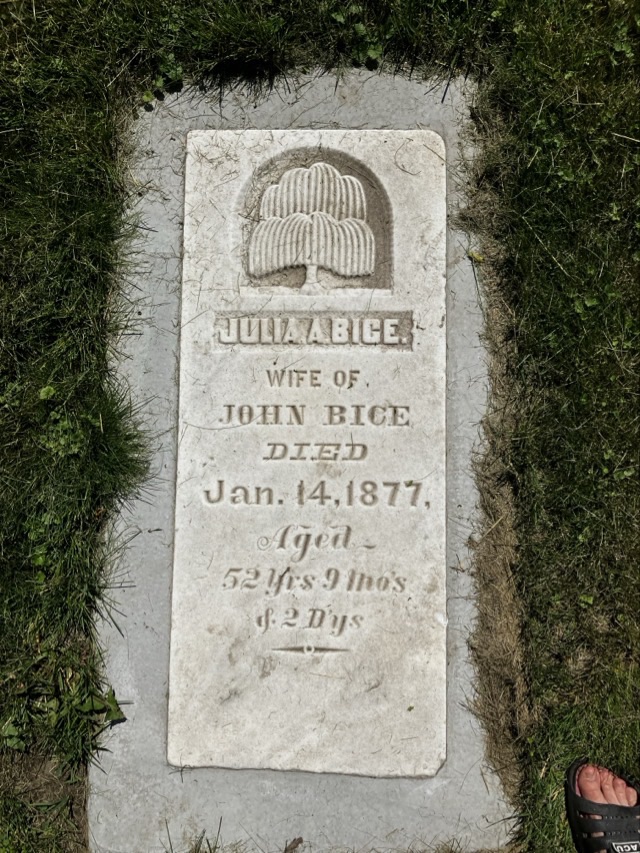
Note the weeping willow tree on the gravestone of Julia Bice. The suggestion of sorrow and grief is obvious, but less obvious is that the willow tree also was associated with the gospel of Christ “because the tree will flourish and remain whole no matter how many branches are cut off.” (From Stories in Stone by Douglas Keister.)
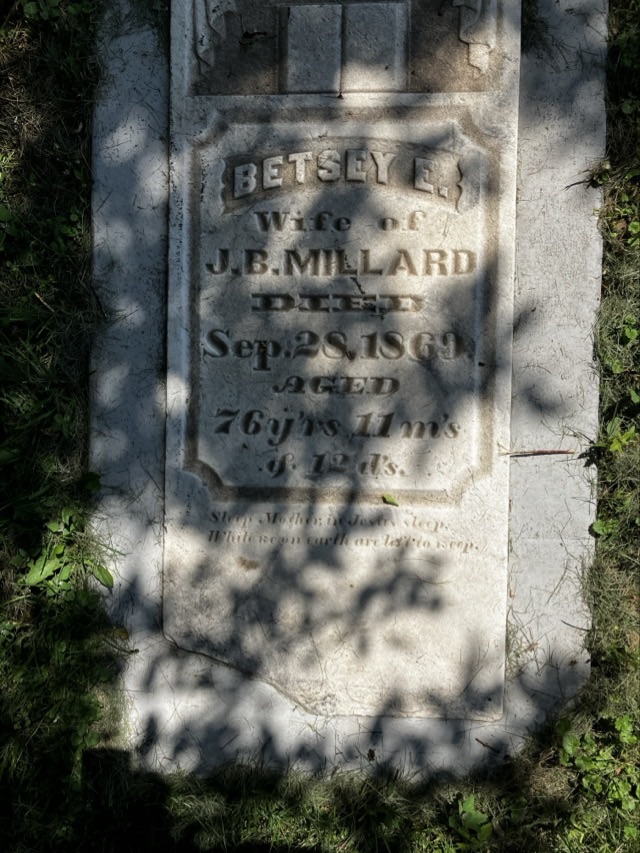
Betsey E. Millard. “Sleep, Mother, in Jesus sleep, while we on earth are left to weep.” An open book is shown above, perhaps symbolic of the Bible.
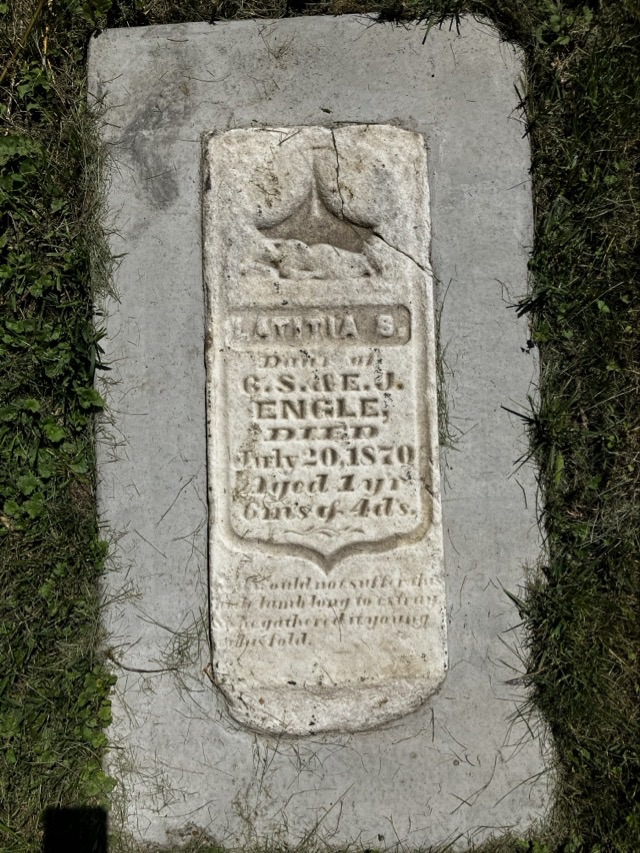
Letitia Engle, daughter of G.S. and E.J. Engle, died July 20, 1870 aged 1 year, 6 months and 4 days. Although it’s hard to tell, I believe that you can see a resting lamb above the name. The inscription reads:
(He?) would not suffer this
Little lamb long to estray
So he gathered it young
into his fold.
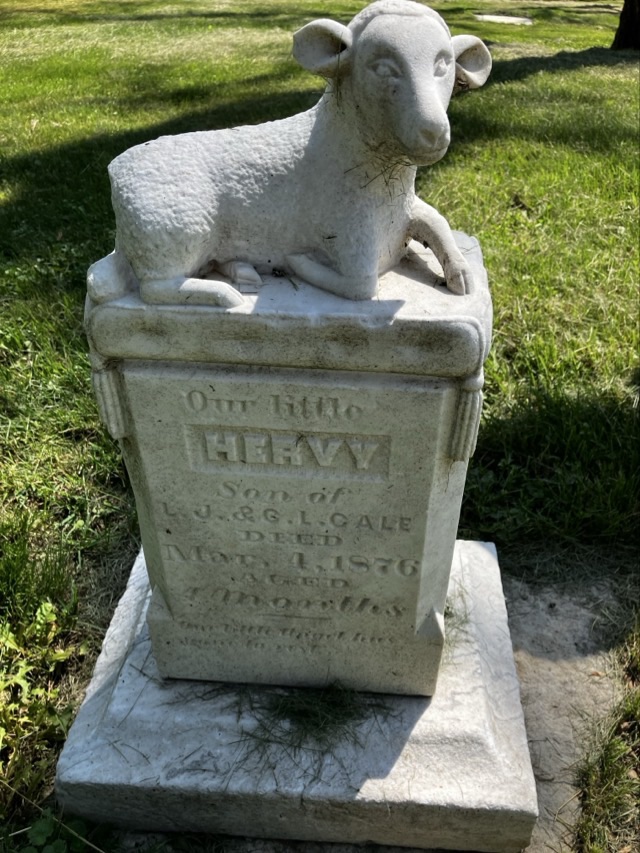
Similarly, “Our little Hervy” has a lamb atop his stone. Little Hervy Cale died at 4 months old. The inscription below reads “Our little angel has gone to rest.” In our day and age, infant and child mortality is fairly low, but it was a common occurrence not too long ago.
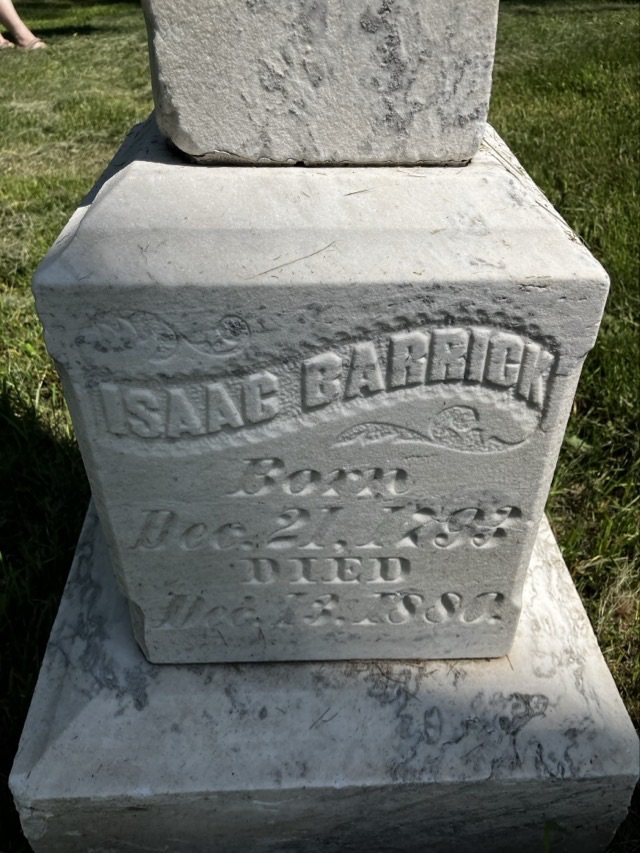
And here’s the stone that started everything, the gravestone for Isaac Barrick and his wife: “Father and Mother.”

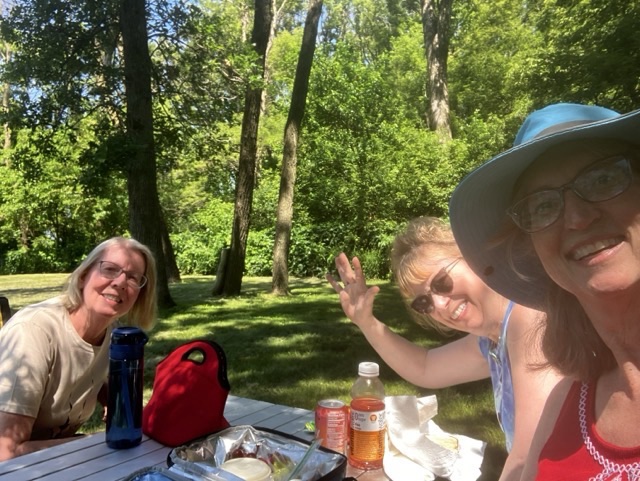
When we were done wandering and taking photos, we sat down for a picnic lunch.
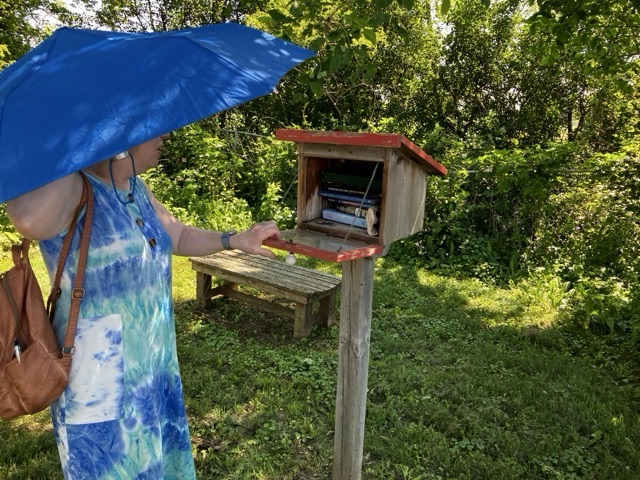
Before we left, we signed the mildewing old register that we’d found in the oddly placed Little Free Library. It was in the midst of several books that had been ravaged by time and moisture.

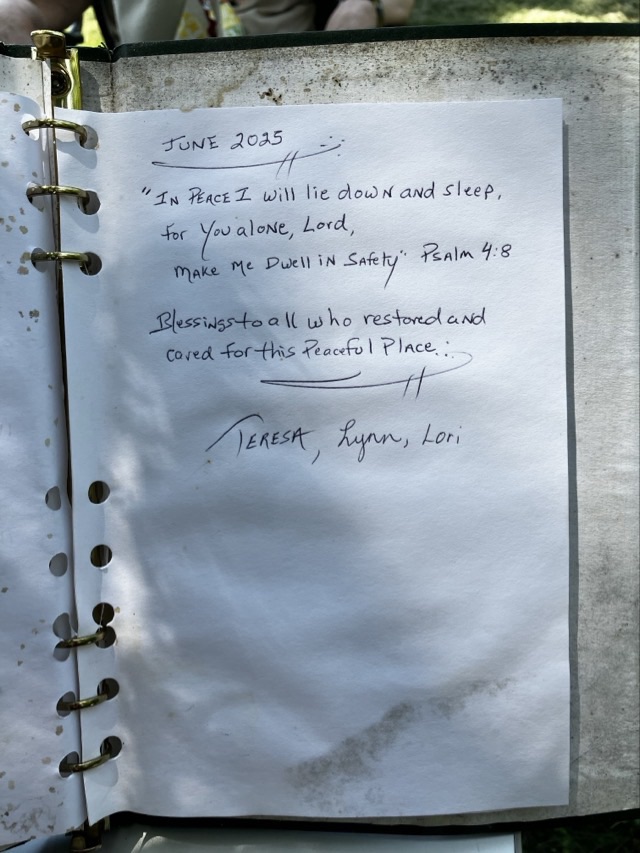
Teresa came up with the perfect Bible verse to inscribe above our names. “In peace I will lie down and sleep, for you alone, Lord, make me to dwell in safety.” Psalm 4:8
Previous post in this series: Grave Musings 10: Denison Cemetery
Start at the beginning: Grave Musings 1 Maple Lawn I
I cannot suffer long this blog post to estray…it will be gathered with its brethren posts in the morning.

 Lynniebeemuseoday
every time we drive by this cemetery we say we should stop and visit it, but still haven’t . Thank you for this wonderful tour to “whet our whistle”. It is a treasure.
LikeLiked by 1 person
I’m glad you enjoyed the “tour.” Now that you’ve my post, you can cross that one off your list! 😜
LikeLike