Everyone knows that Lake Itasca is the headwaters of the Mississippi. Back in the day, many an explorer sought to find the origin of that river because that’s what explorers do. Of course, the Ojibwe people knew it all along. When Henry Schoolcraft came along in 1832, Chief Ozawindib kindly guided him to it, the lake they called “Omushkos,” which means Elk Lake. Schoolcraft apparently didn’t think that name was sufficient, so he put his scholarly mind to the matter and decided that since the lake was the “true head” of the Mississippi, he would use the Latin version of that phrase, “veritas caput,” and cobbled the name “Itasca,” from the end of the first word and the beginning of the second one. I bet his children had interesting names.
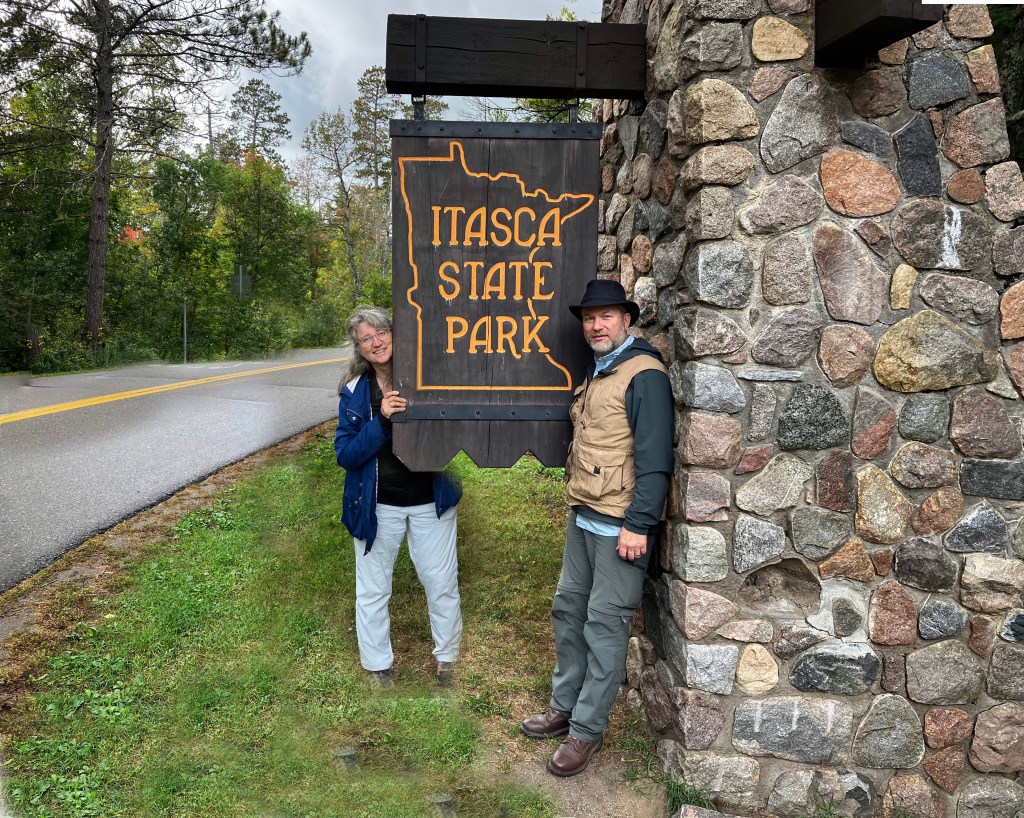
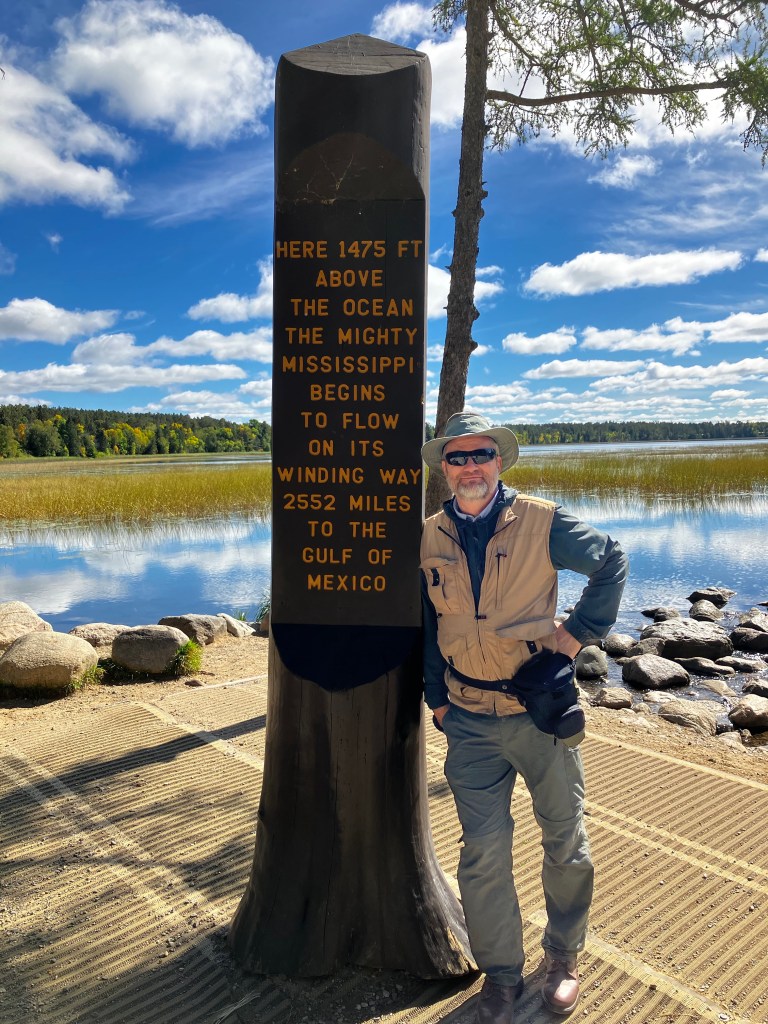
We had been to Itasca State Park about 10 years ago with our two youngest children, but we hadn’t done any hiking there. We went to the actual headwaters and took pictures of each other there. Because that’s what tourists do. We were looking forward to seeing more of the park this time.
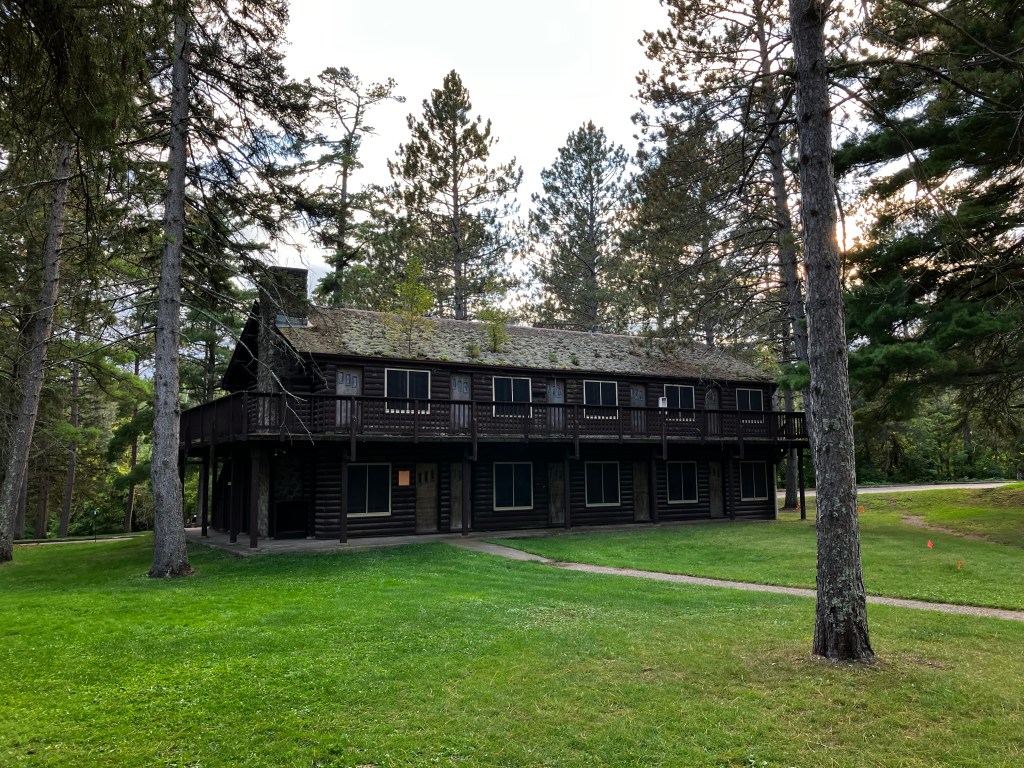
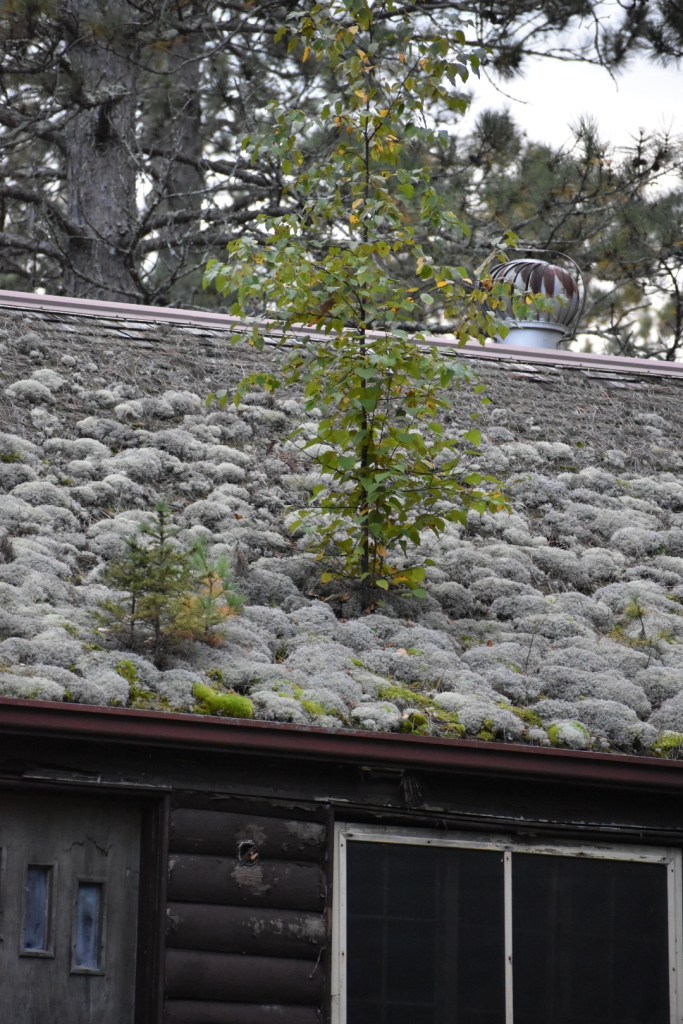
We stayed at the Douglas Lodge and were mystified to see trees growing out of the roof of the building behind it, Nicollet Court. It reminded me of the Mrs. Piggle Wiggle story about the boy who hated bathing and cleaning himself. Mrs. P.W. advised the parents just to let him experience the consequences of being dirty instead of constantly nagging him to take a bath. He was overjoyed with his freedom at first, but then the dirt layer on his skin became a nice place where seeds could grow and when plants began to emerge, he gave up his commitment to filth. Ha ha! I loved those stories! Well, Nicollet Court had been given over to itself, that’s for sure. Kris talked to a park employee later and found out that when it became clear that Nicollet Court needed some major repairs and that it would cost 20 million dollars to do it right, the park officials decided to let it go the way of the world: death and decay. Ah, there but for the grace of God go I.
The description of the Hiking Club trail included the word “hilly,” which is always a red flag for me. In spite of that I opted out of the hiking poles, which are nice, but an encumbrance when I want to take photos (i.e. frequently). I had my trusty knee huggers on and they would have to suffice. It was 49 degrees and sunny when we started out around 9:00 a.m., picking up the beginning of the 3.5 mile trail right by Douglas Lodge.
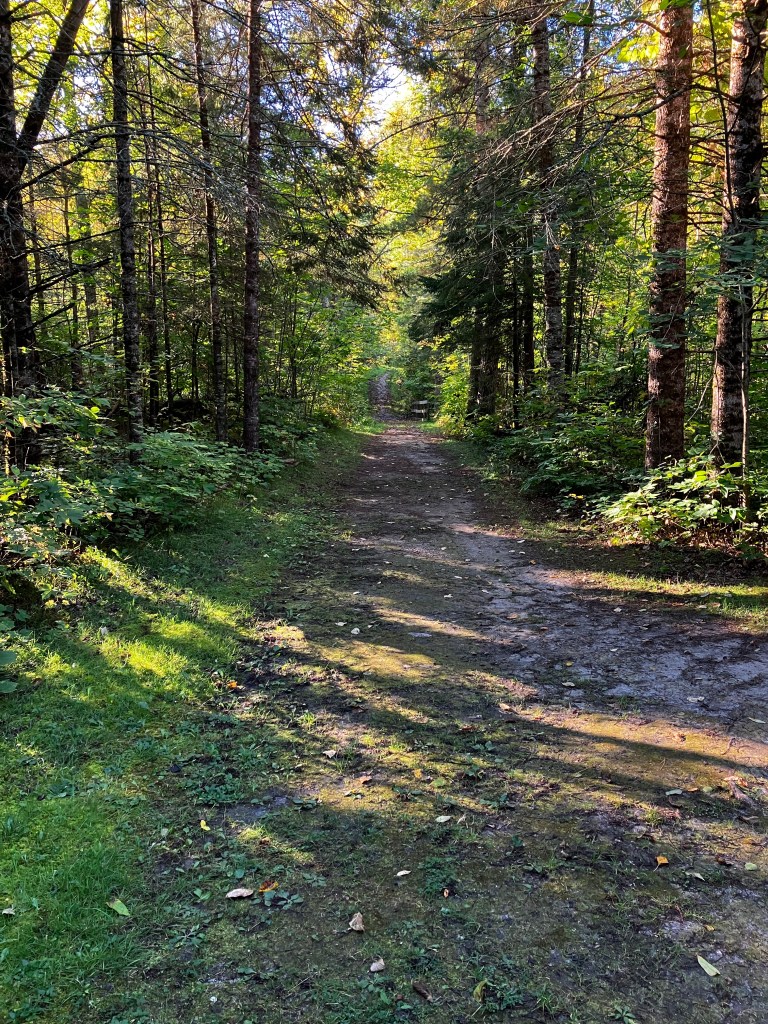
The trail was quite ferny, and we also saw some of our old friends, like Meadow Rue, Large Leaved Aster and Smooth Blue Aster. It feels good to know their names now. My husband’s educational background was in plant breeding and therefore, he knows a goodly amount of botany. I received a little instruction along the way about the difference between dioecious and monoecious plants and I now pass it on to you, dear readers. Dioecious plants, like meadow rue, have their male and female parts on separate plants, rather than on different parts of the same plant. Corn, on the other hand, is monoecious, containing both male and female parts, the tassel/pollen being the male and the ear being the female. This has been the plant sex education portion of this blog.

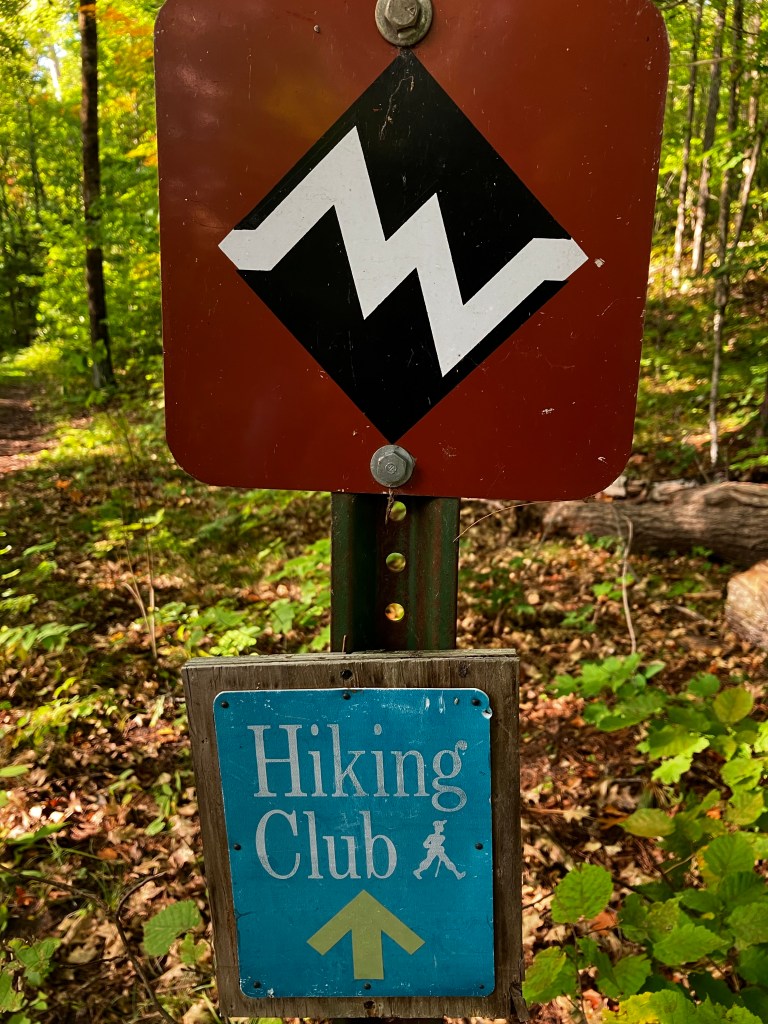
I had a eureka moment on this trail. I noticed some interesting icons on trail signs. I’d seen them before but wasn’t sure what they meant. I finally looked at the legend on one of the maps on the trail and saw that these were cross-country ski trails in the winter and the icons meant “easy,” “difficult” and “more difficult.” In other words, these were comparable to my knee scores! Very nice to know.
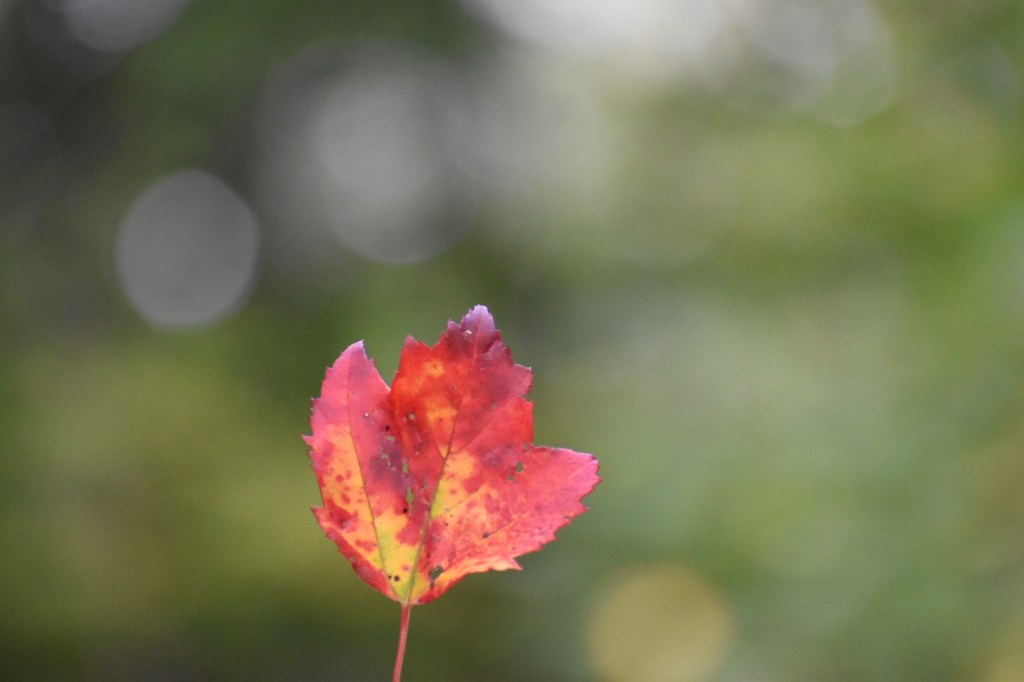
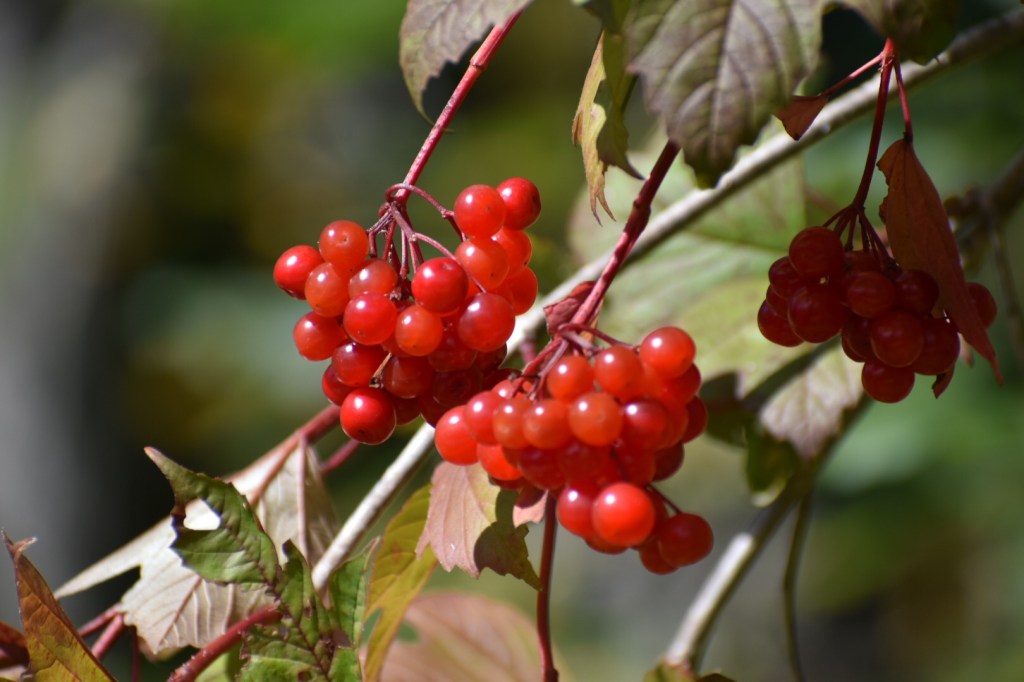
The colors of the natural world are a continual source of joy. Thank you, Lord.
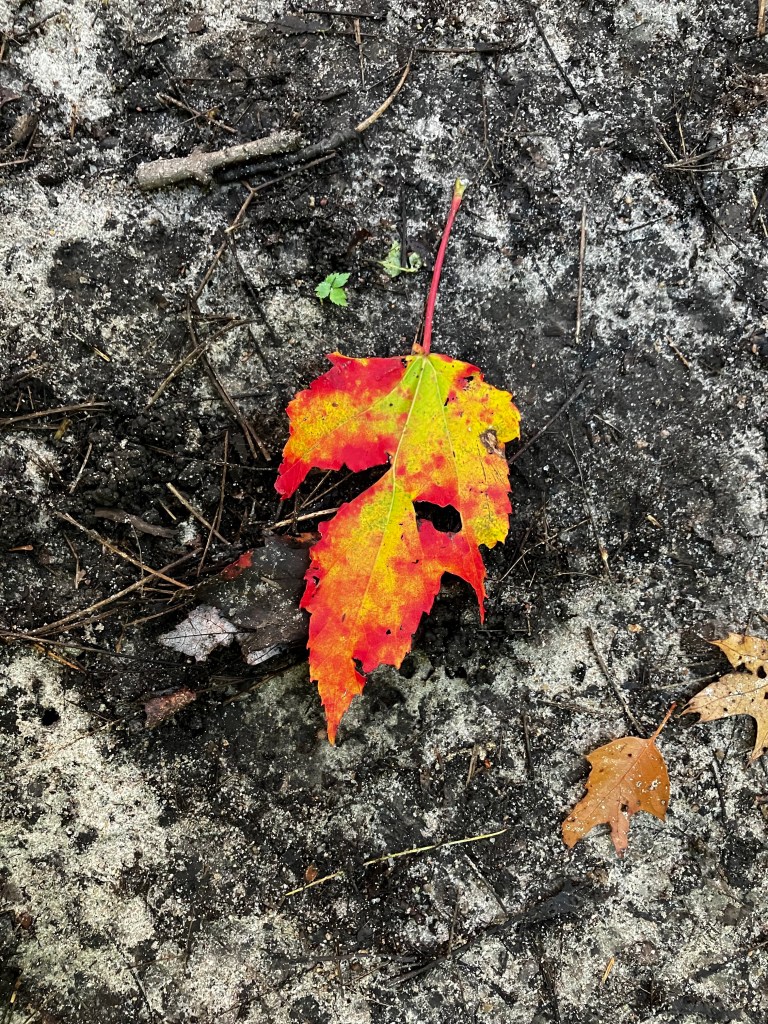

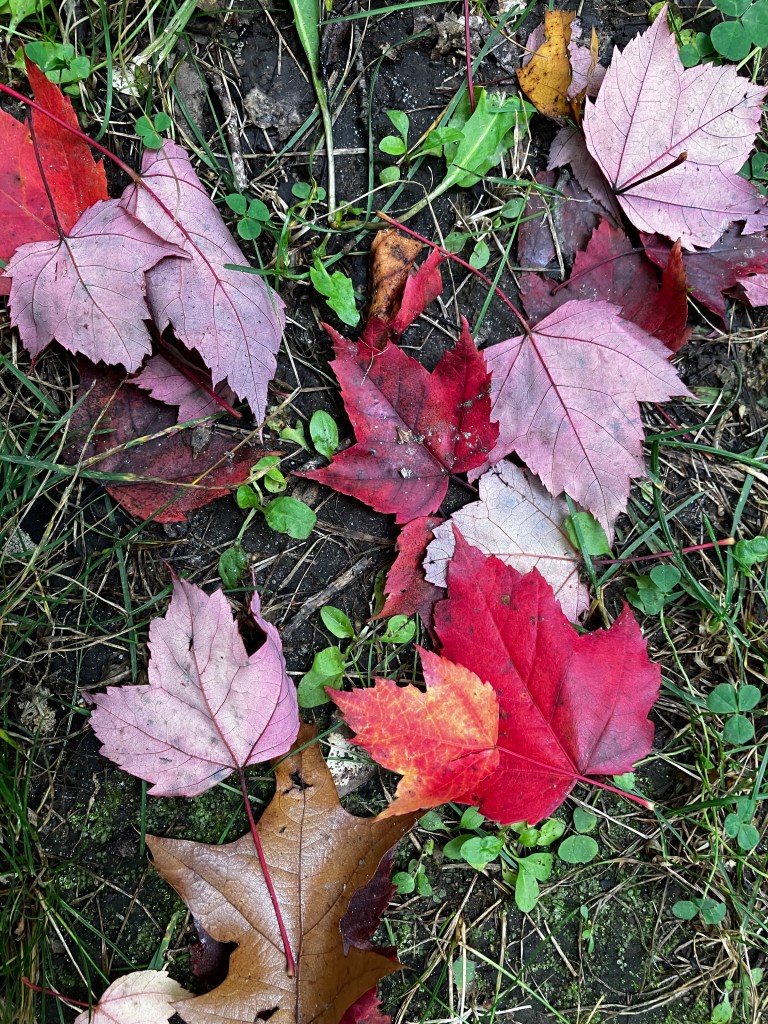
The trail would not be taking us anywhere near Lake Itasca, actually. Instead we would be seeing some of the smaller lakes in the park, like Mary Lake and Myrtle Lake, Itasca’s forgotten little sisters.
We’re assuming Mary Lake is named after Mary Gibbs, who was appointed as park superintendent at age 24 when her father, the current superintendent died. We read a few things about Mary Gibbs and it was like reading a script from a movie. At one point she came up against a local lumber company that built a dam to facilitate logging operations, but which might cause flooding that could kill the park’s old pine forest. Gibbs and a local sheriff brought a warrant to open the dam’s lift and the lumber boss threatened to shoot the hand off of anyone who put their hands on those levers. The sheriff backed off, but Mary Gibbs was made of stronger stuff. She said, “I will put my hand there, and you will not shoot it off, either.” The lumber boss knew when he was beat. He ordered the gates opened and was eventually jailed. Gutsy lady!
We passed by a few more lakes, probably the most lake-intensive hike we’ve been on so far. For me, lakes are all about the reflections in them, so that’s what I captured as we went along.
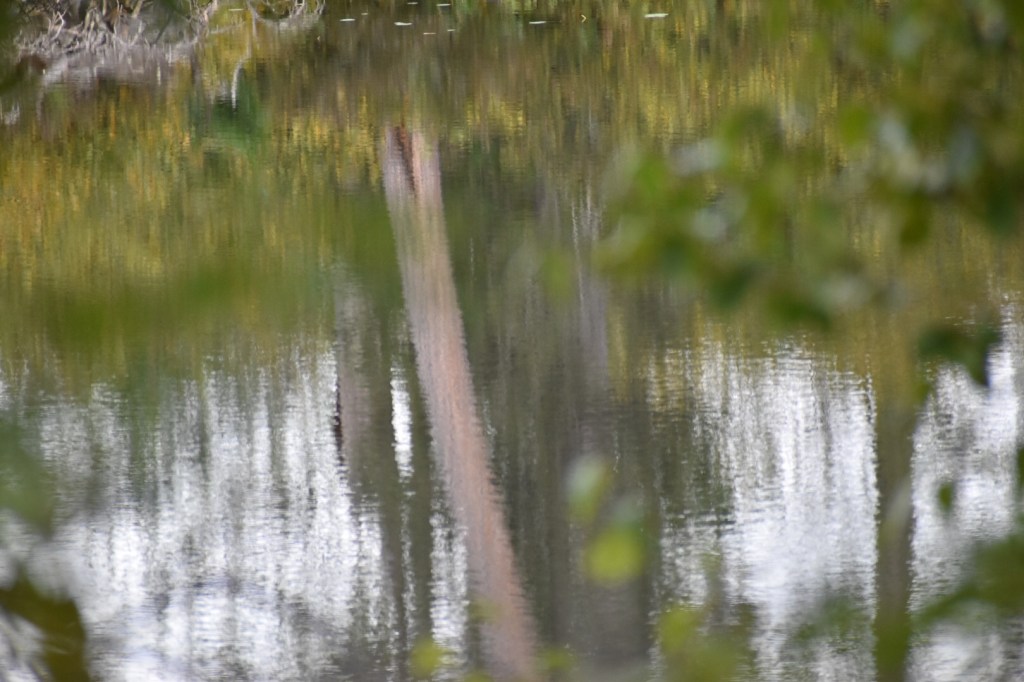
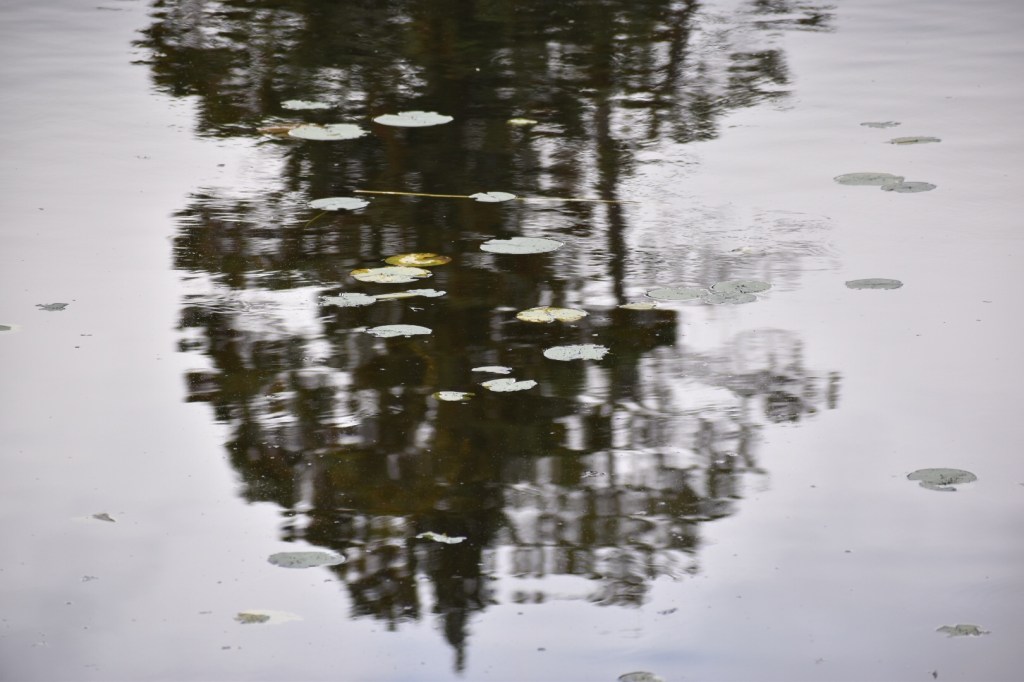
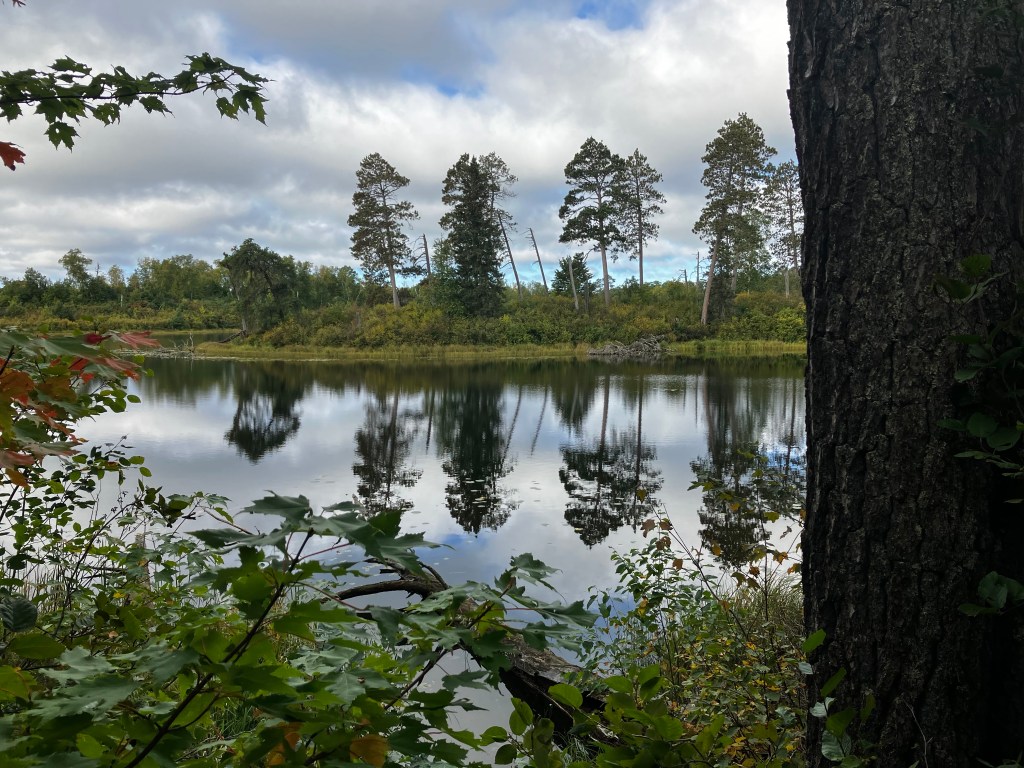
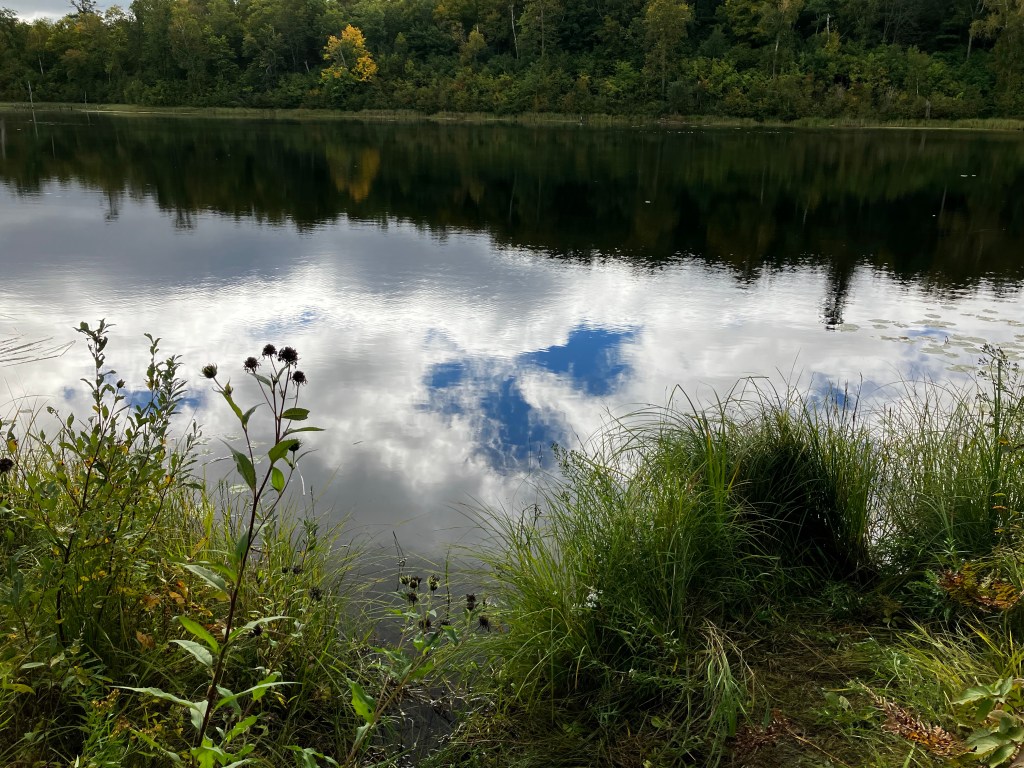
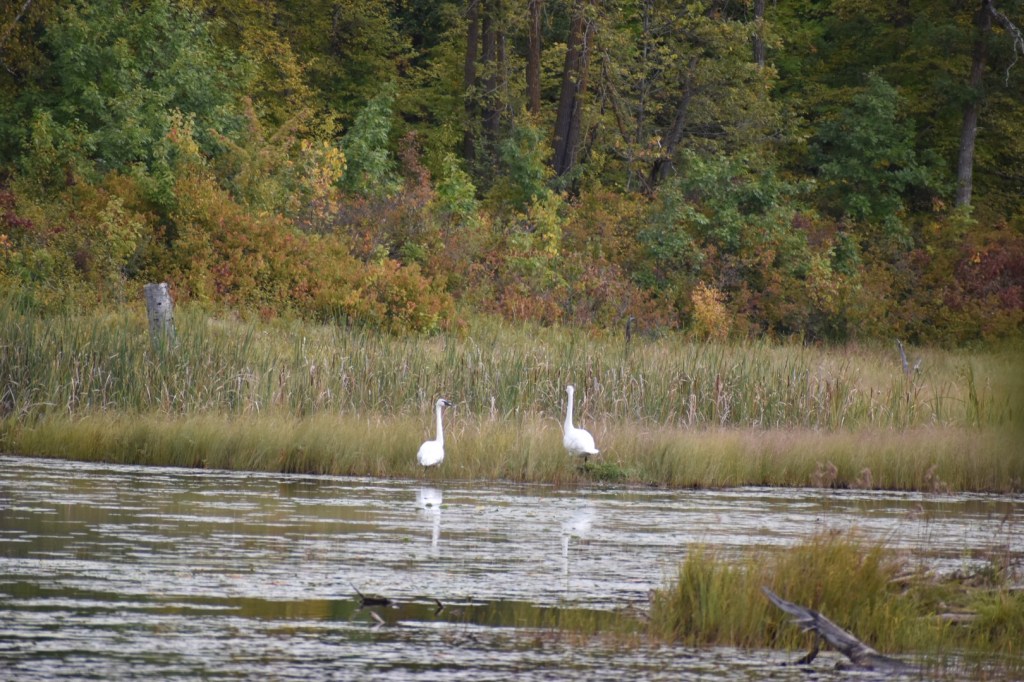
But I also saw a couple geese on Deer Park Lake.
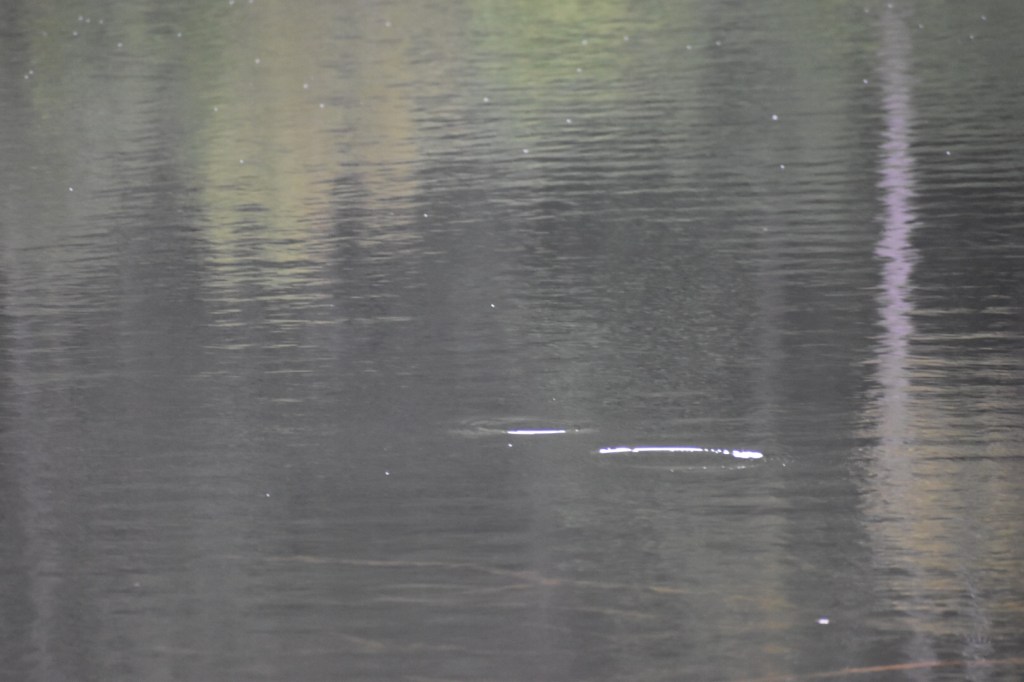
Fallstad Lake was a frenzy of fish feeding activity. You could see places all over the lake where the fish were touching the surface as they were feeding. It was like watching stars twinkling in the night sky. I tried to get a photo, but it’s hard to capture.
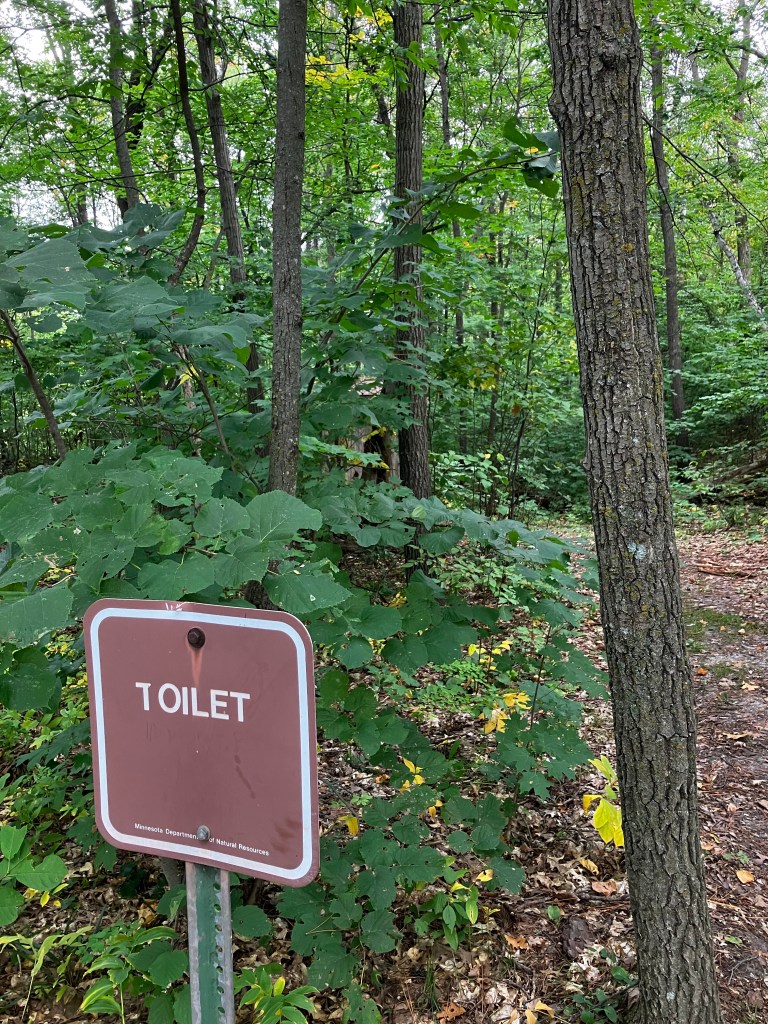
It turns out that the Toilet Family has a tiny dwelling in the park. We passed by their humble abode but decided not to pay a visit.
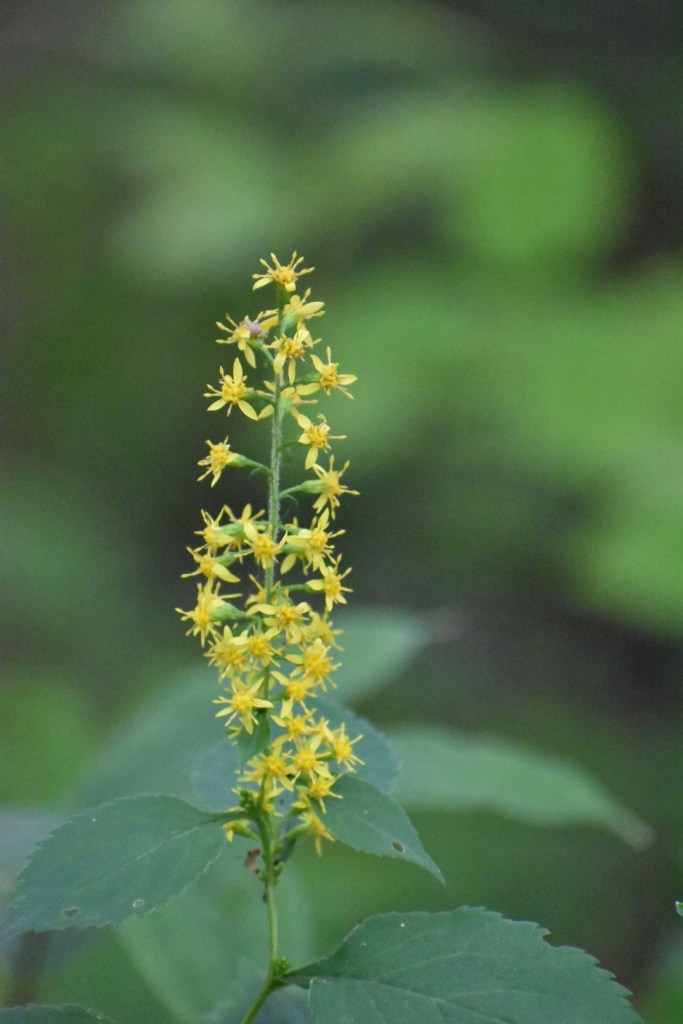
We’ve seen several different species of goldenrod this time of year, the most attractive of which is called zig-zag goldenrod. I have nicknamed it ZZ Gold. But let’s play the Henry Schoolcraft game and take it one step further. The Latin words are “obliquum aurum,” so the HS technique would render it “quumaur.” I guess not. ZZ Gold it is!
The last lake we passed was Coffee Break Lake. Who gets to name all of these lakes anyway? I know a lot of coffee drinkers who would appreciate that one.
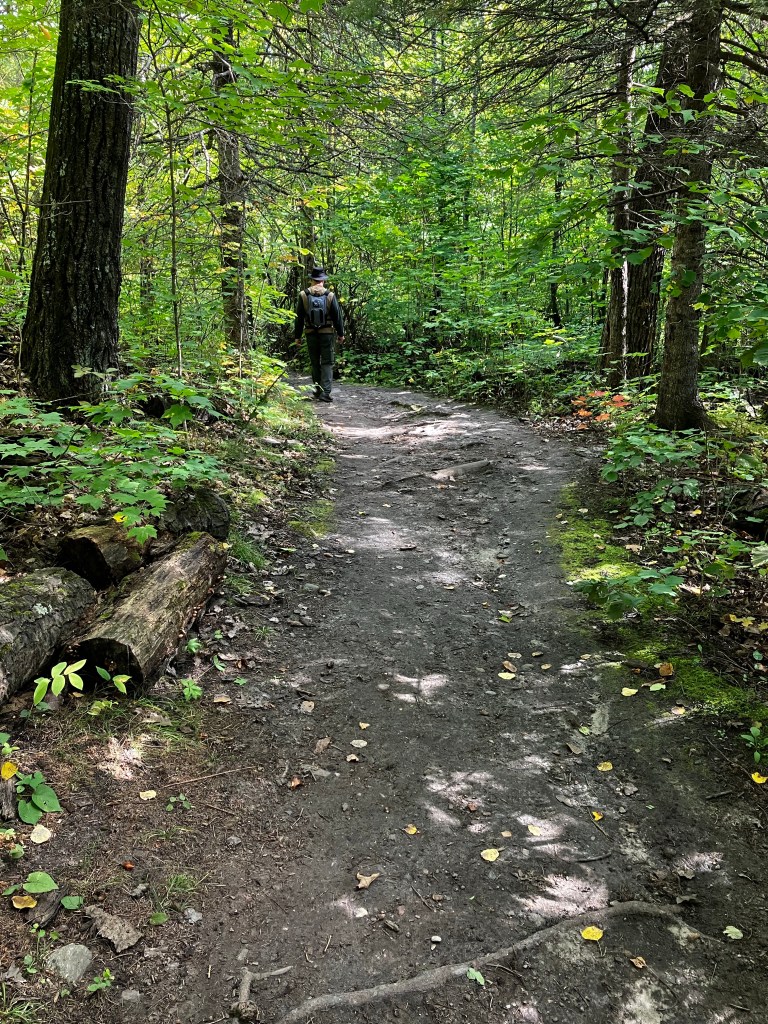
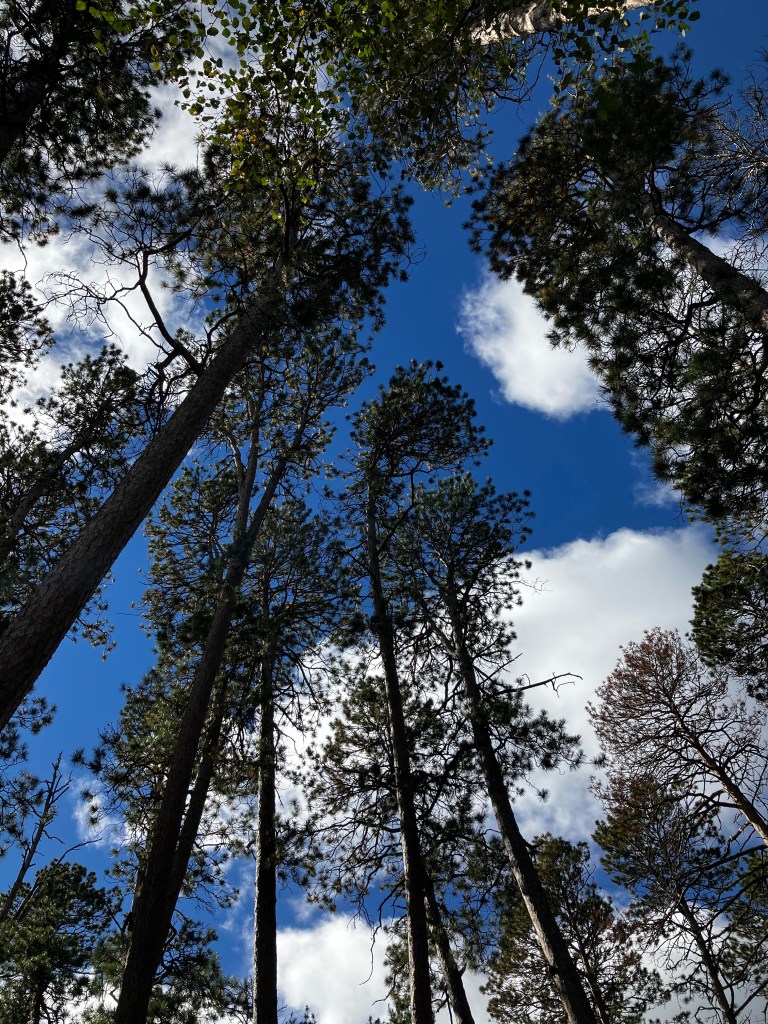
We finished the hike in just under 2 hours and due to the cooler weather, it was a lot easier on the weaker vessel.
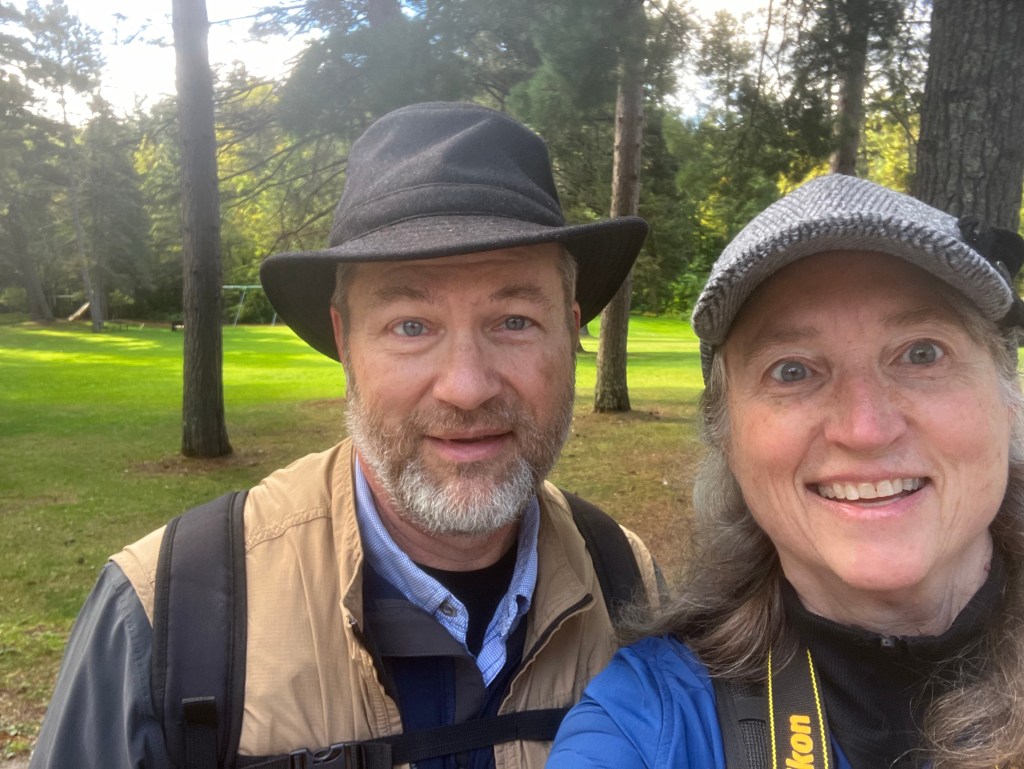
Knee score: 6 on a scale of 1-10 (equivalent of 14 flights of stairs).
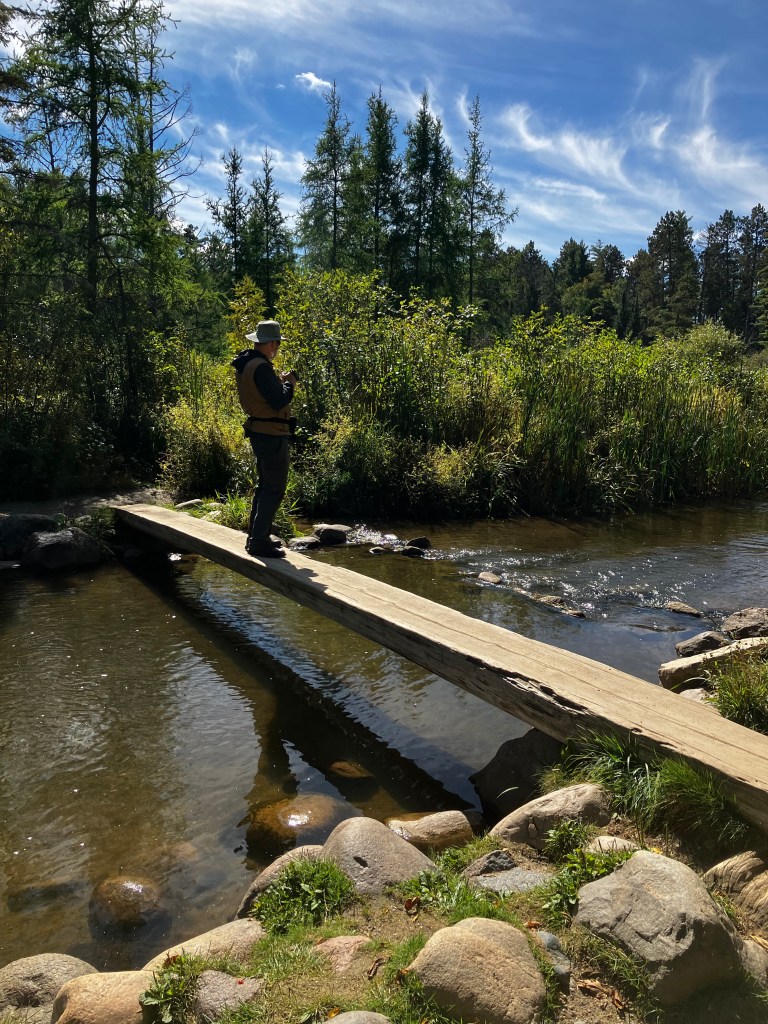
But that’s not the end, no sir. You don’t think we’d come all this way and NOT go to the actual headwaters again. We put our tourist hats on and got ‘er done. From this little trickle of water, a mighty river is born.
If you can tell me where the Blog Headwaters are, I’ll take a photo and delete this post.
Next hike: LaSalle SRA

 Lynniebeemuseoday
I love going (vicariously) on these trips with you and Kris!
Thank you for taking me along! 🙂
LikeLiked by 1 person
I’m always pleased to know when someone is coming along with us on these hikes through my blog. Thanks!
LikeLike