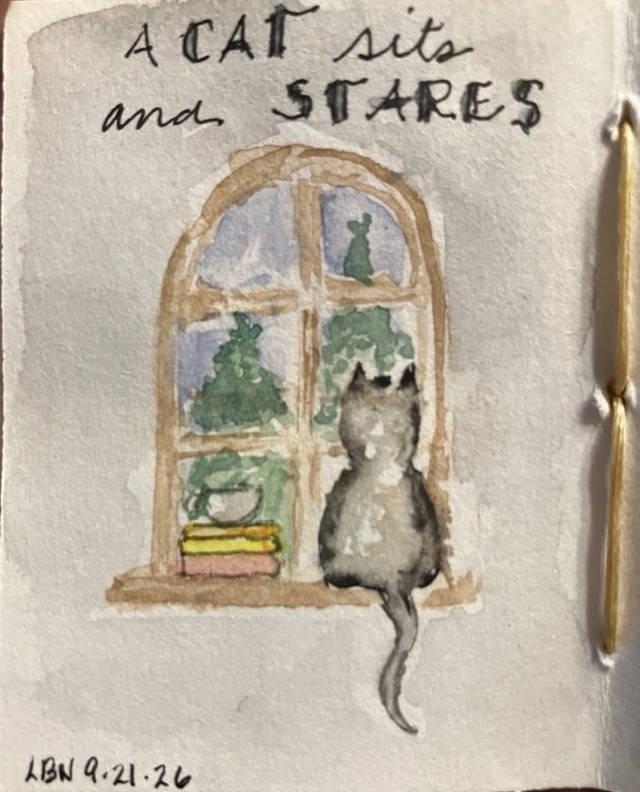
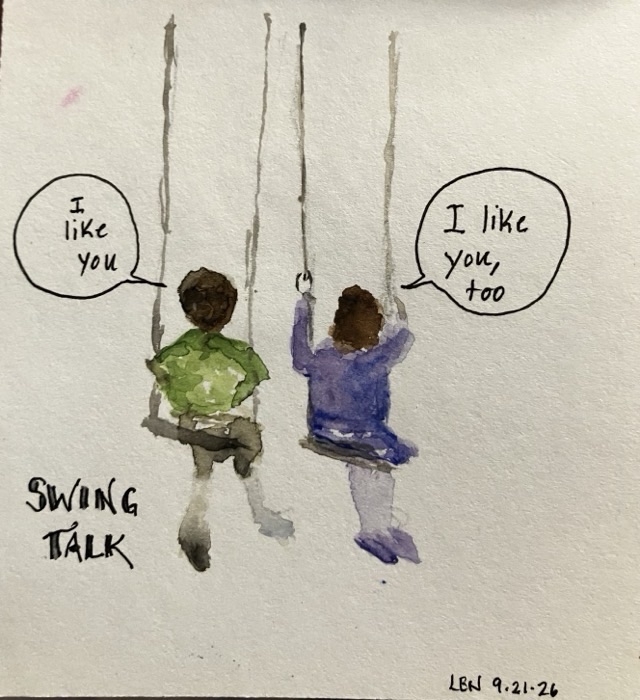
To set things straight, the comma in the title is important. The cat is not, in fact, swinging, as you shall see.
To be honest, sometimes I wonder why I bother with trying to paint at all. This was one of those weeks. I’ve been thinking lately about taking watercolor painting lessons from an actual person, rather than trying to learn things from Pinterest and YouTube.
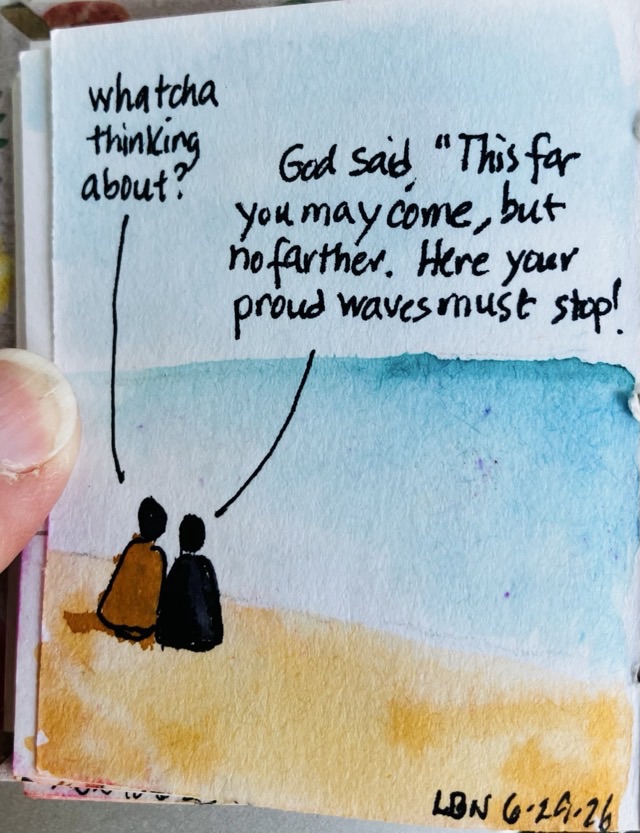
I dipped into my Tiny Art books recently and here’s what happened:
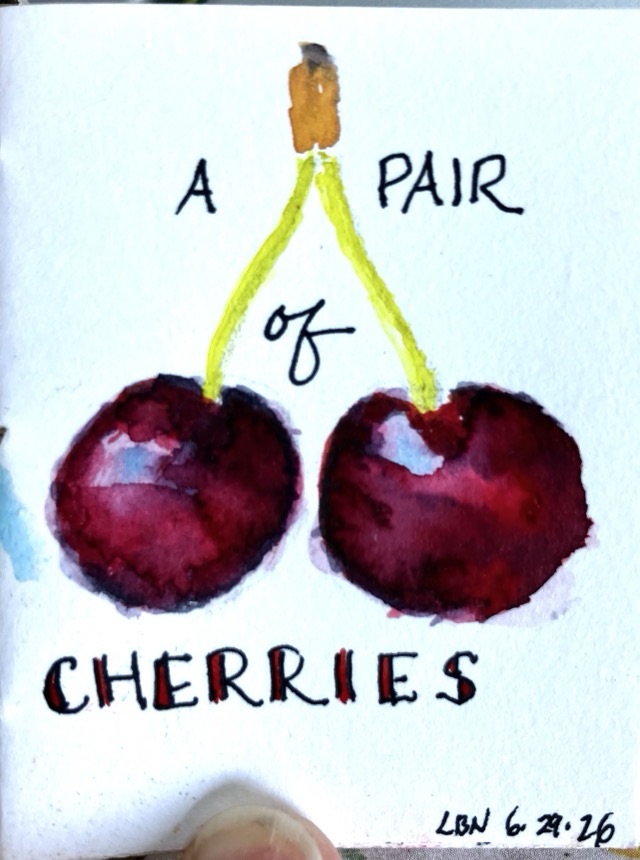
And this:
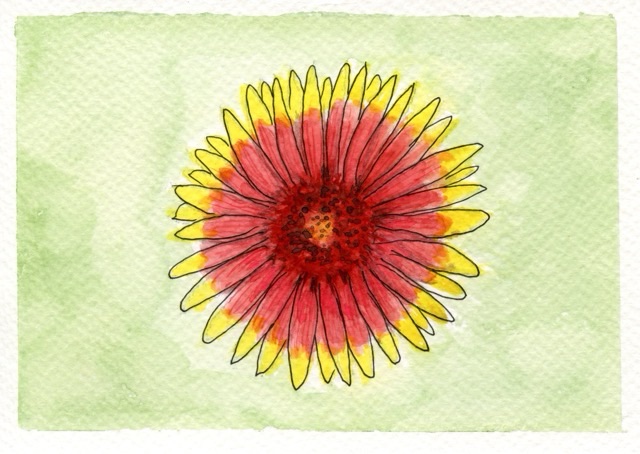
Then I tried my hand at painting from a photograph. The original flower was just exquisite, something that makes you say, “Of course there’s a God! Isn’t it obvious?” I’m afraid my painting doesn’t do it justice.
Are you still reading? Today, I feel that your attention is more than I deserve, but I thank you. Truly I do.
These two things have no point of intersection, by the way, in case you were hoping for an essay in which the fashion rules of striped ground squirrels was in the offing.
First, fashion rules. On some level, it seems like one should be aware of these things, but I have remained embarrassingly unaware. About 10 years ago, someone let slip to me that we are not supposed to wear white before Memorial Day and after Labor Day. I feel a little haunted by that revelation. In my ignorance I could wear white whenever I felt like it, but now, having received the Law of Wearing White, I am aware of and accountable for this Fashion Sin. Today someone told me that she wouldn’t be able to wear neon green very much longer because of the time of year. Okay, not that I’ve ever had neon green in my wardrobe, but what’s that about? She also told me that the Law of Wearing White includes white shoes. What?!? Please don’t tell me anymore.
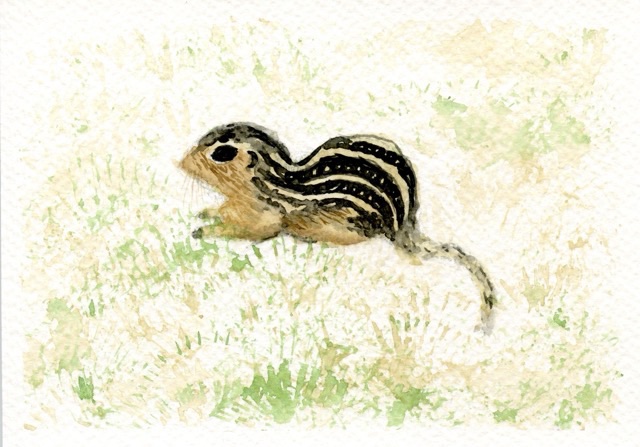
Now for the striped ground squirrel, my latest postcard painted from a photograph I took a month ago.
I call him “Stripey Guy.”
If there’s a fashion rule about deleting blog posts, I don’t want to know about it, because I’m used to doing it in the morning.
Hello, friends! I have a question: didn’t summer just start? I turned my head for just a moment and it sped past in a blur. We’ve had a busy summer in all the best ways and I am, as always, ready for the beautiful days of autumn to be upon us.
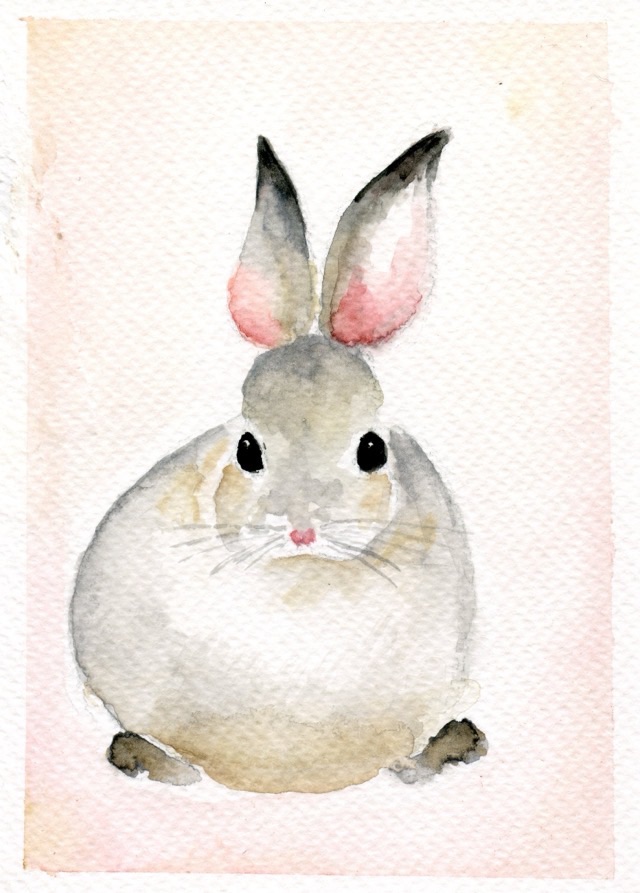
The workshop has been a bit barren. Lots happens in my head, but I have little to show for it, except for this sweet little bunny:
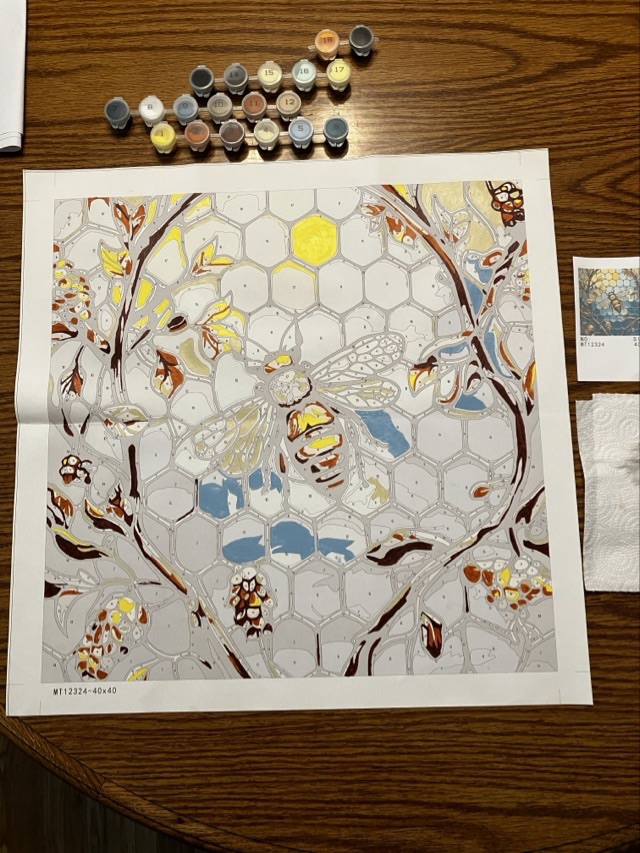
And progress on the Paint-By-Number Bee:
I started the PBN Bee in January before my surgery and it has lain fallow until recently. I want to finish it before Christmas, since it was a Christmas gift.
Bee and Bunny Are awfully funny. Bunny and Bee Are friends, you see.
Bee gives Bunny All the best honey And Bunny gives Bee Her best willow tea.
Honey in tea Bunny and Bee All go together Most happily!
Until I wrote the first line, I didn’t even know a poem was on its way, and *whoosh* there it was! I call that a kind Providence.
The blog by me Will have to be Deleted in the morning Most happily!
We finished hiking all of Minnesota’s state parks back in September of 2023. Has it been almost three years already? As it turns out, we finished just in time, with various joints and limbs showing their age now (mine, not my husband’s – he’s still a spring chicken as far as I’m concerned).
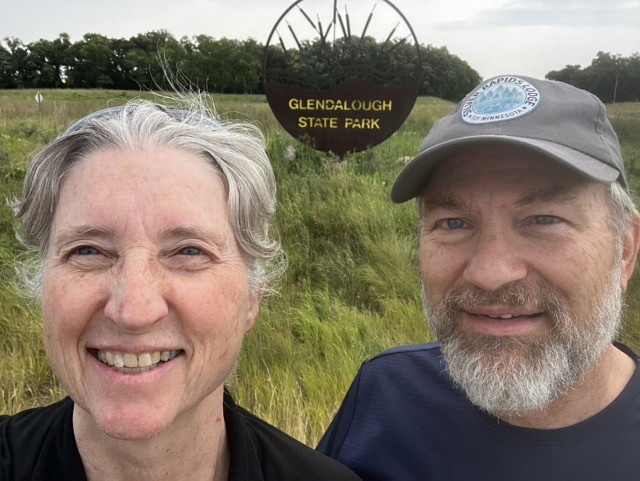
One of the parks that we felt calling us back was Glendalough. Glendalough State Park Hike 2021 We had hiked it in 2021 and could see bikers whizzing around on the part of our trail that met up with the paved biking trail. “Let’s come back here and do the biking trail!” one of us said. And the other agreed. It would also give us a chance to try e-bikes again. I had not been impressed with my first outing on one of those a couple years ago in Flagstaff, AZ. Renting e-bikes in Flagstaff 2024
The last park of our five-year adventure was Maplewood State Park, which is not far from Glendalough. Maplewood State Park Hike 2023 We had our camper with us this time and with no places for RV’s at Glendalough, we planted ourselves last week at Maplewood, another beautiful park. Here are just a few photos from our camping trip.
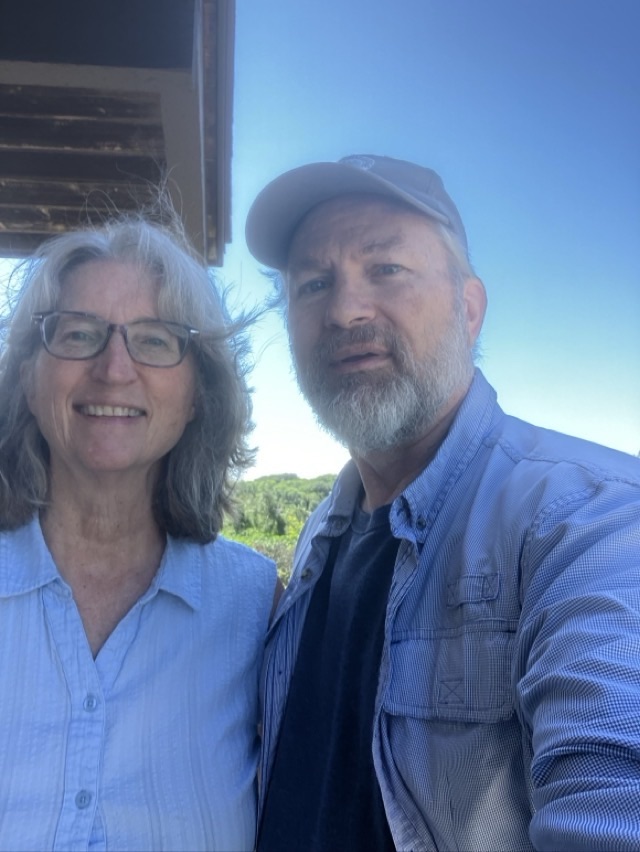
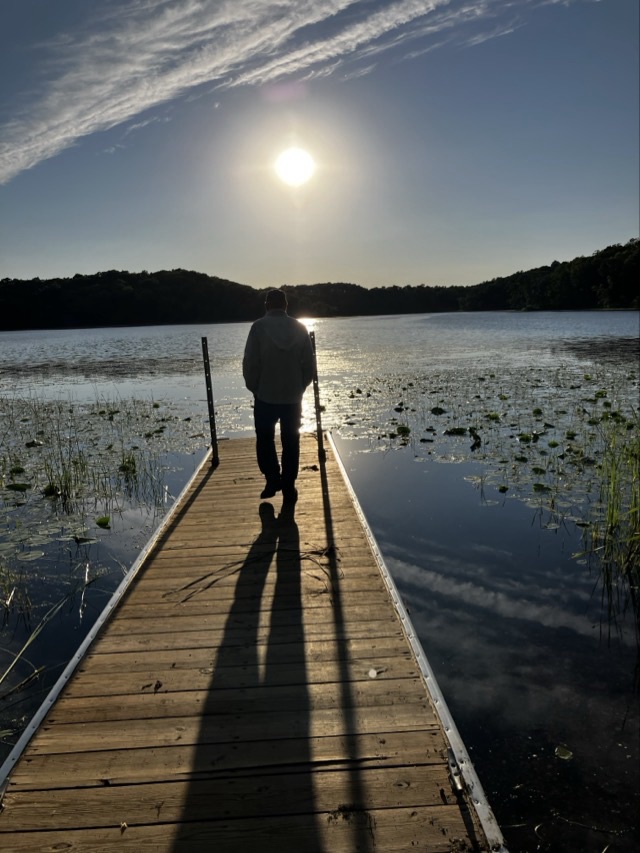
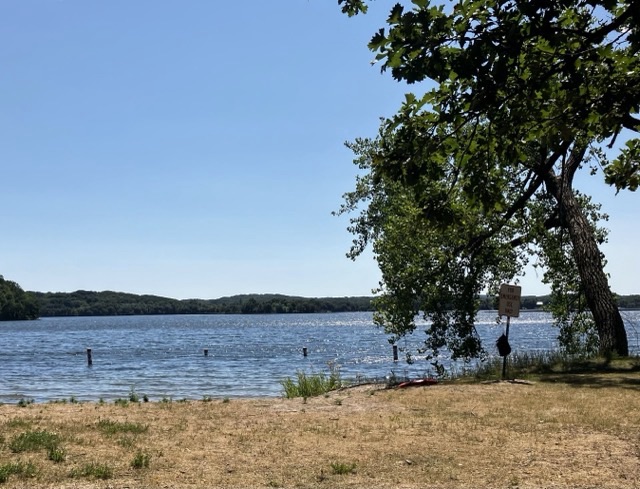
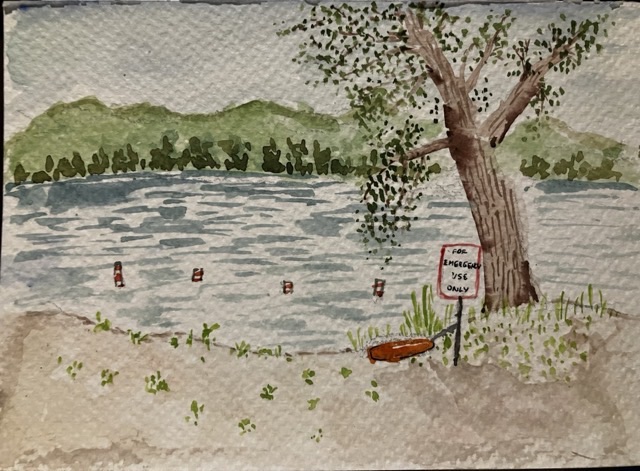
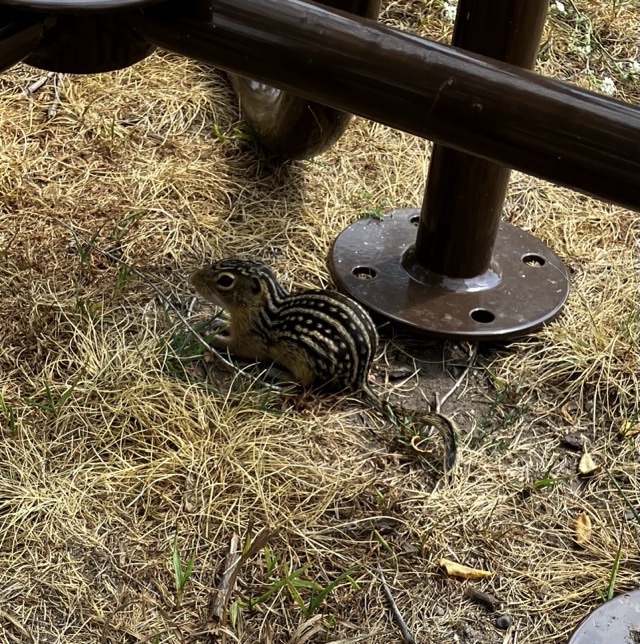
Here we are again, three years later!We’re standing in the same place as when we finished the Maplewood hike in 2023, our last photo.Our campsite was fairly close to Grass Lake.What’s a camping trip without a campfire? We indulged in a campfire all three nights. Ahh…On day two, we drove to Lida Lake which is in Maplewood State Park. I tried my hand at plein air painting. Had to use a shell to hold the water because I forgot to bring a cup.The scene in front of meThe painting, with some artistic license. Day 3: Back to Glendalough after six years. I loved their cattail sign.There they are – the Townie Go e-bikes we used. It was a wonderful experience! I’m glad we gave e-bikes another chance. These were lighter and simpler to use.And to cap it off, a striped gopher that we saw after the bike ride.
We also met old friends at the park for a cookout over the campfire: hot dogs, various fruits, chips and salads plus…you guessed it: S’mores! My family made them differently than everyone else when I was growing up, a fact I did not know until my late teens. We made ours with peanut butter on saltines, topped with a marshmallow, which we popped into a broiler. Fabulous! I love the salty sweet combo. Our friends brought some dark chocolate, which I have to admit improved the experience. Yum! No photos though – our hands were too sticky for handling cameras.
I’m going to have to delete this post with sticky fingers in the morning.
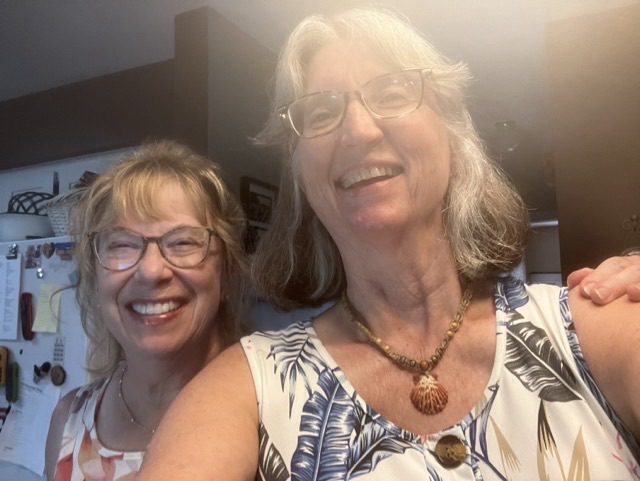
I was taking a stroll through Pinterest and became enamored of the things people were doing with their dried flowers and leaves. I’d been making bookmarks by randomly strewing them in laminating pouches and running it through the laminator. I liked how they turned out. But now there was a whole new game going on. Clever people had used different elements of flower petals and leaves to create wonderful images. I had some dried flowers and leaves left over from last year and thought, I bet I can do something like that. I invited my friend Barb over for this adventure and we got to work. I showed her some of the different designs and we chose a flower fairy, thinking it didn’t look too hard. We were wrong.
For one thing my dried things were so dry that they were brittle and hard to use. In addition, as we were placing them on our paper, every time we breathed, they scattered. We decided we needed to put a little glue on each piece while placing it. This was when I discovered that my friend Barb is glue-challenged. It turns out that she’s had a bad relationship with glue for many years. In her hands, it seems to find its way to everything but the thing that she wants to be glued. She told me of a time when she was using super glue, and ended up with several things being super glued to her fingers. We went ahead with our project, but it was a trial to her.
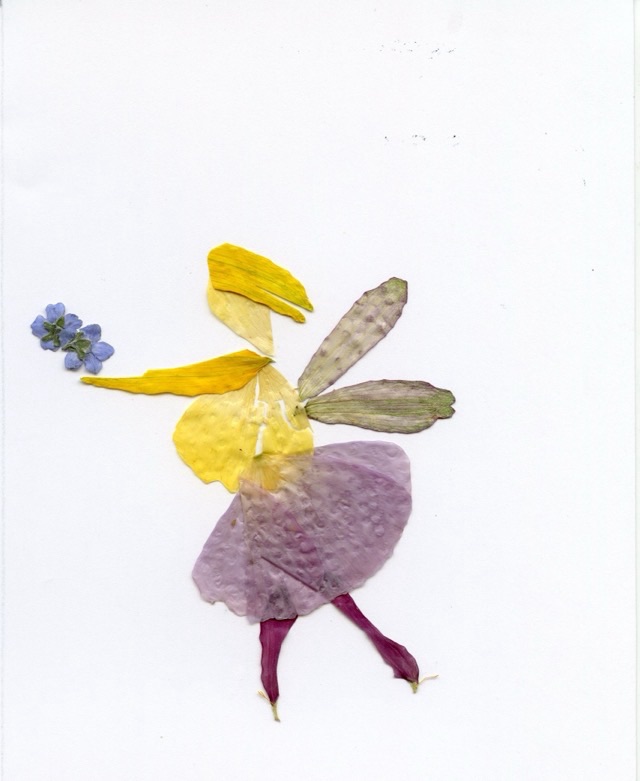
The Pinterest flower fairy was so charming and delicate. Her hair was a poetry of thin petals curling away from her head, and her face was well-formed. Her figure was trim. Her skirt was flowing and her wings were sheer and lacy. The bouquet she held out was lovely. More flowers grew out of the grass at her feet. Our supplies were meager, so we had to make do with what we had.
In the end, I had a flower fairy. Her hair was an unfortunate stiff thing that looked like she’d been caught in 20 mph winds. She turned out rather buxom as well, nothing like the lithe sprite in the original. Her bouquet was just two little flowers with no holder. However, I thought her legs and feet turned out quite well. Here she is:
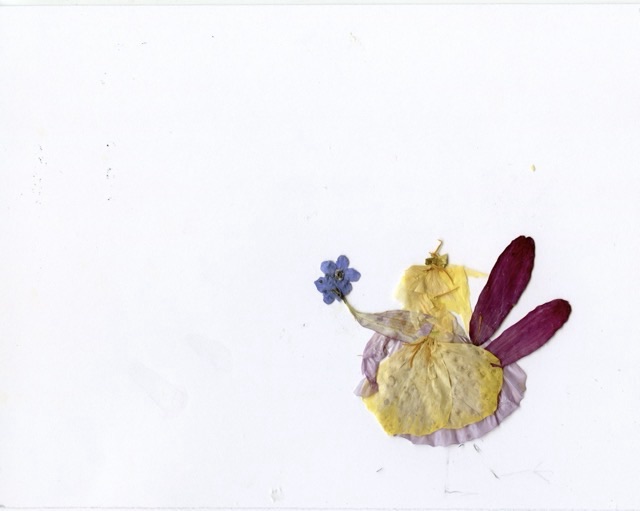
And below is Barb’s flower fairy, who ended up with somewhat of a mop head and a matronly body, but is still presenting flowers with an attractively slender arm. I love her wings, bold and purple! I think her legs must have come off at some point, but we can pretend that she tucks them under her skirt while she’s flying.
When I see our flower fairies, they make me laugh and give me good memories of a laughter-filled afternoon with a good friend. By the way, I didn’t actually ask Barb’s permission to share hers on the blog, but I can’t IMAGINE she’d say no. 😬
I’ll probably have the Flower Fairy delete this in the morning. She might as well have something useful to do.
It’s our last day at camp today. My husband will be busy with projects until the last moment, but the week turned out quite differently for me than the one I anticipated. Instead of slaving away in the kitchen, I’ve had a lot of free time, most of which I’ve spent sitting down. Yes, the word you’re thinking of is “sedentary.” The most active I get is often when I walk from our camper to the dining hall for a meal. Or sometimes I walk over to the lake and sit, enjoying the breeze.
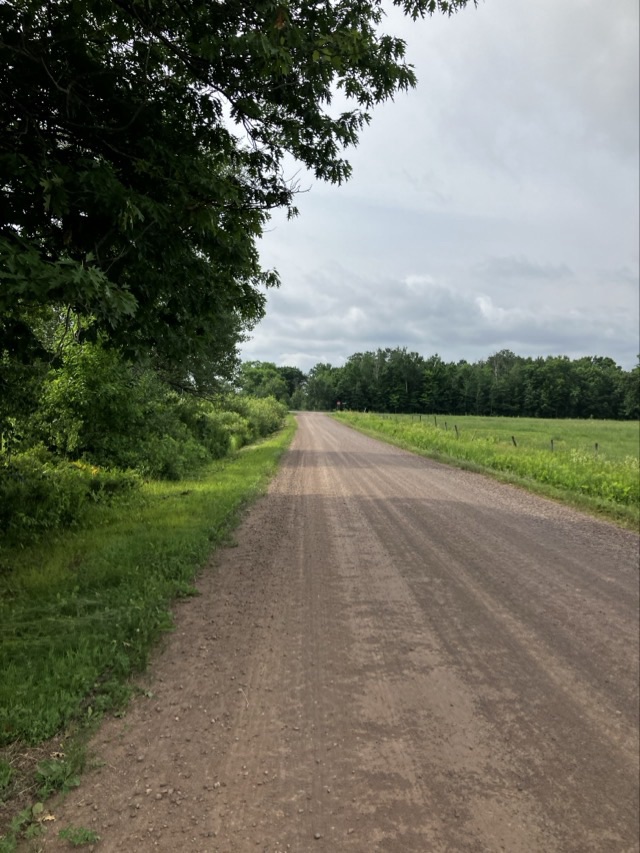
I actually went for a real walk today, though, down the dirt road leaving camp and out on the paved road leading to the highway. It was very “yoo-meed,” which is French for “humid.” It was the most mileage I’ve put on the new knee in one go since I got it: 1.75 miles. Seems paltry, but it’s not.
Our camper has AC, for which we are very thankful. Even so, most of the time I sit outside, acclimating myself to the temperature while I read through books, pencil in hand. I like to underline as I go, making occasional remarks or inserting a heart or smiley face.
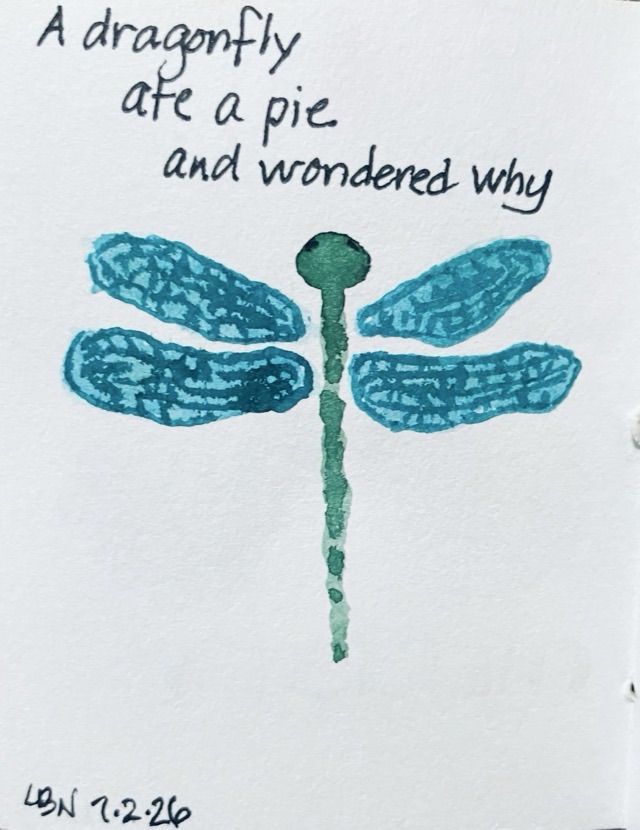
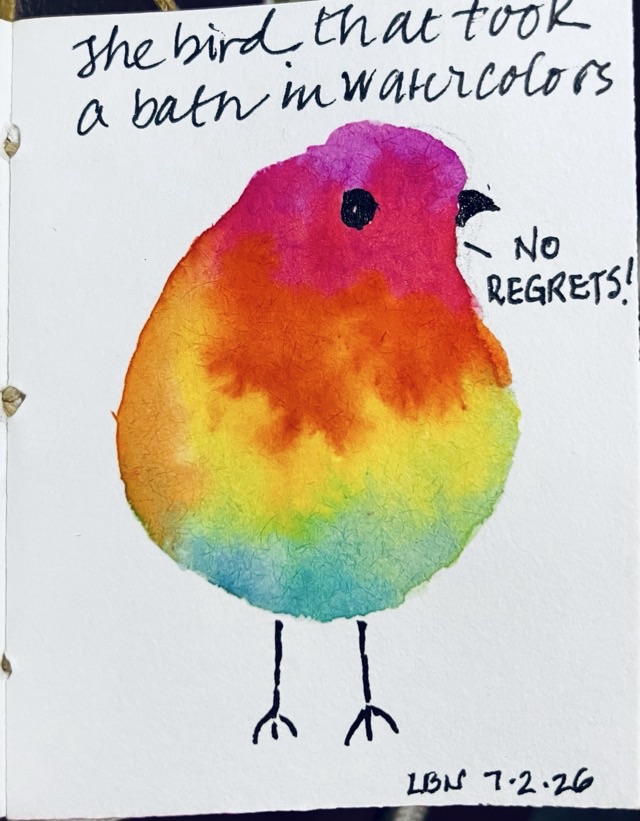
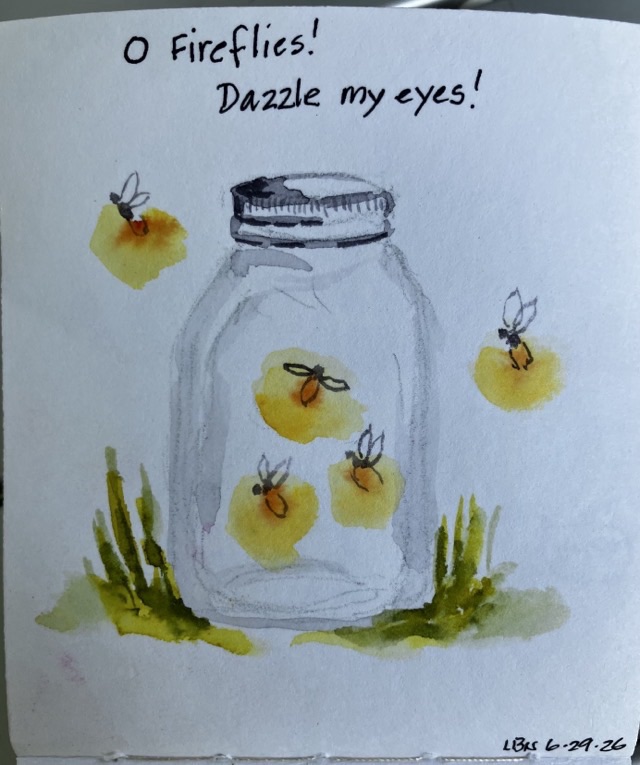
I’ve also continued to do some painting, trying to get the most out of my limited palette. Two more tiny art paintings have emerged (copied from Pinterest) with my signature droll commentary on them. I even wrote a tiny poem to go with one of the tiny paintings!
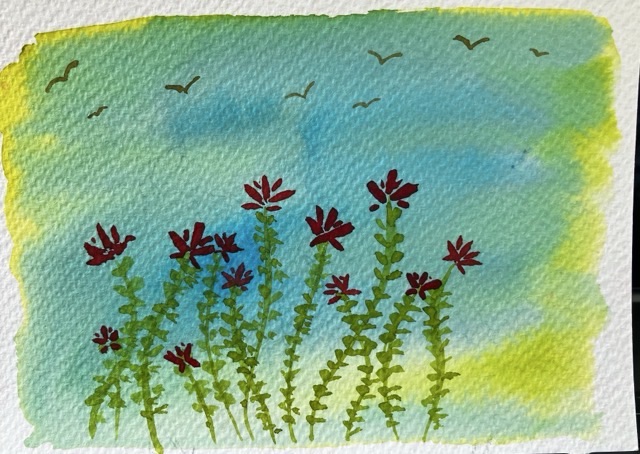
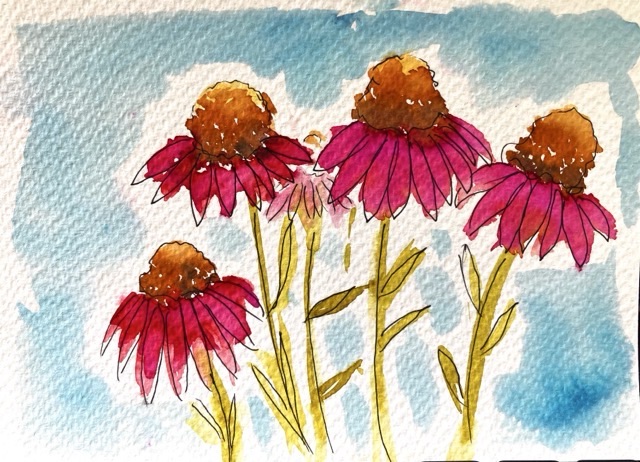
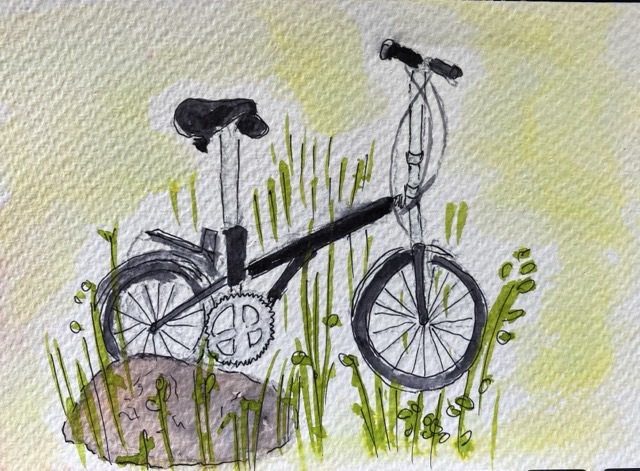
My sister gave me some postcards made of blank watercolor paper; I threw those in with my little bag of wc supplies and now unveil for you three of them that I did this week. Perhaps one of these will make its way to your mailbox – you never know!
That last one of the bike is what happens when I decide to go wild and paint something that is right in front of me, rather than copying something on Pinterest. Think of it as a primitive Grandma Moses painting to make it seem better than it is.
I made a discovery last night that completely derailed me: you can now make collages on Pinterest! Suddenly nothing else mattered. I kept making more and saying to myself, “This is my last one.” Here’s my last one (for now):
Isn’t it charming? I am stupidly excited about these, even though they serve absolutely no purpose. An intervention might be needed.
Thank you for coming along with me this week, and my apologies for not having more interesting fare to dish up for you. Don’t give up on me!
I’ll probably collage this whole thing in the morning.
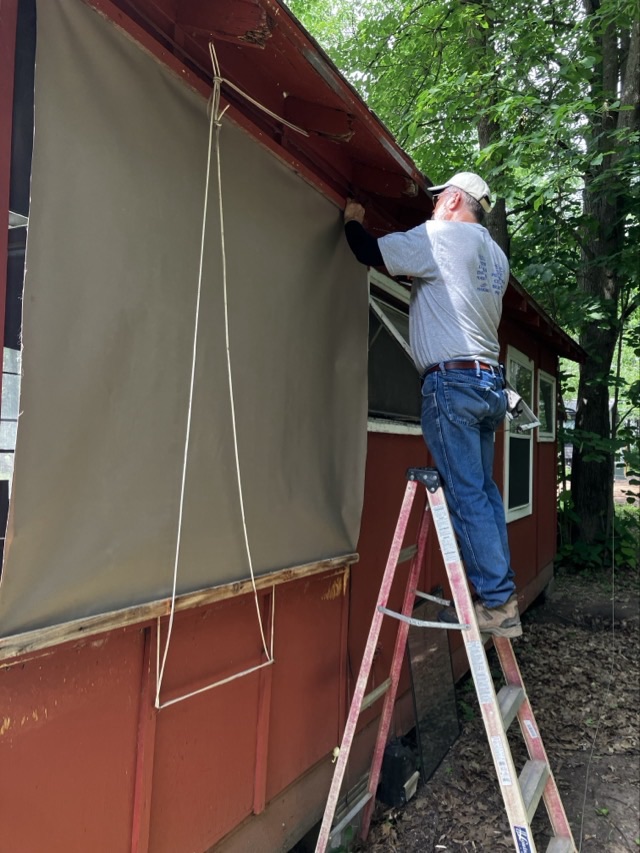
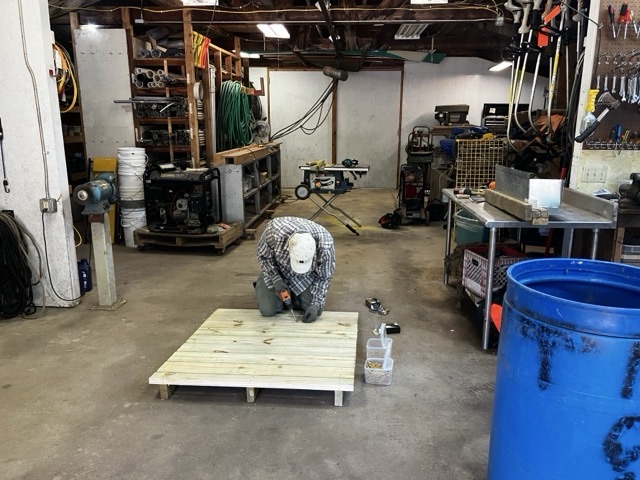
Up here at camp, my husband has been busy working on various projects that have been set before him. He’s quite a handy guy and has been up for the challenges of making a wooden ramp, cutting and bending a sheet of steel to fit a certain area in the kitchen, and today replacing some lights in the wash house.
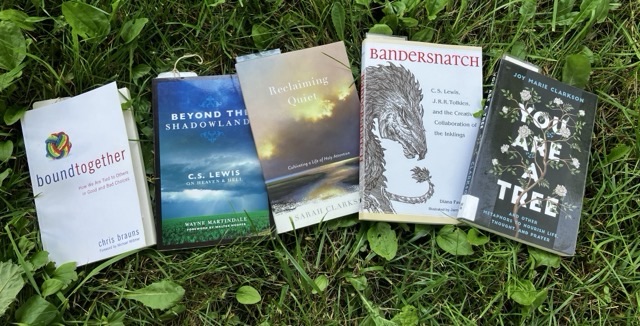
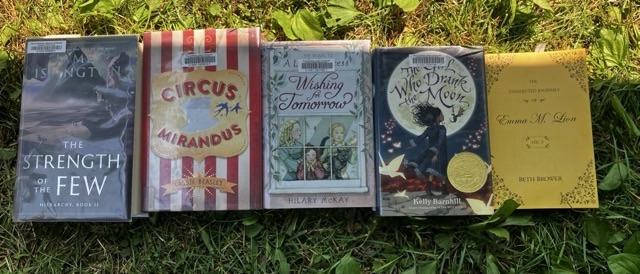
My work has been of a different nature. I brought a lot of books: five non-fiction books and five fiction books and have been making my way through a few of those every day.
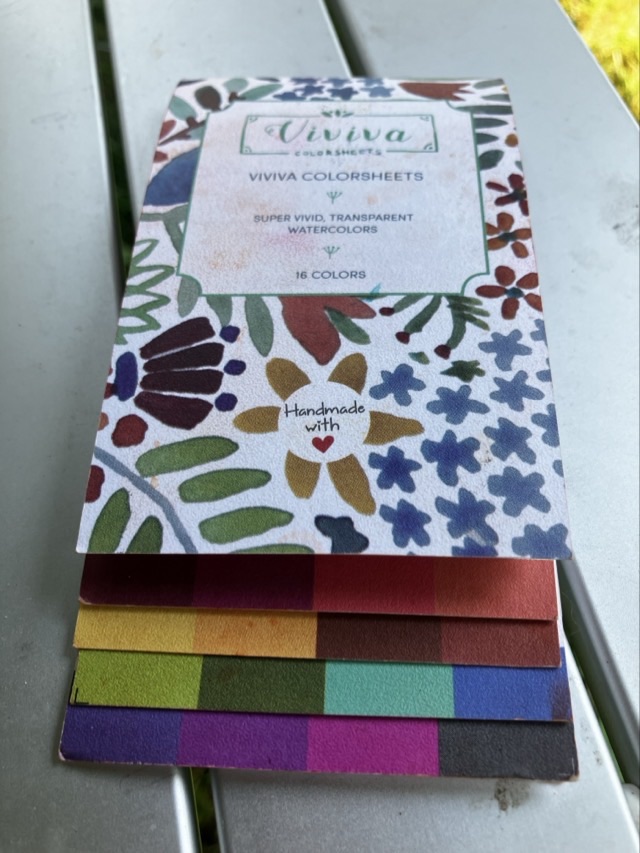
I also brought a small assortment of painting supplies. I almost didn’t pack them because so often I bring something and never use it. I have a flat paint packet for traveling and have given it a good workout this week.
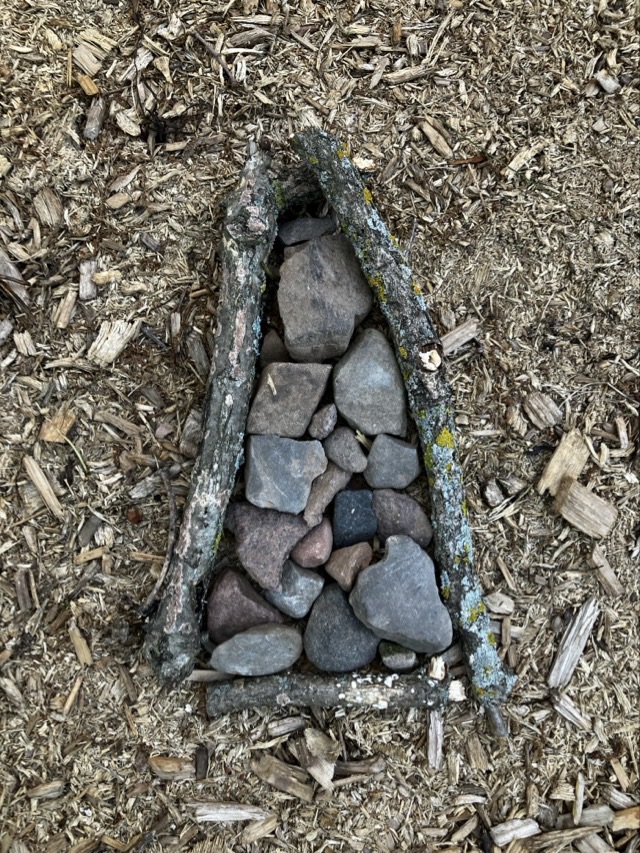
I do a little walking around here every day and made time yesterday to put together another creation of sticks and stones. I haven’t checked to see if it’s been destroyed yet.
I’ve had time to do some writing, thinking, and praying. I found out this morning that they’ll be needing my help in the kitchen for the supper meal. I feel less confident about this, but I am assuming that the guys in the kitchen will give me plenty of instruction.
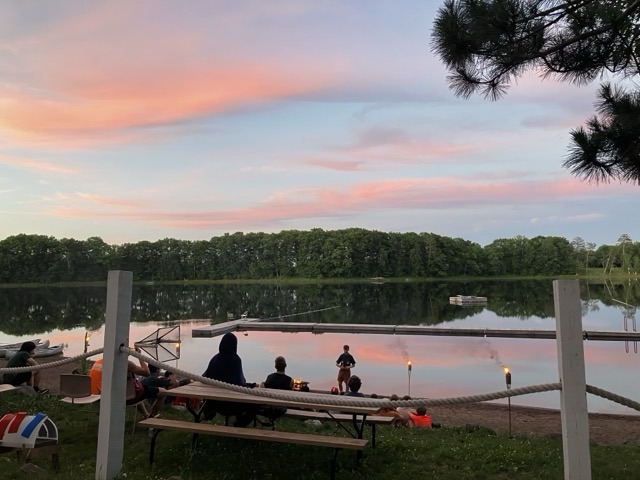
We meandered over to the campfire by the beach last night. There was singing of silly camp songs, a funny skit, some spiritual songs, and then one of the young men told a story that ultimately symbolized the sacrifice of Christ for our sins. He prayed and they all sang “I have decided to follow Jesus.” The sun was setting and the reflections on the lake were beautiful. It was a good day, and a good end to the day.
I’ll probably throw this in the lake in the morning.
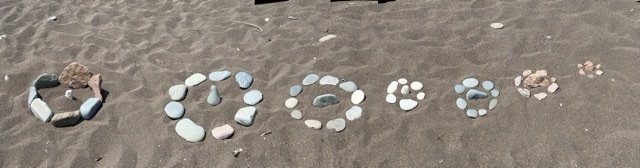
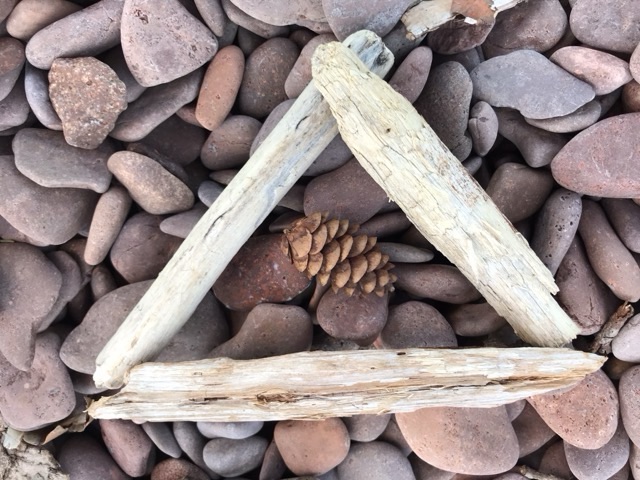
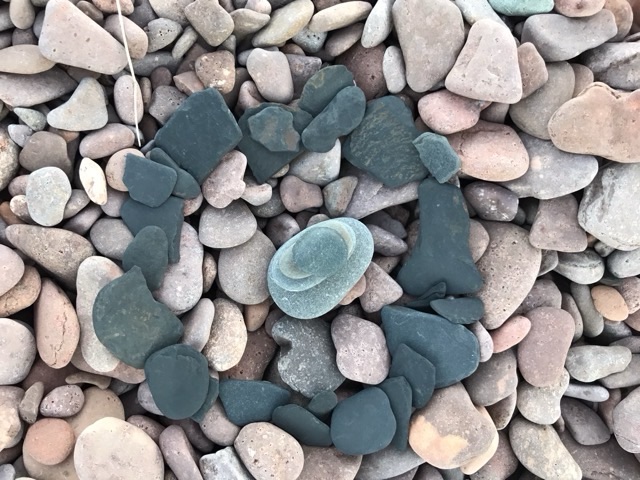
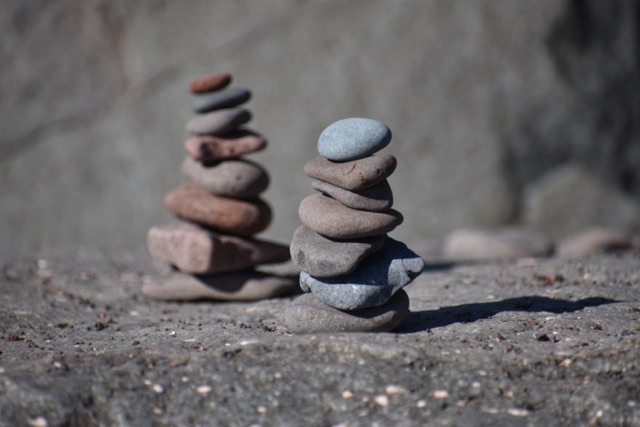
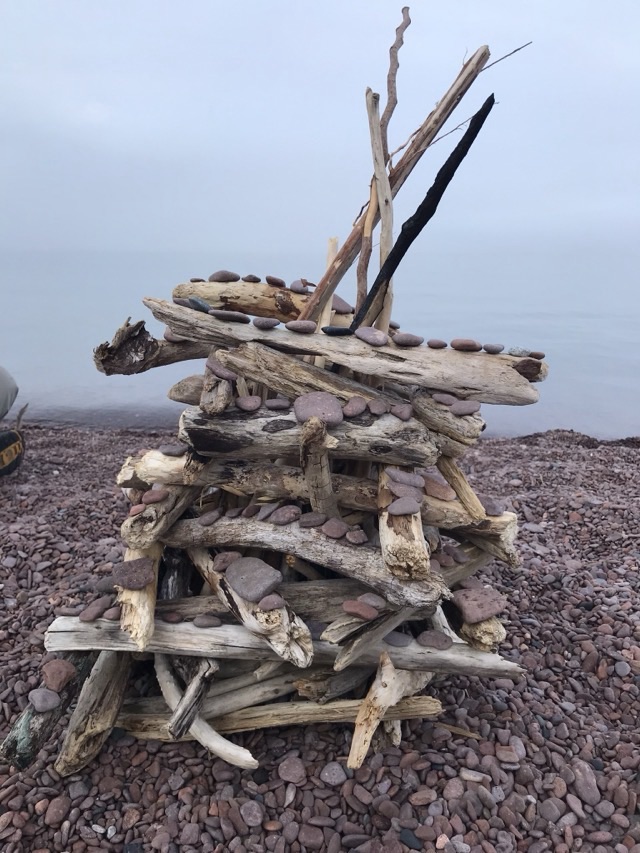
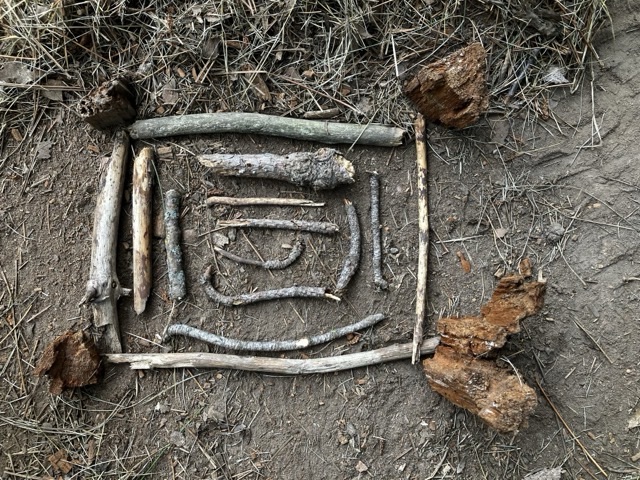
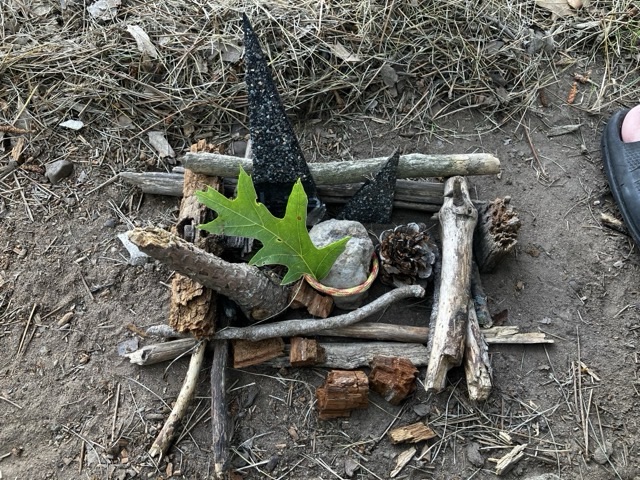
I play with sticks and stones. Sitting on a beach, out in the woods, wherever sticks and stones reside, I pick them up and rearrange them. I don’t remember when I started doing this. Was it when we took the kids on camping trips? Was it in my childhood? Whenever I started, it has become a happy compulsion, especially when I am away from home and time is unbound from my usual routine.
Last year when we were up at Grand Marais I ran back and forth like an excited child gathering up stones that I found especially pleasing. I placed them thusly:
Sometimes my compositions are quite simple:
I built an amazing edifice out of sticks and stones in Grand Marais once but I couldn’t find a photo. If I find it, I’ll let you know. (Later: I FOUND IT! Or rather, hubby reminded what year that was and THEN I found it.)
I don’t often have a chance to go back later and see what has become of these momentary rearrangements in nature. The conceited part of my soul (which is vast, indeed) likes to think that when people come across them they ooh and ahh and instruct their children to leave them as is. “Look Mark, look Sally! Someone has created these artful arrangements in the wilderness/on the beach. Don’t touch them! Let’s preserve them for others to enjoy.” Yes, that’s the kind of silliness my mind conjures up in unguarded moments.
Here at the boys’ camp, I have discovered the reality of the thing. I made a simple little construction out of sticks on Sunday and it was rent asunder within hours. I made another one this morning which met with the same fate in less time.
I have decided to take this as a challenge. I don’t think I’ve been seen while constructing, and I have not seen who’s been doing the destructing. I shall continue in my efforts and see what happens. The game is afoot!
UPDATE! I was working on my next Work of Art (which is what any Sticks-and-Stones Artist would call it), when a gregarious boy came and sat next to me on the bench chatting me up. We talked about all manner of things: the candy he was eating, his attempts at fishing, where he hoped to go with his group for the cookout that evening, etc. (O Lord of Little Boys, thank you for sending this fellow over!) He didn’t appear to notice what I’d been doing, but a red-headed friend of his meandered over and saw it right away. “What’s that you’re making?” Red asked. “Cool!” said Gregarious Boy, “Can I add to it?”
“Sure!” I said, as GB put an acorn cap on the top of a stick. The SAS Artist approved.
“What if I kick it?” asked Red, “Would you be mad?” He had a look of mischief on his face that I recognized as a mother of five boys.
“Not at all!” was my cheerful reply, “I’ll just make another one.” Privately I was thinking So YOU’RE the one!
Red put his foot out as if to kick it, but changed his mind, apparently unwilling to do it right in front of me. In a moment, the call went out for kids to come to the waterfront to go fishing and off they went.
Oh my goodness, I love those boys! I wanted to give them a motherly hug, but wisdom restrained me. Last time I checked, my edifice still stands.
Perhaps interactions like that are what the Lord brought me here for…. Other than that, I’ve taken prayer walks, praying for the campers and the staff. And I’m doing a fair amount of reading, writing and painting. All in all, this is shaping up to be a lovely week.
Sticks and stones may break this post, but words will never be deleted. Or something like that.
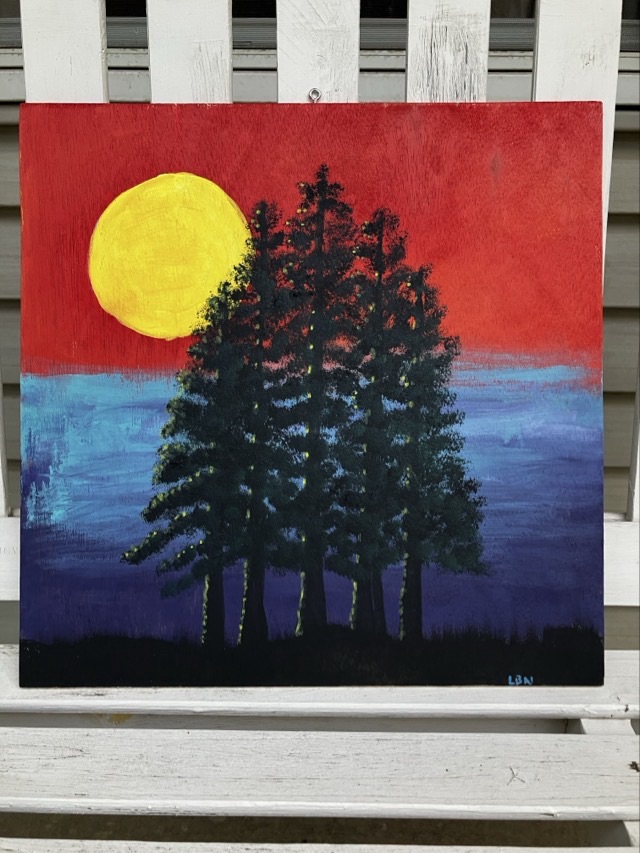
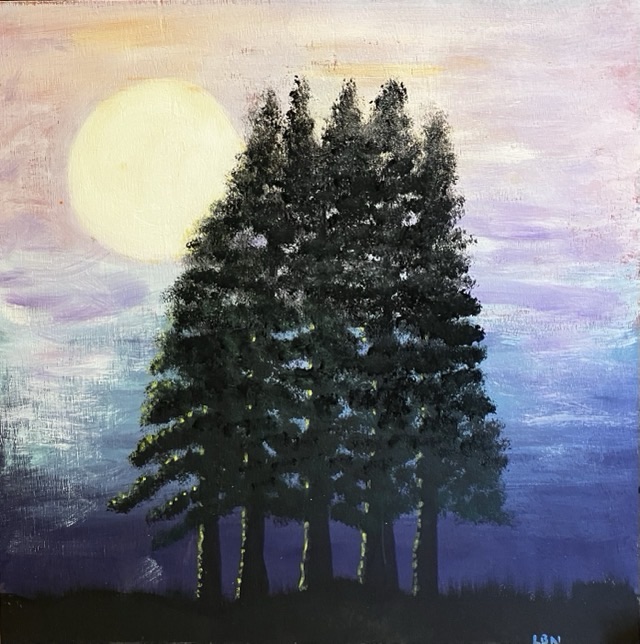
I hosted a paint party recently. It was my job to not only find enough people to come, but also to pick out the painting that we would do. I had about 10 paintings to choose from. They were all nice, and I dragged my feet on the selection. Finally, the event was drawing nigh and I had to choose, so I picked one that I thought was quite striking.
The paint party was lots of fun and I got to know some of my neighbors a little better. It’s always interesting to see how the paintings turn out when you do one of these paint parties. They’re all basically the same subject with the same paint, but rendered in different ways. Still, that striking painting struck me differently when I thought about where to put it in our house. The bright red and yellow in the sky just didn’t fit anywhere here. What to do?
My good friend Teresa visited today and among other things we talked about that painting. She is an interior designer, a skill I do not possess on any level (hence, picking a painting that doesn’t work well in my house).
“Should I just throw it away?“ I asked.
She looked at it thoughtfully and said, “I wouldn’t do that. Why don’t you repaint the sky and the sun? You could put in some more muted tones that would make it more suitable“ The fact that she thought I was capable of this was quite encouraging. I had a few dozen small containers of acrylic paint that I had not looked at nor opened in probably 15 years. Why not?
As soon as she left, I got to work. It felt rather touch and go the whole time. At one point I accidentally spilled a little orange paint in the sky and had to just blend it in and hope for the best. The final result, while not perfect, is a painting that I think I can find a place for on one of our walls. I would not have been brave enough to try it without her encouragement.
That’s the difference that a good friend can make.
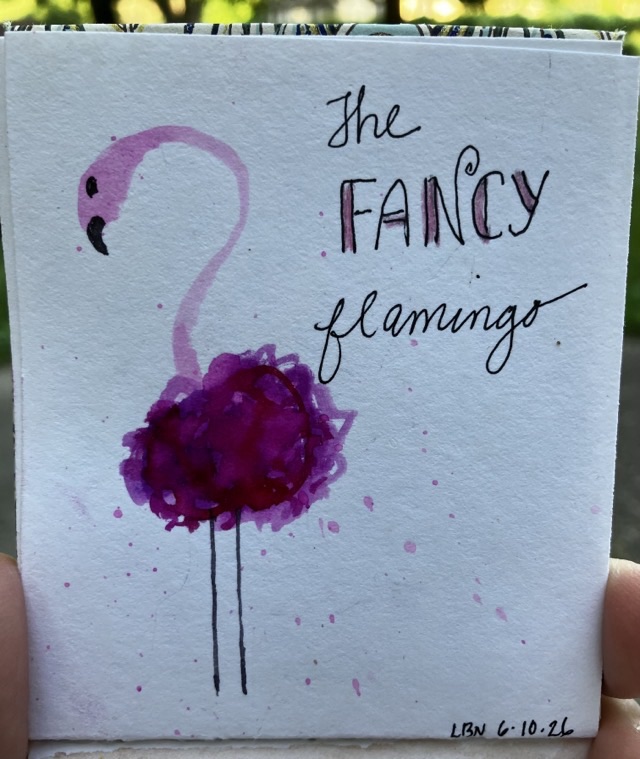
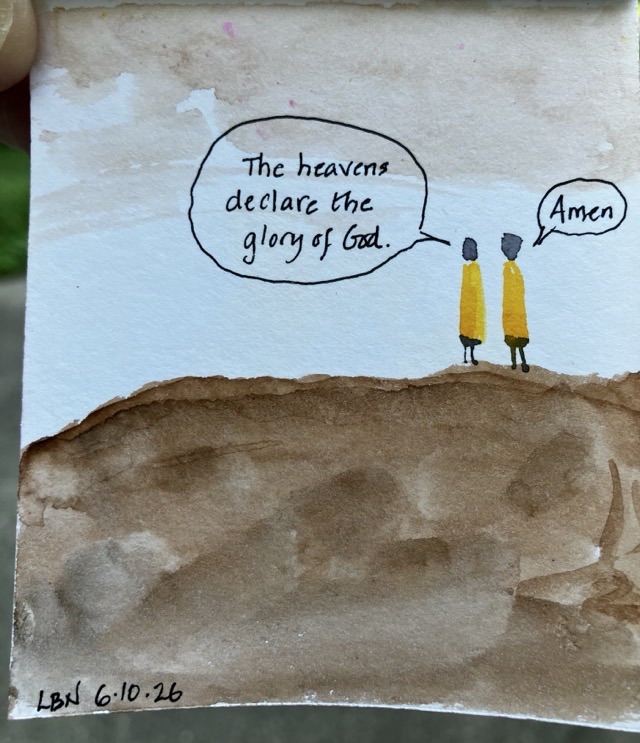
Yes, I finally got out the carefully packed zipper bag of art supplies that I brought with me out West in April, having intended to do some Tiny Art out there. Hope springs eternal, apparently, since I have done this many times in the past and the result was the same as this time: Zip. Nada. Null and Void. But today, the muse struck me like a mallet hitting a gong. Tiny Art Happened.
Quirky flamingo with a serpentine neck:
This is the truth:
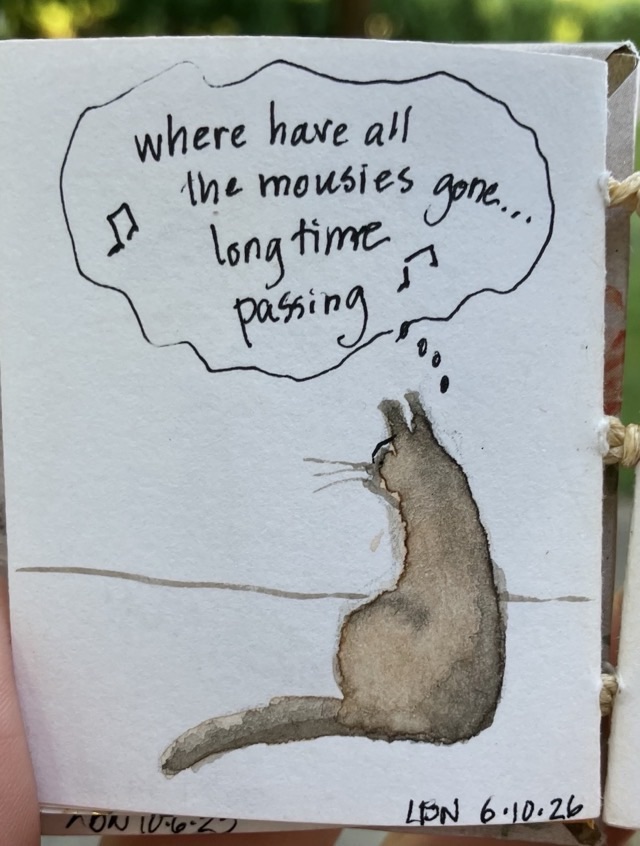
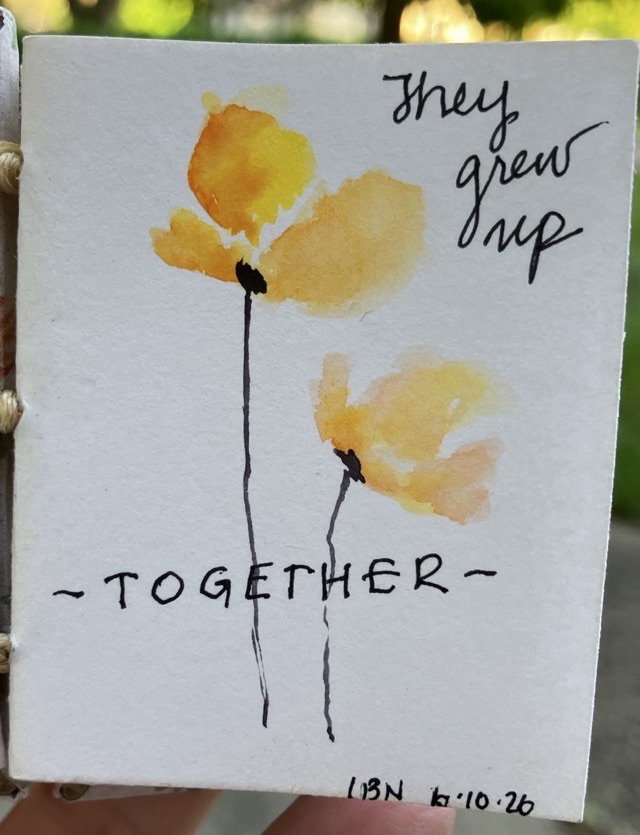
You’ll only get this next one if you know the song “Where have all the flowers gone?” If you do, you’ll be singing it for the next few hours – sorry.
Flower siblings:
And now you know what happens when inspiration strikes! Full disclosure: I copied all of these from art I found on Pinterest. But the words, as always, are mine (for what that’s worth).
Where have all the blog posts gone…long time passing?