Henri Emile Benoit Matisse was born in northern France in 1869, the son of a wealthy grain merchant. He didn’t start painting until he was 20 years old when his mother bought him some art supplies to keep him occupied while recovering from appendicitis. His decision to pursue art as a career disappointed his father deeply.
In 1896 he was introduced to Impressionism and the work of Vincent Van Gogh, which influenced him to change his color palette completely – from earth tones to bright colors. He began collecting expensive paintings that he couldn’t afford and went into debt.
The intense colors of his works between 1900 to 1905 made him one of the “Fauvists,” (wild beasts) of the art world, a style that was only popular for about 10 years. These paintings expressed emotion with wild, sometimes dissonant colors, often ignoring the natural colors of the subject.
When many fled France during WWII, he decided to stay, saying, “If everyone who has any value leaves France, what remains of France?” His daughter, active in the resistance, was caught and tortured by the Gestapo and sent to Ravensbruck, but she escaped from the train on the way there and survived.
Matisse died of a heart attack at age 84 in 1954, having spent the last decade of his life concentrating on paper cut-outs as an art medium.
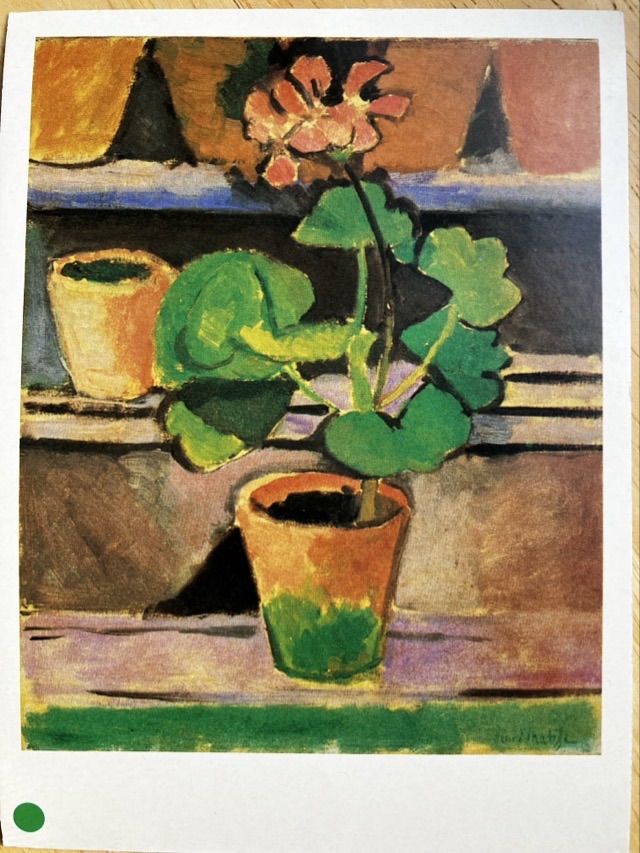
“Pot of Geraniums” was painted in 1912, oil on linen. It is on display at the National Gallery of Art.
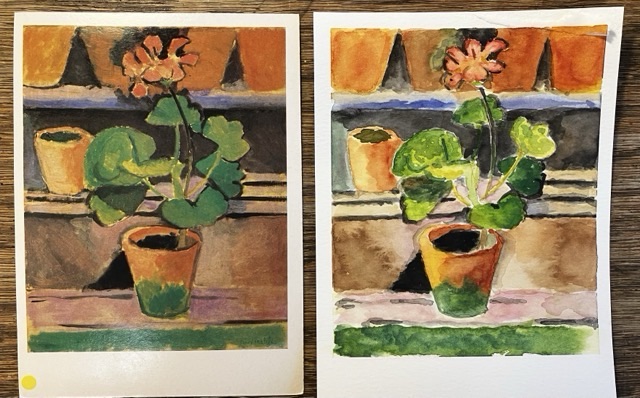
When I saw this one, I thought with only few colors and a simple design, it might not be too hard to copy. I was wrong, as usual!
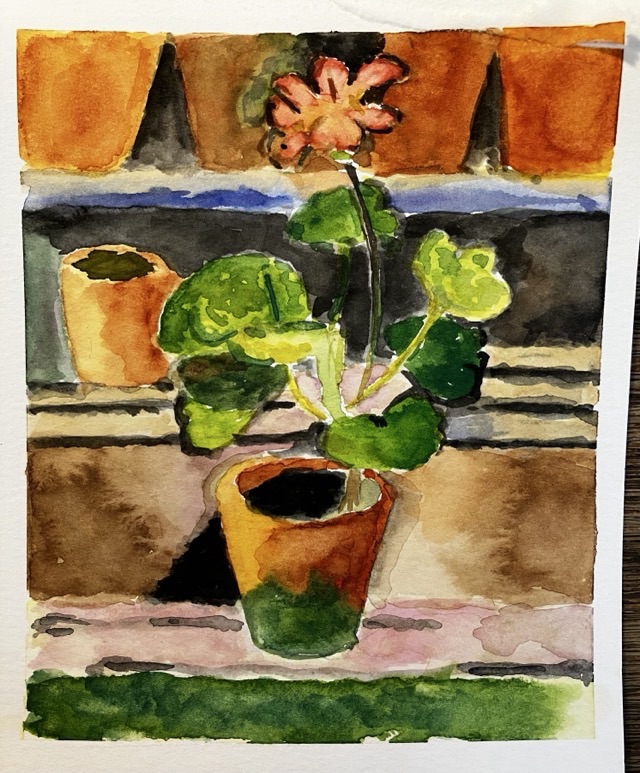
It’s an adventure, that’s for sure. I almost gave up on this one, but decided to persevere.
Next up:
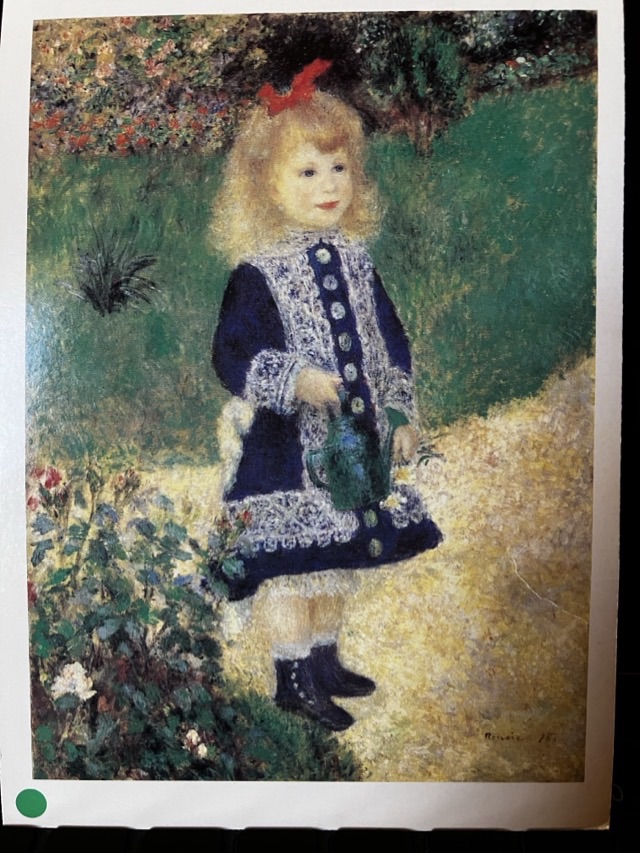
Renoir! Am I crazy? Watercolor will be pretty difficult with that dress of hers…
I’ll delete this wild beasts of a blog post in the morning.


Love your perseverance, it pays off. The results are amazing. Can’t wait to see what you do with that Renoir. I wouldn’t even know how to attempt that in watercolor.
LikeLiked by 1 person
Thanks, friend! I have no idea how to do the Renoir in watercolor either. 😬.
LikeLike