Friday, January 22, 2021 The Game

Rats, Kelly thought to herself. She hadn’t wanted to come to this party, but had felt maneuvered into it. Well, not so much maneuvered as having fallen prey once again to her reluctance to say no when people at work included her in any sort of social gathering. And now she had gotten sucked into the orbit of a particularly high-brow group conversation. They were blathering on about something esoteric having to do with the intersection of art and literature.

Well, she’d played this game before. The trick was to nod your head thoughtfully and keep a pensive look on your face. She drew the line at laughing uproariously when everyone else did, however – this was a minefield she’d stepped onto before and regretted it when she laughed louder and longer than the others, causing them to lift the dreaded Eyebrow of Disdain. After that, she’d developed a new technique which consisted of allowing a mysterious smile to play on her lips – sort of the Mona Lisa approach. She was a devotee of the Advice to Hapless Party-Goers which came directly from the Good Book: “Even a fool, when he keeps silent, is considered wise. When he closes his lip, he is considered prudent.” This was easy enough since she was essentially an invisible part of the group, anyway – most of them probably didn’t even know her name.

She was in the middle of one of these mysterious smiles (which she’d perfected by practicing in front of a mirror), when the question came like a thunderbolt.

“What do you think, Kelly?”

She didn’t see who’d asked the question. Although startled, Kelly prided herself on her poker face. She hadn’t really been listening, but they didn’t need to know that. A bold note went zipping through her brain, accompanied by a little trill of mischief. She grabbed at the most random thing she could think of and threw it right out there. “I find it’s always helpful to reflect back on what Bennet said in one of his lesser known works – so simple and yet so profound.” She paused for effect, and said it, the words that had come to her in a dream fragment recently: “Encourage chickadees.” Uh oh…so much for staying silent and being considered wise.

Silence. Someone gave an uncomfortable half-chuckle as the group pondered this bit of fluff. Kelly worried she’d gone too far, but right on schedule, Brett, who never liked being caught with his academic pants down, nodded sagely and said, “Yes, I’ve always admired Bennet’s avant-garde views. His insights always take one by surprise – he makes you work for it, doesn’t he?”

At this the whole group, grateful for the cue, nodded thoughtfully and looked pensive. The conversation ebbed and flowed as they all tried to outdo one another with comments about Bennet and his seminal work. Kelly’s mysterious smile threatened to turn into an unflattering snigger, but she managed to stifle it. She’d been reading Pride and Prejudice again and “Bennet” was the first name to come to mind. It looked like she was off the hook, so she prepared to break out of the orbit of this conversational planet and head over to the snack table.

“That phrase – ‘encourage chickadees…’ – What do you think it means, Kelly?”

Rats again. She’d noticed that one of the guys in the group had been eyeing her with a mysterious, knowing smile of his own. It appeared that at least one person in the group suspected her intelligentsia credentials and meant to expose her. In fact, she’d bet he was the one who asked the first question. Nothing doing, buster, she thought to herself. All eyes were on her.

“The elegance of Bennet’s wisdom, of course, is that he means to let you come to your own conclusions, Alex.” More nodding from the group, but Alex merely stared and called her bluff. Very well. The gauntlet had been laid and she would pick it up. Time to nip this in the bud with a strong finish.

“But I think what Bennet clearly meant is that we need to return to an appreciation of the natural world around us for our inspiration. What could the chickadees represent, but the many delightful thoughts that arise when we leave our inner sanctums and take in the fresh air of this glorious and beautiful world in which we live? Do we want our souls to flourish? Encourage those thoughts, those chickadees! That’s what he meant, and I, for one, will always live by that rule.”

The group nearly applauded this burst of eloquence. Alex’s stare became a grin of admiration. She’d won the game.

Kelly walked over to the snack table. Alex followed.

* * * * * * * * * * * * * * * * * * * * * * *

This has been Fiction Friday brought to you by Lynniebeemuseoday.

I’ll probably delete this in the morning, while wondering how much mileage I can get out of the phrase “encourage chickadees.”

Thursday, January 21, 2021 The Crystalline Wave

I am trying to figure out why I’m so enamored with that photo. I think it’s the juxtaposition of the bright crystals against the dark background. It looks like a crystalline wave about to break over a dark blue sea.

The snowdrift began to rumble,
Each crystal tried to break free
With a mad desire to tumble
Down into the deep blue sea.

Short and sweet today! Well, at least short.

I’ll probably delete this in the crystalline morning.

Wednesday, January 20, 2021 Encourage Chickadees

I mentioned on this blog that I wanted to do more knitting in 2021 and received a commission right away to work on two pairs of mittens for a friend of mine who donates them to an afterschool program for kids. This coincides nicely with my desire to use up my yarn stash, so I plucked a handsome little skein of yarn out and got the needles going.

I was sailing along smoothly until I realized that I had read the instructions wrong, starting the thumb a full three inches above the cuff. You’d think I might have noticed this as an error, but I didn’t think about it until I was way up on the hand and had a thought that either this mitten was going to have to be for someone of very unusual hand anatomy or I had to “tink” those 3 inches off the mitten. (Note: tink is knit spelled backwards – a knitting friend of mine introduced me to that charming way of referring to the process of unknitting.). I wish I’d thought to take a photo of that monstrosity, but you’ll just have to imagine it.

Progress was made.

One down, three to go! I’ll use a different yarn for the next pair, though.

In other artsy news, I had a dream recently in which someone was giving a series of 2-word imperatives. The only one I remembered when I woke up was “encourage chickadees.” Strange, I know. I’m not sure what this means, but one thing was clear: this must not be ignored.

Can t-shirts and mugs with this motto be far behind? It’s probably going to become all the rage and you guys can say that you were here at the beginning.

There you have it – Watercolor Wednesday!

I’ll probably delete this in the morning, whilst encouraging the wee little chickadees in our yard. They must really need it.

Tuesday, January 19, 2021 Reading Roundup

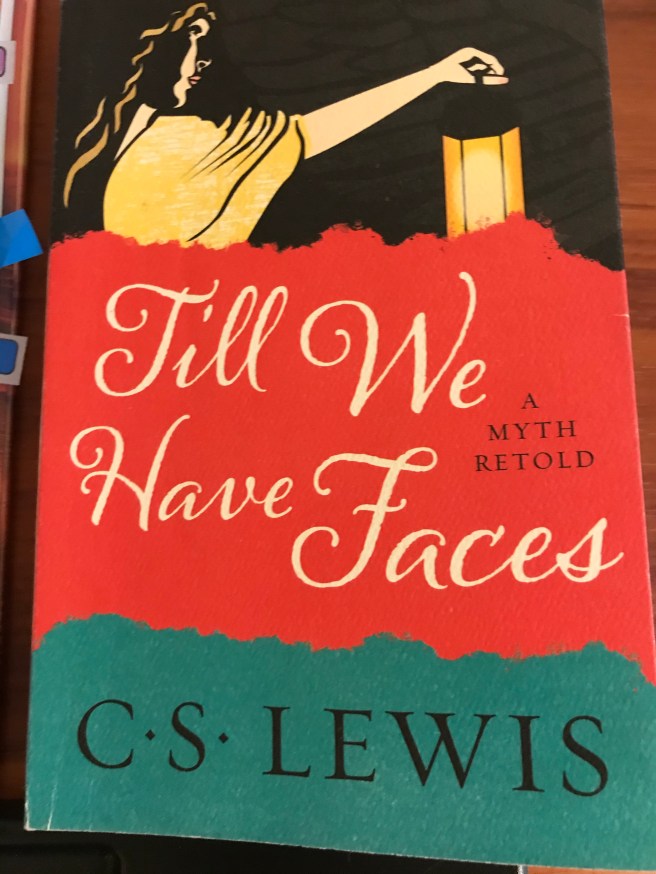
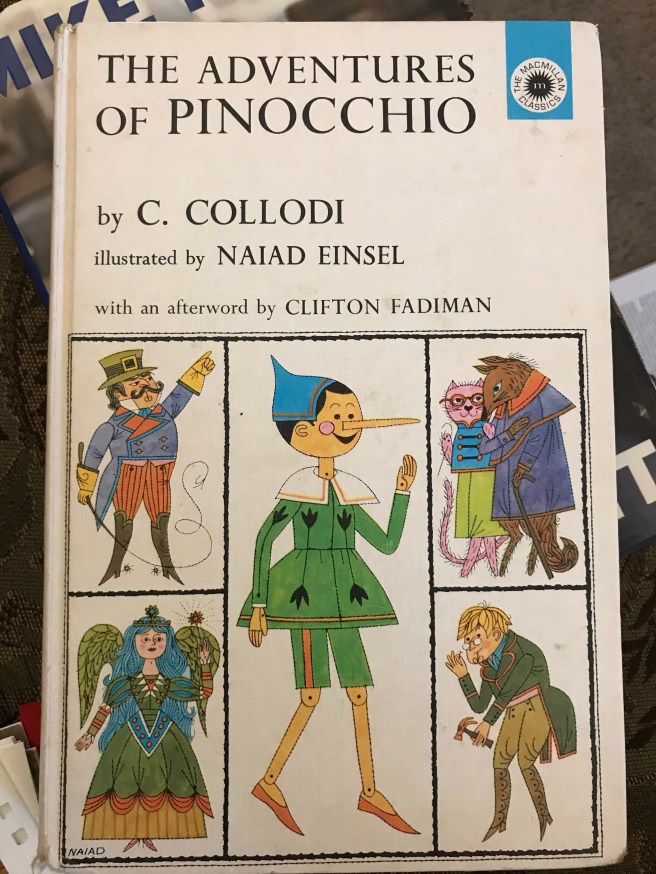
Erasmus wrote a book called On Free Will. I’m currently tackling Martin Luther’s response to that book, called The Bondage of the Will. It’s definitely not light reading, but got off to a sizzling start with Luther’s scathing comments to Erasmus about his book:

“…your book is, in my estimation, so mean and vile that I greatly feel for you having defiled your most beautiful and ingenious language with such vile trash, and I feel an indignation against the the matter also, that such unworthy stuff should be borne about in ornaments of eloquence so rare, which is as if rubbish or dung should be carried in vessels of gold and silver.”

Luther was a little ball of fire, that’s for sure. It’s strong stuff, but almost lyrical compared to the kind of things people express on social media when a disagreement arises.

Elisabeth Elliot, Keep a Quiet Heart, p. 135

Restlessness and impatience change nothing except our peace and joy. Peace does not dwell in outward things, but in the heart prepared to wait trustfully and quietly on Him who has all things safely in His hands.

I am often impatient and assume I’m not the only one. Maybe you needed to read this today, too.

And here’s a little whimsical look at germs by the humorous poet, Ogden Nash:

The Germ
A mighty creature is the germ,
Though smaller than the pachyderm.
His customary sleeping place
Is deep within the human race.
His childish pride he often pleases
By giving people strange diseases.
Do you, my poppet, feel infirm?
You probably contain a germ.

“Strange diseases,” feels just a little bit too relevant right now!

I hope you are able to wrap yourselves in warm light on these cold days as you cozy up with a good book.

I’ll probably delete this when someone tells me how mean and vile it is.

Monday, January 18, 2021 Harry Potter Musings

For those of you who are interested, I’m going to follow through on why we ended up loving the Harry Potter series so much. For the rest of you, class is dismissed.

First: Objections Answered (I really want to use the phrase “Mischief Managed” here)

Dark. Another way of expressing this would be to say that as the books progress along with Harry’s age (one year per book), the stakes get raised in terms of the manifestation of evil and its consequences. In a sense, when the books were first released, children grew up apace with Harry. The bad things that happen in the first few books are more in the realm of bullies, mean teachers and mysterious disappearances. As Harry grows, the threat of evil grows, finally emerging as a truly dark thing with the killing of a classmate in book 4 (or maybe book 5 – I can’t remember). But the darkness is never glorified, nor is it treated in comic book fashion – it is real and it is frightening, but it is always in its proper context. I think Rowling did really well with building this throughout the series so that by the time Harry and his friends begin to meet it head-on, they are becoming mature enough to handle it. I’m not sure that the whole series should be galloped through by a young reader, but it probably depends on the maturity level of the reader.

Lies. There’s no getting around it – Harry tells lies in the early books to get out of trouble. And he doesn’t always get caught and punished for it. But again, these books were meant to show the story arc of a young boy who is growing up and maturing as he grapples with increasing threats against him and those whom he loves. In the last book, Harry tells one last big lie, but it is to his friends in order to save their lives by giving his life for theirs. It is a beautiful redemption of this early weakness of his.

Witchcraft. Harry attends a school of witchcraft and wizardry. Within that milieu everyone learns spells and has a wand for casting spells, but it’s really more about learning to use weapons for good, along with strong discouragements and restrictions on their possible uses for evil. The context is very clear. I don’t think one need worry that their children are being drawn into the real practice of witchcraft – we certainly didn’t. It’s clearly very fanciful and, to be honest, quite fun.

Line Between Good and Evil. A common complaint after the first book came out was that the line between good and evil wasn’t clearly enough drawn. To this I can only say “Nonsense.” That’s not to say that there wasn’t some nuance to the characters. Sometimes “good” characters did foolish or bad things. Sometimes you learn that those who seem evil aren’t as “bad to the bone” as they appear at first. But the ultimate line between good and evil is never really in doubt.

I think that sums up the objections. Now to some of the elements that I found commendable.

Story. This is really a well-crafted story. I read once that it took Rowling 5 years to plot it all out before she started writing. That might not be true, but I wouldn’t be surprised if it was. There are minor details included in earlier books that take on huge significance that surprise the reader in later books – that had to take some major planning ahead.

Characters. I could go on and on with this one. Rowling assembled a huge cast of characters for these books exploring a large range of the human condition: funny, tragic, wise, buffoonish, sweet, cruel, misunderstood, evil, earnest, phony…

Creativity. I love the whole world that Rowling created. It is interesting and fantastically creative without requiring you to learn an entirely new vocabulary.

Depth. There are back-stories, there are stories within stories, there are characters that seem minor, but are surprisingly important. You get the impression that these were almost real people to Rowling, she so generously endowed them with real histories and heart.

Themes. Rowling explored some major themes throughout the books, including father hunger, sin and redemption, fear and courage, love and sacrifice. If you don’t get choked up at least one time per book, you’re made of stronger stuff than I am (which may not be saying much).

Marriage and Family. It may be a small thing, but I appreciated the fact that couples did not live together – there was a strong culture of marriage and the expectation of marriage. The Weasley family was a wonderful depiction of a good, strong marriage and a large family where everyone was loved and valued. You could say that they were the core family in the series.

I’m going to quit here because I don’t want this to get too long. I’ve tried to tell you about why we loved the books without giving too much away. If you haven’t read them before, I hope you’ll give them a try, but I recognize that this genre isn’t everyone’s “cup of tea.” I’ll be reading them again this year!

I’ll probably delete this…but maybe not. It took me too long to write it.

Friday, January 15, 2021 The Beckoning Window

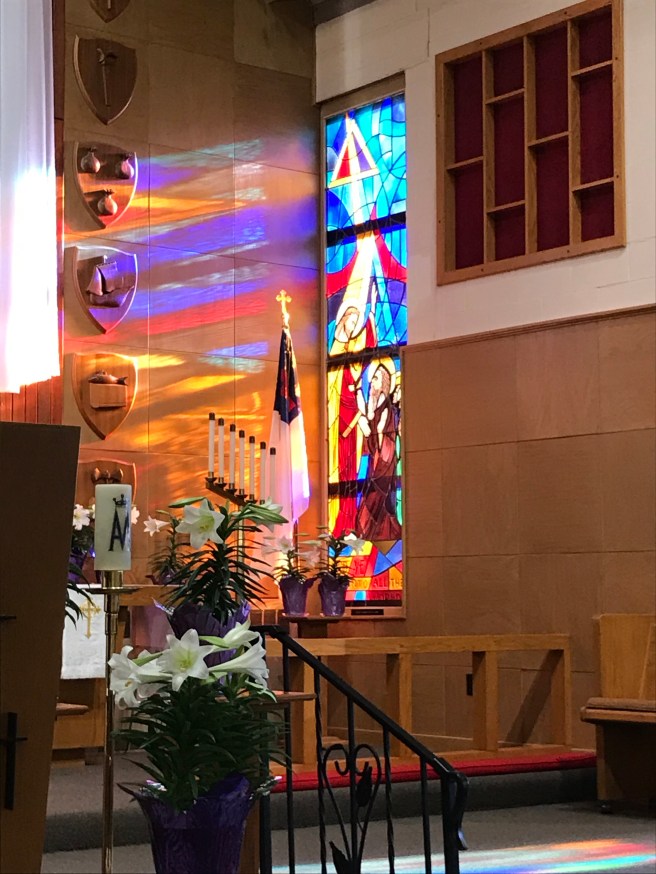
He passed by this window every day at the same time, in the late afternoon when the lowering sun brought deep shadows to the window panes. Normally, he burrowed into whatever book he was listening to and paid no attention to his surroundings, but one day he was arrested by the thought that the window was calling to him. He stopped and looked around – was anybody else similarly affected? People streamed past him, moving out of his way like water rushes around a boulder in the river.

He looked at the window. Nothing special. How very odd, he thought, and went on his way, the boulder becoming part of the river again, the incident forgotten.

But the next day as he walked by the window, it called again. Distinctly. Irresistibly. He stopped and looked at it, carefully this time. The glass panes were dark and nothing could be discerned beyond them. He pressed “pause,” on the book to which he’d been listening and began to listen for something or someone else. Perhaps he had been mistaken.

“What?” he inquired politely, hoping the passers-by would assume he was on the phone.

“I SEE YOU.”

In that moment, the window became a mirror and he knew what it was to be seen, really seen. Guilt and shame flooded his soul as his eyes were opened to the oppressive mysteries of his heart. He felt a nightmarish nakedness, bereft of hiding places. Before him as on a public billboard were all the lies he’d told, people who loved him that he’d ignored and hurt, women he’d used up and discarded, seeds of life that he’d planted, never caring whether they lived or died, those degrading websites he kept visiting, the sheer unremitting self-centeredness of his life. Even the “good” things he’d done were tainted by grimy self-interest. And how had he responded to all of the good fortune that he’d enjoyed,the simple pleasures of his life, and the beauty and wonder of the world around him? He’d been bored and unsatisfied, always wanting more. He tried to find his face in that dreadful mirror, but a skull stared back at him.

This was untenable! He’d always thought himself a fairly good fellow, somewhat innocuous and certainly not evil. (After all, there was always Hitler to compare oneself with when one was in danger of seeing the evil in themselves.) But in this one, awful moment, he knew what he was. He was depraved. He was lost. He was dead.

“Stop!” he cried out, not caring if the world heard him. “I don’t want to be seen!”

The mirror became a window again; the man pressed “play” on his book and went on his way, agitated and stricken. He tried to forget and failing that, tried denial. He found other ways to walk home from work, but the window kept calling his name. One might even say it harassed him. He tried cleaning up his life, but quickly realized that this was easier said than done and the blackness of his soul weighed more heavily on him every day. Finally, he could stand it no longer. He had to go back, to find out what could be done about this predicament in which he’d found himself.

When he came before the window, he couldn’t even look at it. The window beckoned. Sweetly. Irresistibly.

“COME AND BE CLEANSED.”

And this time, when he looked up at the window expecting to see again the dreadful mirror of his life, he saw a cross.

And he was cleansed.

* * * * * * * * * * * * * * * * * * * * * *

This has been Fiction Friday with lynniebeemuseoday. I’d love your feedback on this story. I really felt quite desperate this morning when the fiction piece I had been planning to write just withered away.

I’ll probably delete this over the weekend, or (perhaps even worse) I’ll go back and start tweaking it here and there.

Thursday, January 14, 2021 The Mighty Snow Fence

We get a lot of snow drifts here and they tend to form in very inconvenient places, like our driveways. Thus, when my husband decided a few years ago to start installing snow fences on our property to keep that from happening, I had an idea in my brain about how those were going to look. I pictured more or less a temporary wall. I did not picture this:

How on earth does a plastic fence full of holes keep snow from drifting? I’m glad you asked. I went to our friend, Wikipedia, and learned this:

Snow fences work by causing turbulence in the wind, such that it drops much of its snow load on the lee side of the fence. Thus, snow fences actually cause snow drifts, rather than preventing them. The fences are placed so as to cause a snow drift where it is beneficial, or not harmful so that the snow does not drift onto undesired areas such as roads or among buildings.”

I’m guessing most of you knew that already, but I didn’t. The thing that is supposed to prevent snow drifts actually causes them by creating turbulence. Snow drifts are going to happen either way – it’s just a matter of where they get planted.

I think I’m going to have to remember that the next time a stiff wind is blowing and there’s turbulence all around me. If there are going to be snow drifts, I’d rather they were put in the beneficial places. And only the God of the snow, wind and turbulence knows how to do that – good to know when that “hedge of protection” looks like it’s full of holes. The wind whistling through those holes is creating a symphony with all the crescendos and rests right where they should be.

Thursday Thoughts brought to you by Lynniebeemuseoday.

I’ll probably be slogging through snow drifts tomorrow to delete this thing.

Wednesday, January 13, 2021 In Andrej’s Class

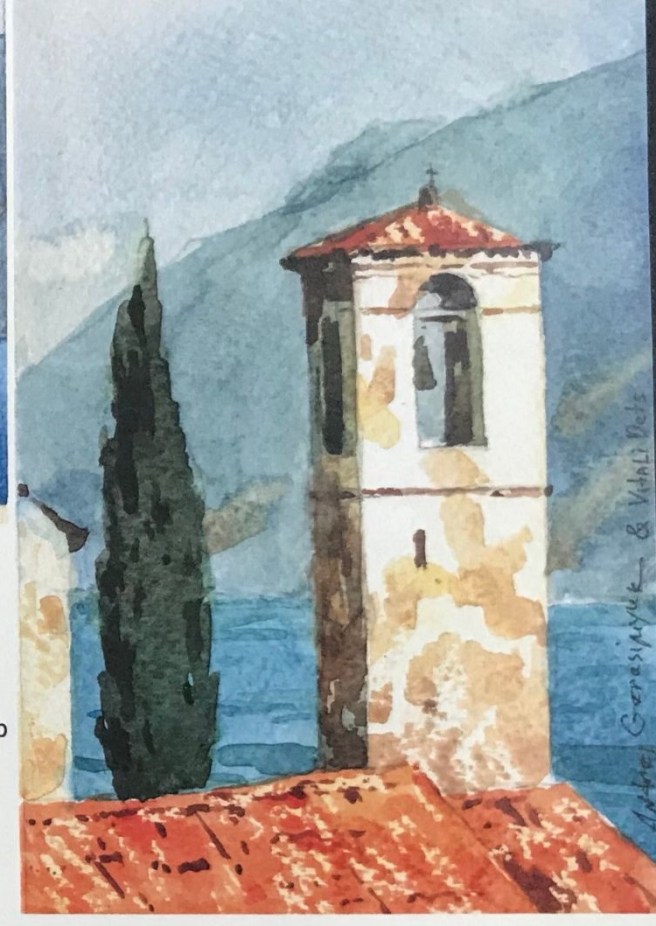
I hinted heavily (i.e. sent a link) to my husband for a birthday gift this year: a watercolor instruction booklet that had caught my eye several times on Instagram.

Step-by-step advice from the masters! And isn’t it nice to know that this particular master, Andrej (yes, we can call him by his first name – he doesn’t mind), is ranked among the TOP20 watercolor artists of the world? (We don’t need to know who does this ranking – it’s not important.) With Andrej at the helm of my watercolor exploration ship, I felt assured that everything was possible. Simplicity itself!

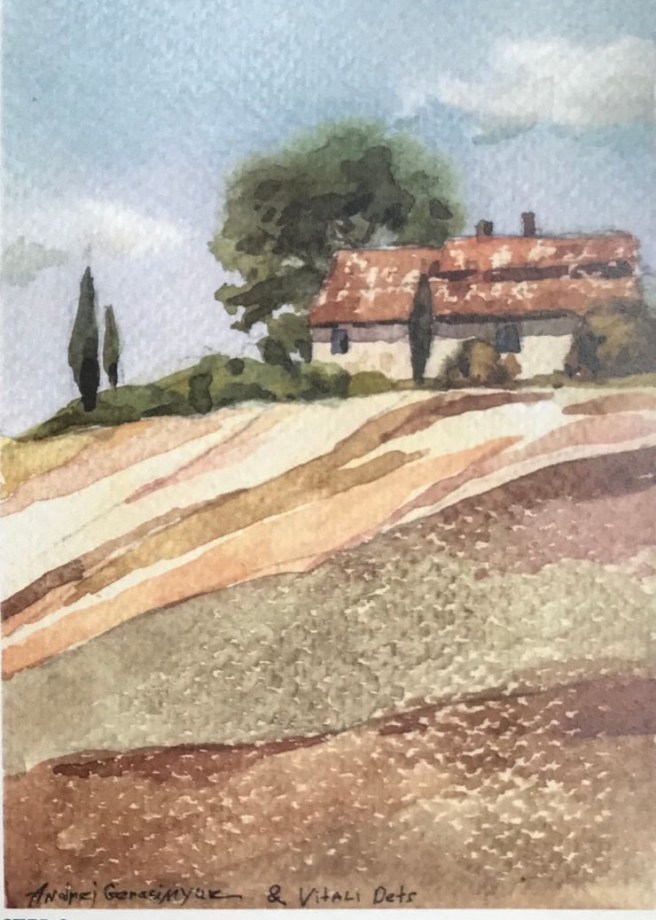
The booklet is actually very well designed. Each lesson includes a photograph – taken, no doubt, in Italy, where even the grout between tiles looks beautiful and worthy of painting. You also get watercolor paper with light sketches of the photograph, two for each lesson. The paintings call for a limited palette of colors from which you will be able to get all the hues that you see. As promised, you get step-by-step instructions on how to do the painting. Lastly, you can see how the artist(s) version turned out.

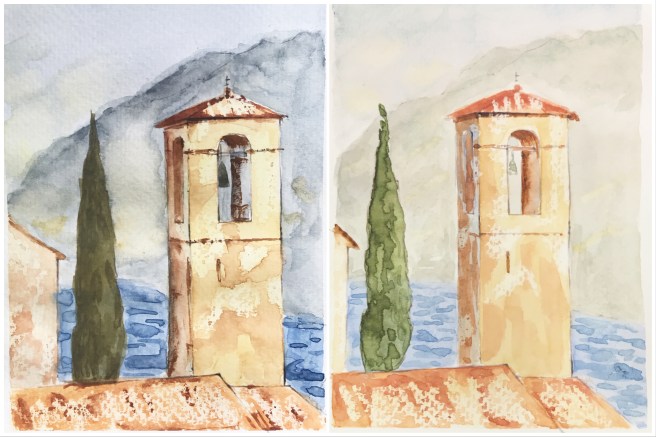
the artists’ original painting

I approached the first lesson with an insane amount of over-confidence. I liken it to watching figure skaters do their simplest elements on the ice, making it look so easy that those of us who can skate say to ourselves, “I could do that.” Naturally, we know that there will be no triple salchows or toe loop jumps in our repertoire, but surely we can eke out an elegant figure eight or a graceful move from skating backwards to going forward. We fail to recognize the sheer amount of work and practice that goes into all that graceful movement. We put our skates on and go fall on our butts. Many times.

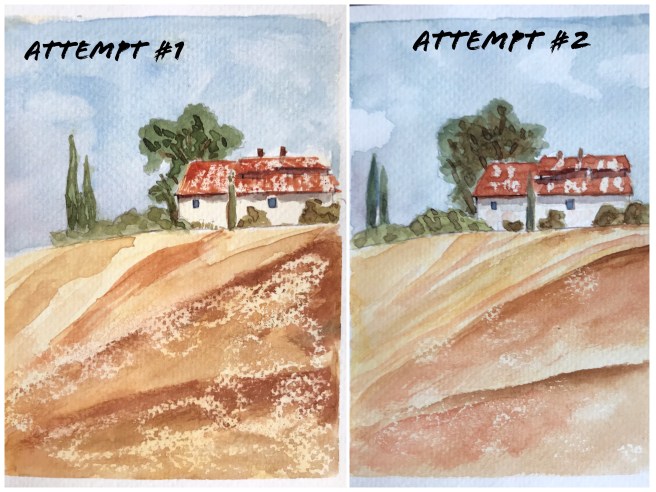
It was a lot harder than I thought. I had a hard time getting the colors right, getting a smooth lay down of color, getting the right balance of water and color, keeping it from looking blotchy in places, preventing color bleed… The one on the left was Attempt #1. It was kind of Andrej to include two sketches on which to practice. If you don’t compare the second one with Andrej’s, it doesn’t look too bad, but it’s definitely not a triple salchow.

Still, I’m eager to go on to the next 15 lessons with the hope that by that time I finish #16, I’ll be out on the ice at least not falling on my butt. It’ll be fun, right?

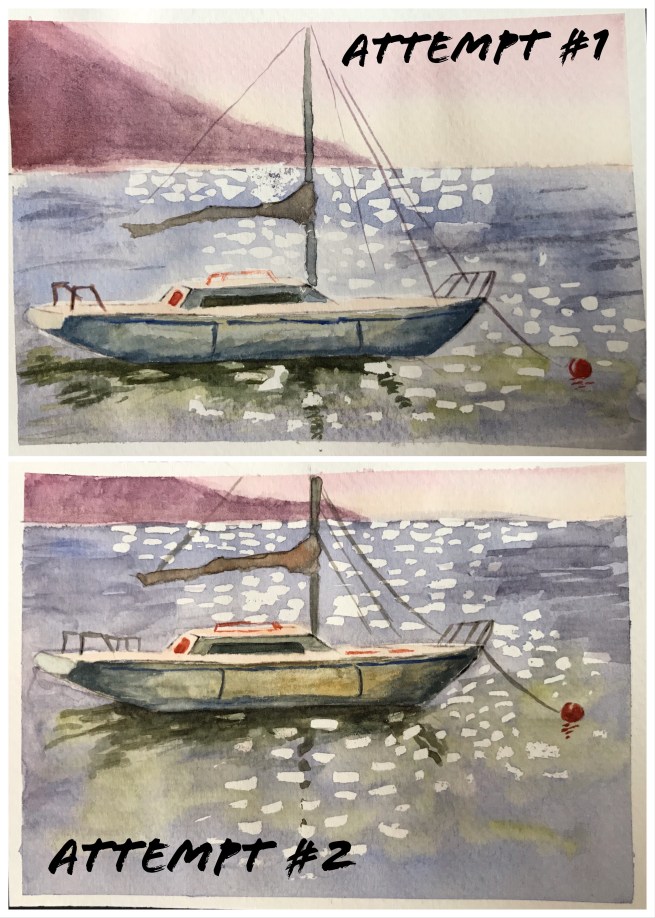
P.S. I started lesson # 2 today. Ugh, the first attempt was AWFUL. My butt hurts now.

Signing off with Watercolor Wednesdays, this is Lynniebee.

I’ll probably delete this in the morning.

Tuesday, January 12, 2021. Reading Roundup

I’m going to call this feature the “Weekly Reading Roundup.” That way I get to use alliteration, even if I can’t use the word Tuesday with it (like Monday Musings, Watercolor Wednesdays and Friday Fiction). Now, I still need to come up with something for Thursdays… Thursday Thoughts?

Whatever.

January 12 Reading Roundup:

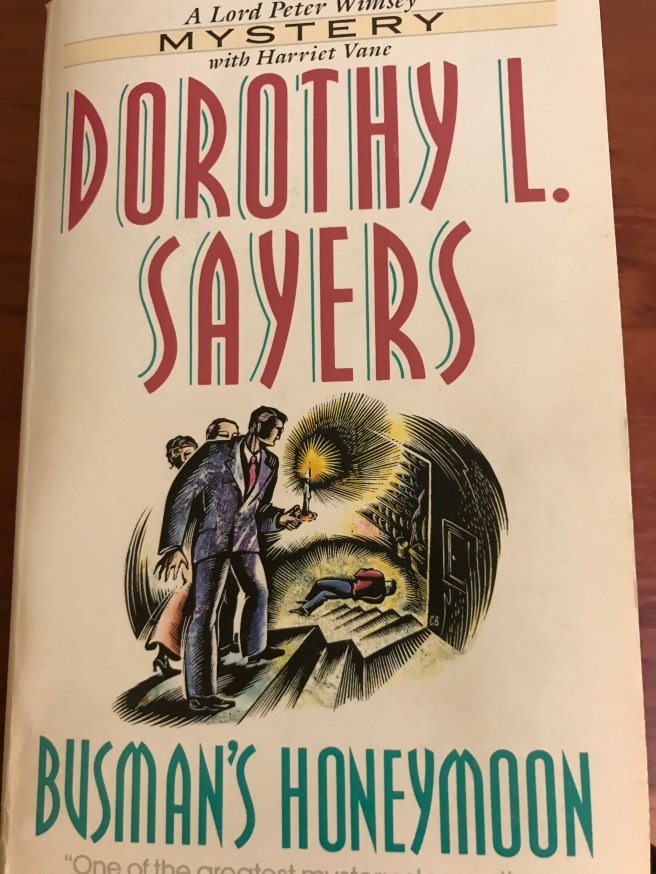
Dorothy Sayers, The Five Red Herrings, p. 13

(As Lord Peter Wimsey heads out to take a look at a dead body that turned up where he was vacationing) “…and with a sky full of bright sun and rolling cloud banks, hedges filled with flowers, a well-made road, a lively engine and the prospect of a good corpse at the end of it, Lord Peter’s cup of happiness was full. He was a man who loved simple pleasures.”

That just made me laugh.

Martin Luther, quoted by Elisabeth Elliot, Let Me Be a Woman

“…It is said that it takes a bold man to venture to take a wife. What you need above all else then, is to be encouraged, admonished, urged, incited and made bold. Why should you delay, my dear and reverend sir, and continue to weigh the matter in your mind? …Stop thinking about it and go to it right merrily. Your body demands it, God wills it, and drives you to it… It is best to comply with all our senses as soon as possible and give ourselves to God’s Word and work in whatever He wishes us to do.

Know any young men that you’d like to have read that? I do!

Alastair Groves and Winston Smith, Untangling Emotions, from the Chapter called “Engaging Fear”

“Fear, whether mild uneasiness or abject terror, has a simple message: something you value is under threat. …Fear points directly to what we treasure.”

“Fear is a notorious exaggerator and false prophet of doom.”

“…every fear brought to the Lord, every anxiety or terror weathered under the shelter of his wings, reinforces our choice to trust. This means that even the smallest acts of faith, in God’s mercy, are self-perpetuating.”

I underlined a LOT more in that chapter, but didn’t want to bore you. This book has been really helpful to me, as sometimes I feel simply awash in emotions and often have trouble understanding where they come from and how to manage them in a godly way that neither abhors, ignores nor coddles them. Really good stuff.

Elisabeth Elliot, Keep a Quiet Heart

“The world cannot fathom strength proceeding from weakness, gain proceeding from loss, or power from meekness.”

True that.

Emily Dickinson, The Complete Poems of Emily Dickinson, excerpt from #279

Tie the Strings to my Life, Lord,
Then, I am ready to go!
Just a look at the Horses –
Rapid! That will do!

That made me think of Hebrews 12:1, which says, “Therefore, since we are surrounded by so great a cloud of witnesses, let us lay aside every encumbrance and the sin which so easily entangles us, and let us run with endurance the race that is set before us.”

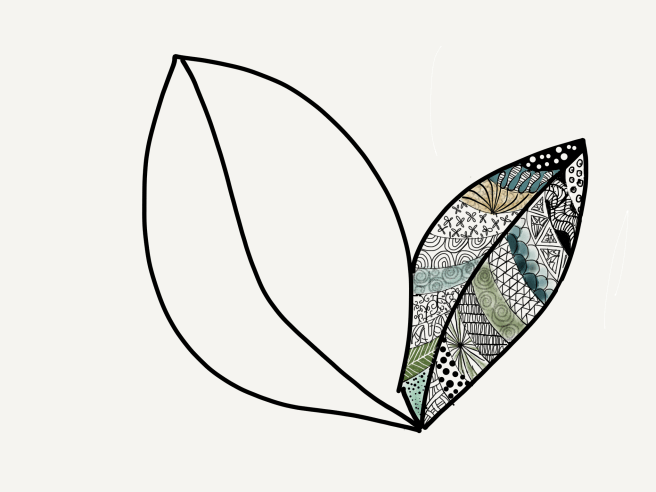
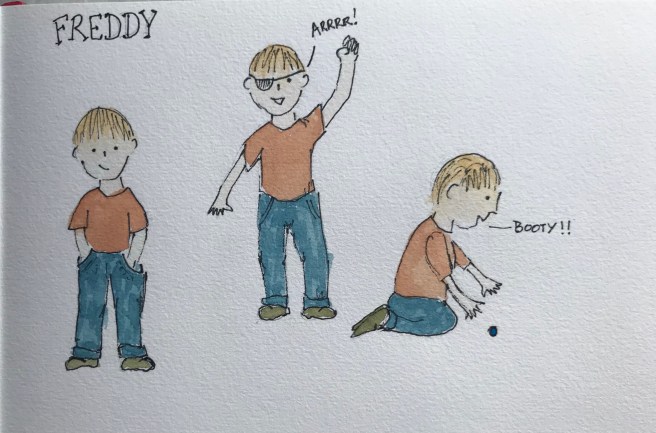
Just for sake of quirkiness, I think I’ll end these posts with a something from my Paper app.

There you have it!

I’ll probably delete this in the morning, while underlining things for next week’s Reading Roundup.

Monday, January 11, 2021 Me and Harry Potter

I met Harry the year the first book was published. Our oldest son was in second grade and it looked like Harry was going to be a very popular fellow, so I decided to preview the book to make sure it got the parental seal of approval. Around the same time I read one of the ubiquitous Goosebumps books. It was awful: poorly written, parents were either non-existent or just plain stupid, sibling relationships were atrocious. We gave it a hard pass.

By contrast, I found Harry Potter and the Sorceror’s Stone to be a really good yarn – clever and creative. But I was uncomfortable with some of the dark aspects of the story for someone as young as our son, and the author said future books would get even darker. It also got wildly divergent reviews in the Christian/homeschooling communities. Some people worried about young impressionable children getting lured into witchcraft, others felt that Harry was not a good role model, often getting away with lying and not always facing the consequences of his actions. It was thought that the line between good and evil was not clearly enough drawn. So, even though there were plenty of Christians who loved the series, we ended up giving it a “soft” pass, thinking maybe when our kids were older we would revisit it.

Fast forward to around 2013. While visiting one of the younger families at our church, we found out their dog’s name was Hagrid. “That’s an interesting name,” I said, “Where did it come from? Is it a family name?” The whole family eagerly pitched in to tell of their love for the Harry Potter stories (and if you haven’t read them, Hagrid is a dearly beloved character in the books). We were going to be taking two long road trips to Idaho and back that summer and decided to borrow the audiobooks from my sister. On your mark, get set…GO!

The excellent Jim Dale does a masterful job of reading these books and we were hooked right from the start. We plowed through 3-4 books that summer on the road and found time to listen to the rest of them over the next year. One time after 8-9 hours of driving we drove into our garage with only 15 minutes left of the book. We stayed in the car and finished it.

So how did we overcome all those objections and what made us love these stories so much? I’ll tell you in another blog post, since this one is already getting so long.

I started collecting the hardbound editions of the HP books right after we finished listening to them, but I set a silly goal of buying only nice used editions to save money. It was relatively easy to find books 2-7 at used book stores, but it turns out that NOBODY gets rid of the first book. NOBODY. So after all these years, I finally just bought a new copy of the first book – and it was less than $13.00, for Pete’s sake! Sometimes you can be too thrifty.

My collection is complete! That’s the whole reason I started this post.

Now if I were a normal person, I would have said something like: “I just bought the first Harry Potter book to complete my collection” and this blog post would have been a lot shorter. I’m not normal. And if you’ve read this far, you’re not normal either, for which I’m very thankful.

Next week’s Monday Musings will take up where this one left off.

I’ll probably delete this in the morning by saying “Evanesco!”

Friday, January 8, 2021 Old Man Hoarfrost

They say he lived in an abandoned old shack hidden in the woods, and he was content to let them believe it. But what need had he of walls and a ceiling? In one sense he had no corner to call his own; in another sense, everywhere was his dwelling place. Any sort of nook or cranny would serve just as well to give room for him to sit and think, to design and make his intricate plans. And to wait. And wait. One could say he was the most patient of God’s artisans, for the conditions had to be perfect for him to work his craft.

Many have lauded his work over the ages. Some insisted he should have a grand title, like “The Honorable Hoarfrost,” or “The Master of Rime,” but he eschewed all of this silliness (even though it did make him smile). His favorite moniker was the rough-hewn “Old Man Hoarfrost.”

He was endowed by his Creator do do one beautiful, glorious thing. He had only one job, one purpose, one “raison d’etre:” to reveal the glory of the Maker on the glittering cold days of winter. His cousin, Dew, could only ply his craft in the summer, so they never worked in the same hemisphere at the same time. They passed each other with a high-five and a “hey, nonny nonny,” as they roamed the earth in search of the tools of their trade: moisture and cooling temperatures.

You’d think winter was Hoarfrost’s favorite season, and it certainly was the culmination of all his imaginings, the time to display his masterpieces. But Autumn was his happy place. Each dried up plant with its sharp and brittle points and its spare and stripped-down lines – these were his canvases! Each time he saw them, he’d rub his hands together with the glee of anticipation. Oh, what a wonderful world he’d been given in which to do his work. Let it begin.

Welcome to Fiction Friday! It might be more accurate to call this piece “Fanciful Fiction,” and I don’t expect every Friday to be like this. But I took a walk this morning and the story began to tell itself – I couldn’t hold it back.

In the future, I will sometimes return to the adventures of Fig Newton and his friends – I was quite taken with him. Also, I had a fun idea about using the descriptions on wine labels as a launching off point for stories.

Thanks for joining me, friends! May these stories lighten your days and brighten your minds when the times are heavy and burdensome. Sometimes it’s good to set down something heavy you’ve been carrying so that you can pick up a light-hearted piece of whimsy.

To God be the glory.

I’ll probably delete this in the morning while searching for Old Man Hoarfrost – I really think I saw him lurking in that shack.