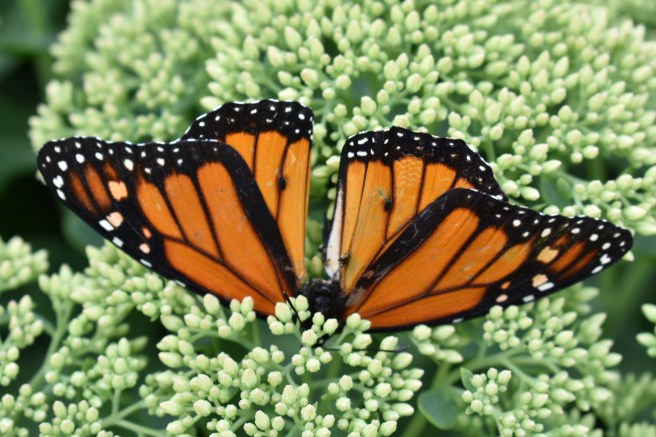
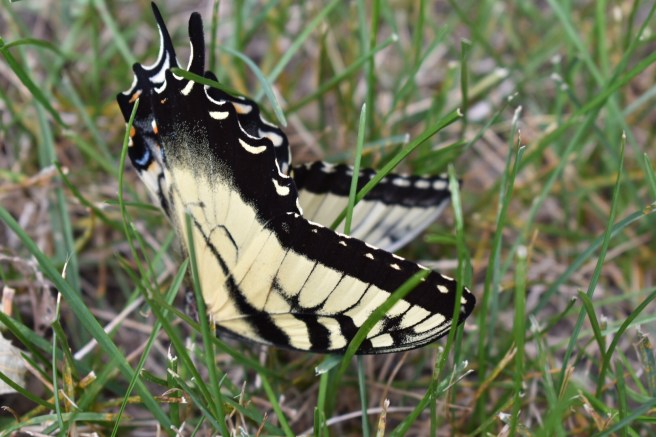
When butterflies die,
Their wings live on in glory.
Beauty must triumph.
I’ll probably delete this in the morning while thanking God for the beauty of butterfly wings.
I’ll probably delete this in the morning.

When butterflies die,
Their wings live on in glory.
Beauty must triumph.
I’ll probably delete this in the morning while thanking God for the beauty of butterfly wings.
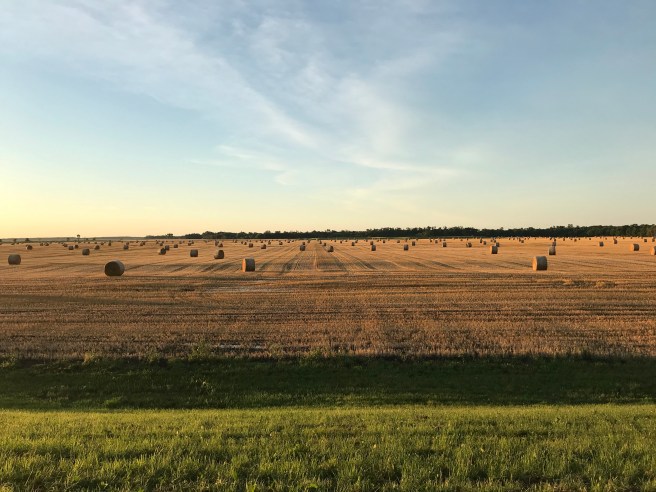
Hay bales, sitting like
Giant chess pieces, waiting
to be moved: Checkmate!
I’ll probably delete this in the morning.
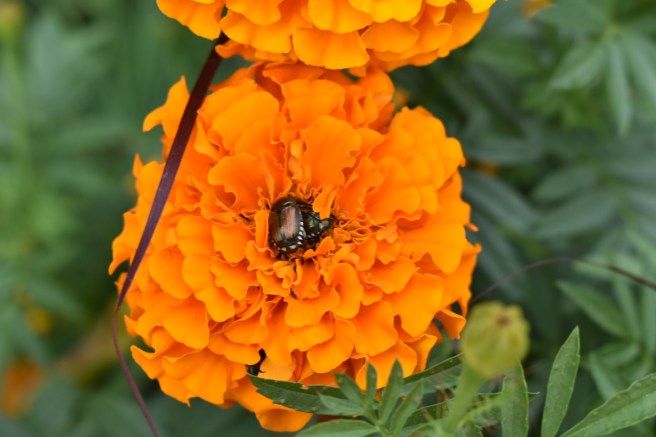
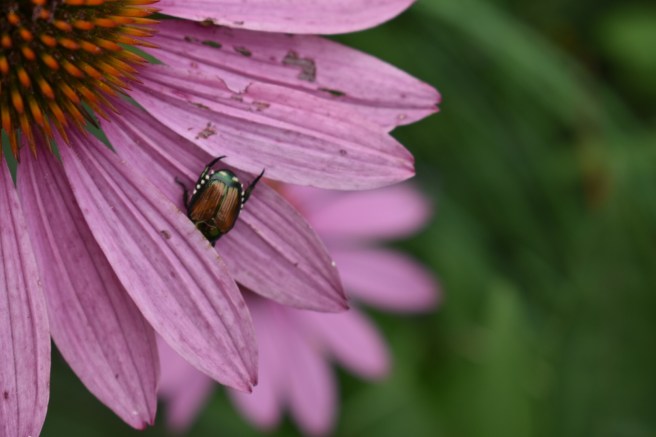
Japanese beetles–
Playing hide and seek with me.
(But not very well.)
I’ll probably delete this in the morning after admitting that I’m still mad at Japanese beetles.

The summer sun sets;
The trees cover me with their
Shadowy blankets
I’ll probably delete this in the morning.
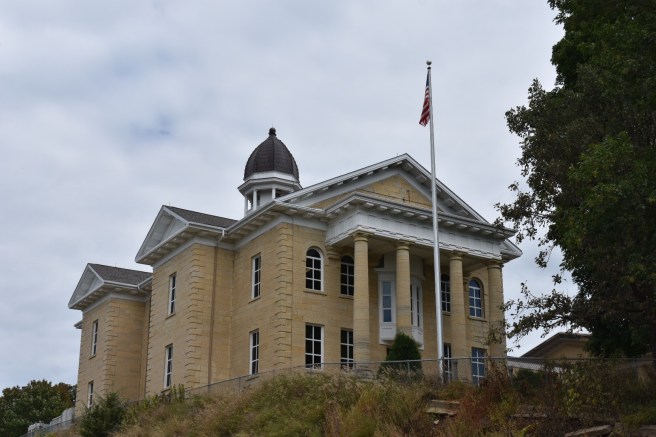
I met a friend for a picnic lunch yesterday in sweet little Mantorville, a small town about halfway between us. We had our lunch by the riverside and then decided to stroll around town a bit. The county courthouse sits up on a hill overlooking the city, a handsome sentinel, indeed.
We walked on and came upon a delightful tableau for a Little Free Library – so inviting!
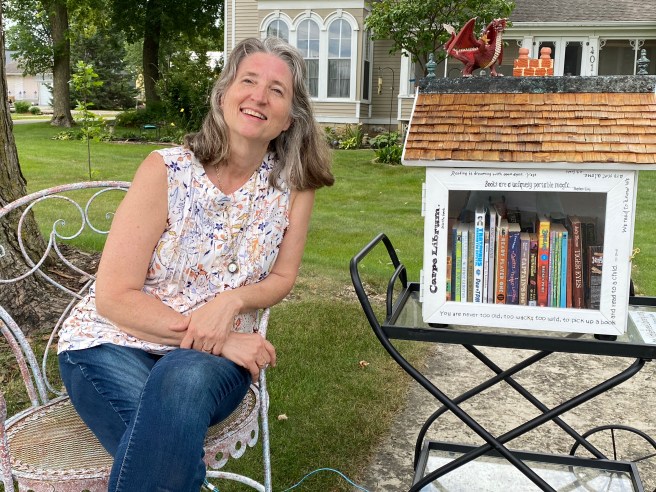
Note the dragon on the top and all the lovely quotes about reading going around the box. We felt an immediate kindred spirit with the owner of this house, which only deepened when we saw this in their back yard:
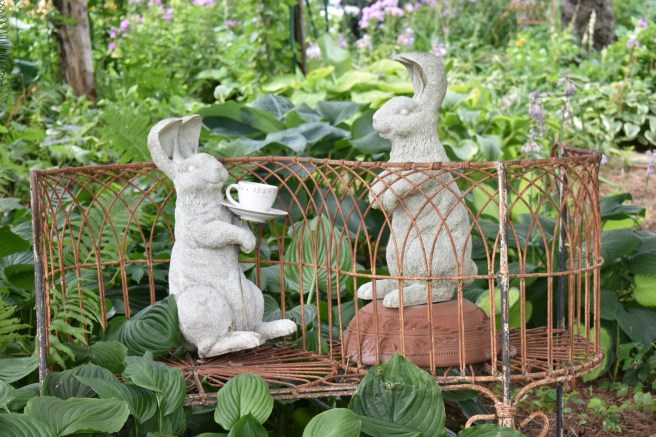
A rabbit tea party!
One rabbit said to the other,
“Would you care for a spot of tea?”
“Why yes,” the other exclaimed,
“And please, with sugar lumps, three!”
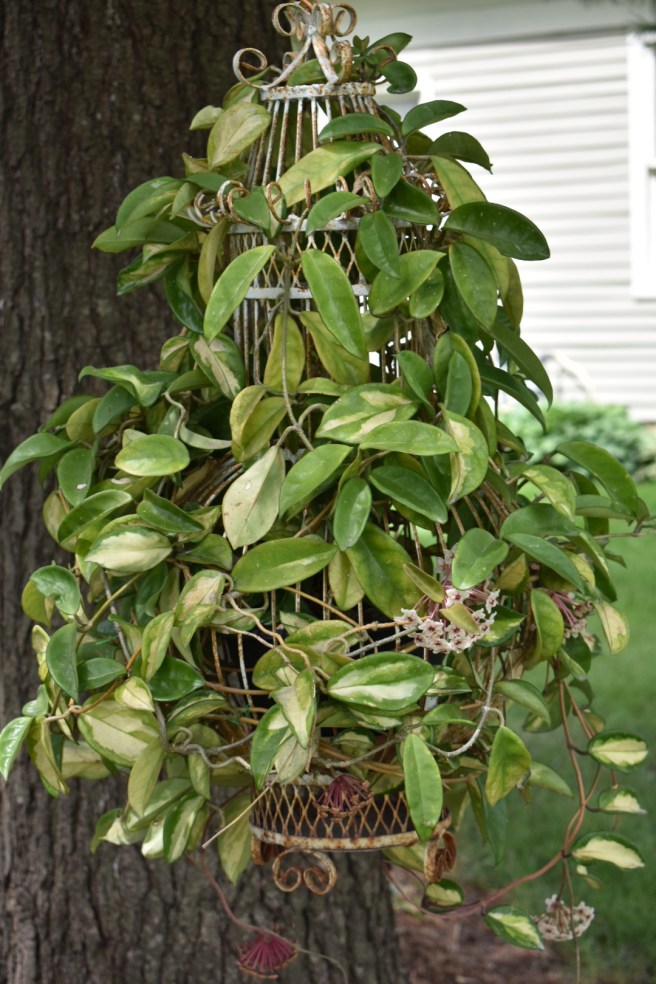
By this time, we were becoming convinced that we could just walk into the house and have a nice chat with our new best friend – we thought there was a good chance that she (he?) would have welcomed us warmly. But niggling doubts kept us from committing what might instead have been a horrifying social faux pas. Our new friend also had a bird cage set up as a planter. Martha Stewart, move over!
The house next door was a Greek Renovation project of some sort – I didn’t get a photo of the house, but the grounds were filled with beautiful displays of flowers.
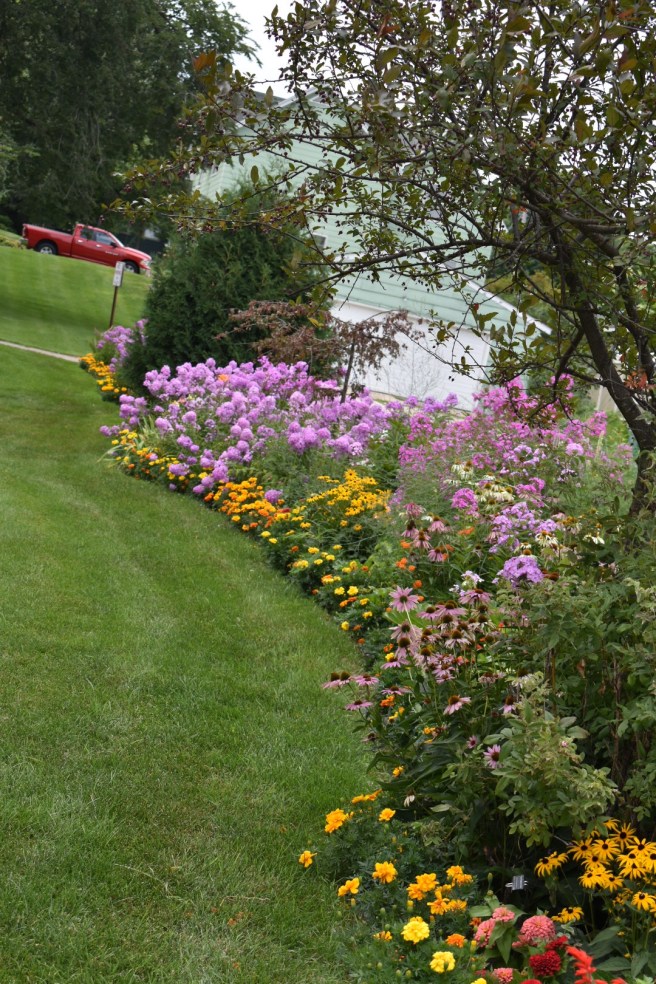
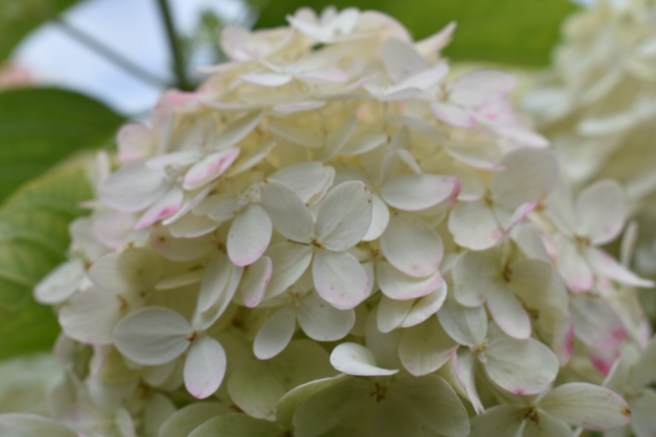
My friend stopped in at a shop to get some coffee while I stayed outside to take more photos, enjoying the creativity of people who know how to take plain and simple things and make them beautiful.


We spent some time talking about the virus – hard to avoid that topic these days. We had strong and differing opinions about the governmental response to COVID and had a civil discussion with an exchange of ideas. Neither of us experienced a shift in our stances, but we both appreciated the importance of hearing what the other had to say. If you don’t know someone that you love on the other side of an issue, you’re missing something essential in the conversation.
It was a lovely, pleasant afternoon and we felt quite welcomed by Mantorville. We’ll meet here again.
I’ll probably delete this in the morning. I’ll be busier than usual next week, so I might revert to the Haiku O’ Day format that I’ve used before during busy stretches.
I’ve been doing Important Research on this matter of echinacea tea (and now I’ve typed that word so many times I finally know how to spell it). I do this all for you, dear readers. The recipe I printed out indicated that it’s even better with fresh flowers. I decided to use the petals and leaves from two flowers, as well as a few mint leaves and a lemongrass leaf.
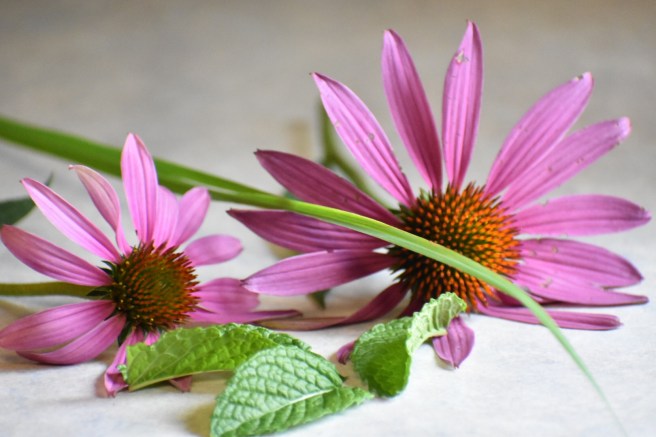
It’s a fairly uncomplicated process: boil water, throw in the stuff, simmer for 5 minutes and strain.


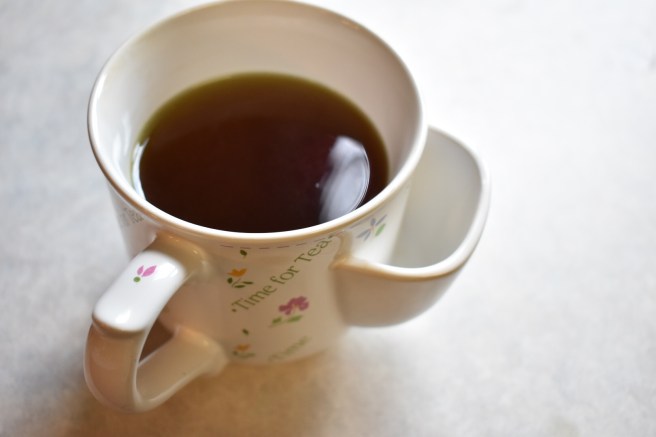
While I was waiting I took a photo of the denuded flowers because I didn’t want their beauty to go to waste.
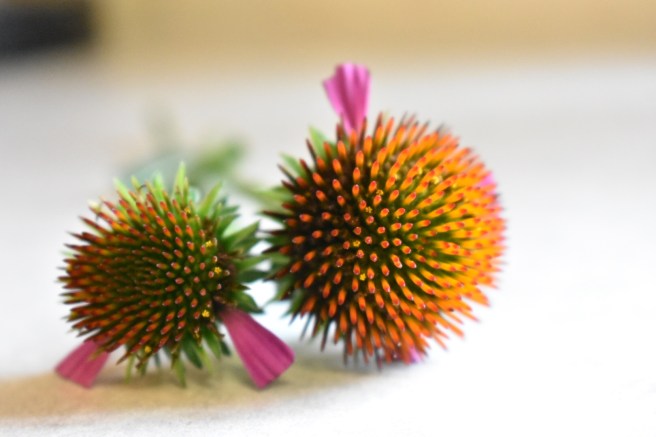
I didn’t have the courage to try the tea unsweetened so I added about a tablespoon of sugar (no judgment, please).
The verdict: Fairly tasty tea, although it might be said that I could have picked just about anything and thrown it into boiling water and come up with the same verdict after adding a tablespoon of sugar to it. I never said that my Important Research was going to be conducted with scientific rigor. It didn’t seem particularly piney, but I could definitely taste the mint.
This has been a Tea Study conducted by lynniebeemuseoday. Let me know if you think there are other things growing in the yard that I should make into tea.
I’ll probably delete this in the good old a.m.

I’ve always thought these were tiger lilies. I liked this photo and thought I’d blather on a bit about why they’re called tiger lilies, etc. However, I learned my lesson after the “Daucus Carota” incident and decided to do a little internet snooping. Here’s what a tiger lily actually looks like (assuming there might be one or two of you that don’t know):


I was chagrined when I saw the photos, because we always get these coming up as volunteers in our yard and I’m not terribly fond of them (but it was handy for getting photos for this post). I brought them in as cut flowers once and found out that the pollen is not only prodigious, it makes a permanent stain on your clothing. Someone needs to tell the flower-naming people that tigers are striped, not spotted. Shouldn’t this be a leopard lily? That’s even got alliteration going for it.
I have to admit that they are rather striking.
The tiger saw the lily
That had taken his name
And thought it was silly –
Just spots all aflame
The leopard saw the lily
That had the tiger’s name.
“With those spots, it really
Should be my claim to fame!”
I’ll probably dilly this in the morning.
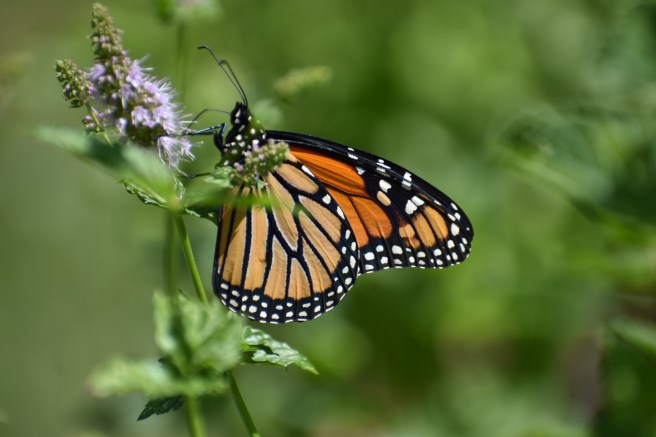
A monarch found a mint flower
And drank a goodly dose.
The mint was quite enraptured
To see the king up close.
“My friends get all excited
By a visit from a lowly bee
But I’ve had insect royalty
Stop and dine on me!”
There are more things happening in your back yard than you know.
I’ll probably delete this in the morning before the sun heralds the next monarch to our humble yard.
Behold, the purple coneflower. 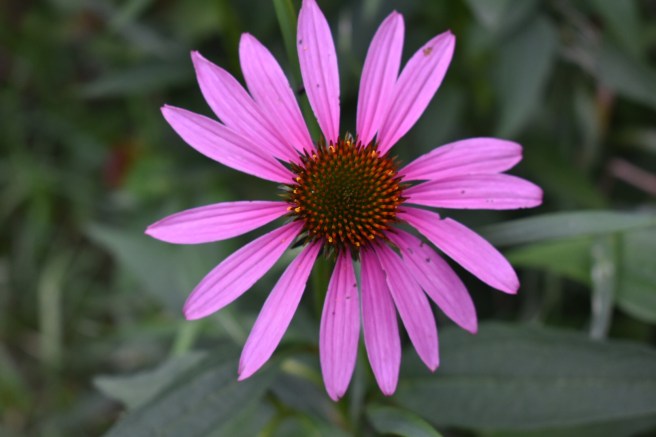

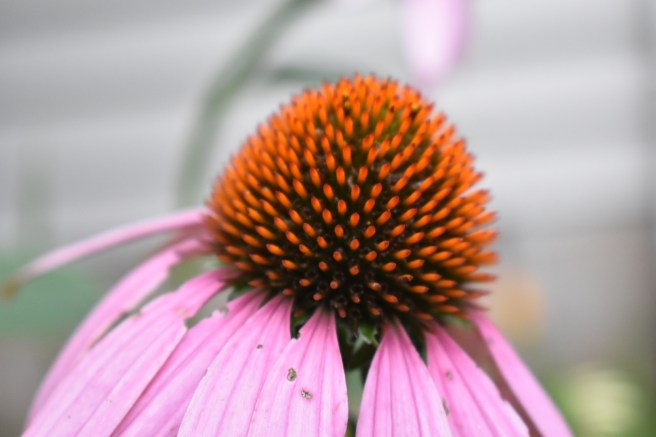
Also known as echinacea purpurea, this flower is not only beautiful, but talented. She does well in the bathing suit part of the contest, but also steps solidly up to the plate during the interview with the judges.
Judge: My dear Echinacea, tell us about yourself. How do you plan to make this world a better place?
Echinacea: I provide a nice boost to the immune system when you are struggling with a cold or the flu. Pharmaceutical companies love me! Native Americans were known to use my leaves, stems and roots to treat many ailments, including burns, insect bites, toothaches, throat infections, stomach cramps and snake bites. I’m quite versatile.
Judge: Impressive!
Impressive, indeed. We have a lot of these beauties in our yard. I found a recipe for echinacea tea on Pinterest and I’m inclined to give it a try. It’s also supposed to help with your mood, triggering the production of dopamine. Here’s what the recipe says about the flavor:
“Echinacea has a sharp flavor similar to pine with a powerful floral note. It features a soft body with a refreshing finish and is often described as similar to meadowsweet. Pair it with a dash of honey or add in lemongrass or mint to play up the flavor profile.”
Hmmm….not sure that a tea that tastes like pine would be my “cup of tea,” as it were, but this year I have both lemongrass and mint in the garden, so that might help.
I’ll probably delete this in the morning, while sipping on a nice, hot, piney cup of echinacea tea.
Previous: Grave Musings 4 Oak Ridge II
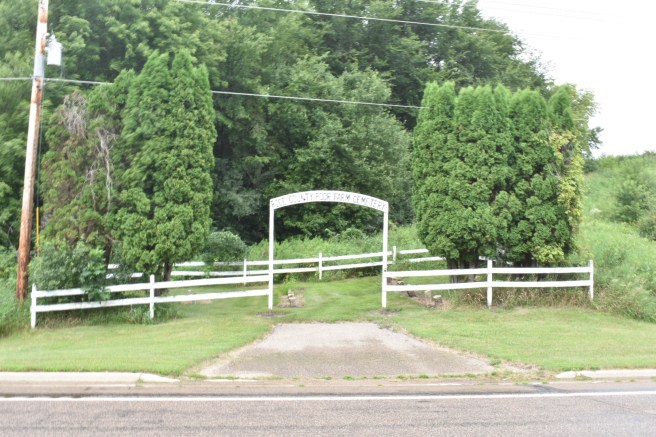
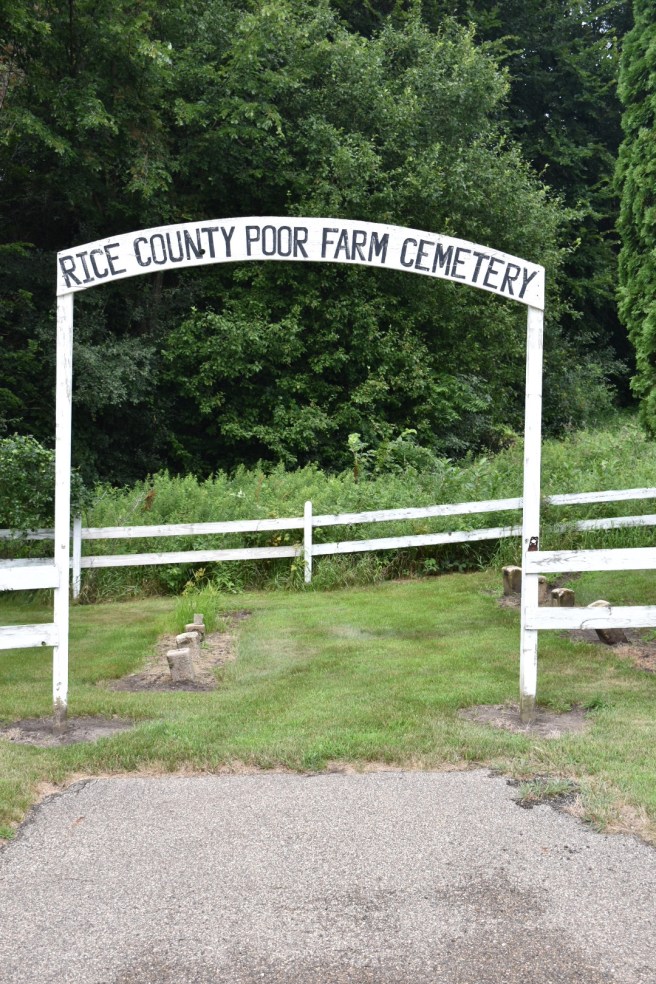
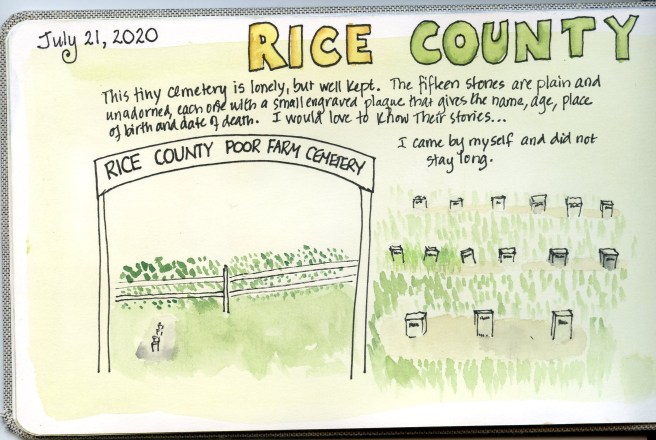
I was astonished the first time I saw this cemetery. It’s so tiny you could easily drive right by and not notice it. There are no glorious monuments, no epitaphs, no statues, no mausoleums, no lovingly placed flowers, no plaques giving the history of the place, and no posters with rules for cemetery visitors. It is spare, and that spareness makes it all the more poignant. Only fifteen stones are placed there, fifteen names etched onto plaques and attached to the stones. For all its simplicity and the sense of being forgotten, someone keeps it mowed and tended. I suspect that job belongs to a city or county employee.
I found an article online by Ethel McClure entitled “An Unlamented Era: County Poor Farms in Minnesota.” The article opens with this statement: “A time comes in the history of all enlightened communities,” wrote a local historian in the 1890s, ‘when some provision must be made for the aged and infirm poor, who have no means of support.’ That time came early in Minnesota.” These places were put in place to help those who were “sick, infirm and mentally incompetent…some were penniless, finding it impossible to make a living in the new country; not a few lost their savings to the ‘demon rum.'” Although originally support was given to those in need as individuals, eventually populations grew and the idea arose to build homes and farms for the support and care of these unfortunates, many of whom were in need of medical care as well. The concept of the farm was especially popular with county boards, since it was a way to produce some of their own foods and use the labor of the inmates to contribute to their own support. Eventually these poor farms fell out favor and were either taken down or repurposed. The last poor house in Minnesota was closed on October 1, 1963.
I don’t have a photo of Rice County’s poor house and farm, but I found one online of the poor house of one of our neighboring counties, Olmsted, located in Rochester.
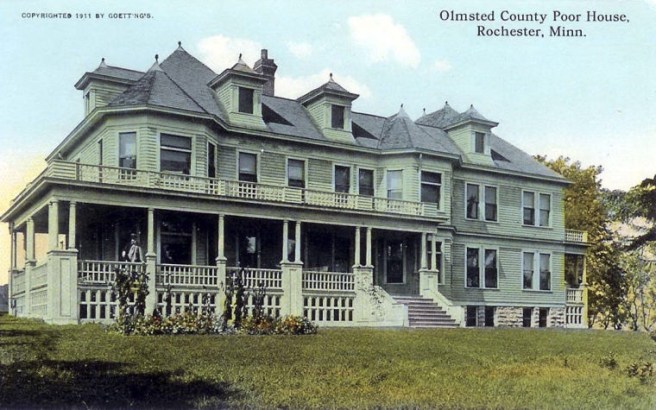
My mother was fond of telling the story about how she and Dad lived in a poorhouse the first year or two of their marriage. Technically, this was true – they lived in an apartment building that had been the county poorhouse years before.
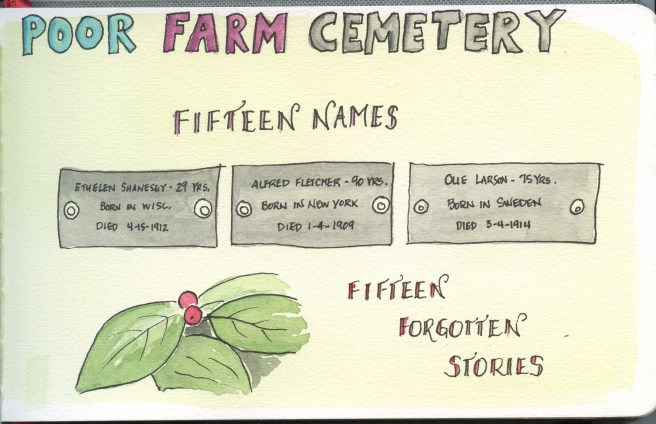
I strolled around the cemetery and decided to take photos of each name plate on a stone. I typed up all the details and sent them to a friend who loves genealogical research, so perhaps at some future date I will have stories to tell about some of the residents of this place. For now, they are only names, but each one represents someone made in God’s image, someone who had parents, a birthplace, and circumstances that brought them to the extremity of having to live at the Rice County Poor Farm.
This small community consists of 13 men and 2 women who range in age from 29-90 years old at their death (although the 29-year-old is a definite outlier – most are 60 and older). They were born in Denmark, Sweden, Germany, Norway, York State, New York and Wisconsin. Do they have descendants in our town? Does anyone visit these graves to find a relative that they recently learned about?
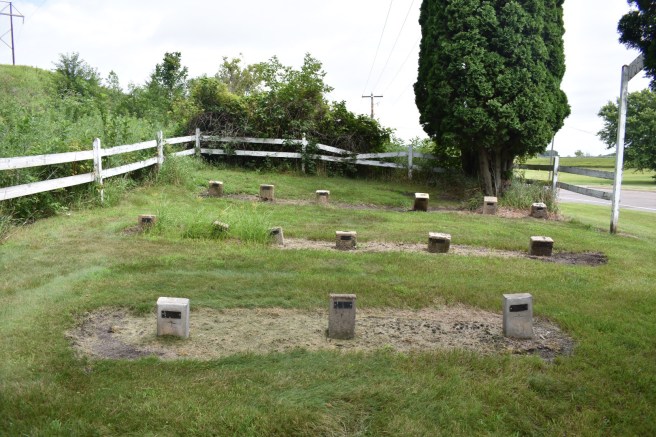

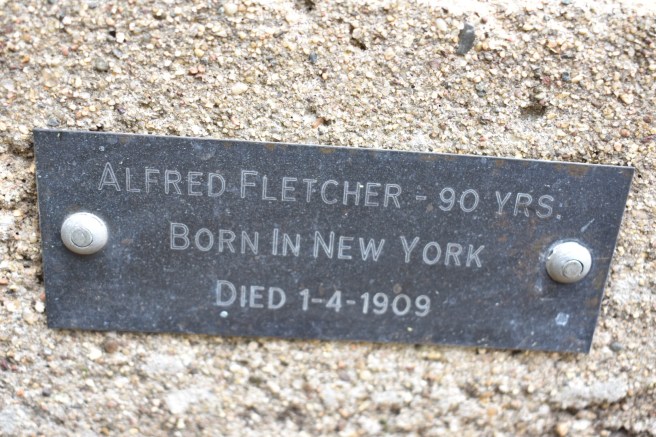

I did not tarry here, but when I drove away it was with many photos and questions about these fifteen forgotten stories.
Next: Grave Musings 6 Lakewood Cemetery
Start at beginning: Grave Musings 1 Maple Lawn I
I’ll probably delete this in the morning.
It’s story time today. I have a true story that combines all the elements of a good novel: hope, despair, ruination, vengeance, death, rebirth, good guys, bad guys, and if we stretch it a little, maybe even a little romance. So here we go.
Once upon a time in the springtime of innocence, we planted two apple trees of very good stock and reputation. You know them as Honeycrisp and Zestar, both Minnesota hardy. As the years went by, we waited with eager anticipation for our first fruits to appear. And when they did, we rejoiced. There weren’t very many, but more would come in future years. We were confident…and a little naive.
The honeycrisp apples were often small and misshapen. Some years we didn’t get any at all. In the meantime, the Zestar could crank them out, but lots of them fell early and the rest became food for birds, squirrels and/or raccoons. We never caught any of these creatures in the act, but this isn’t really defamation of character, so I freely malign them without proof. They’d take one bite and throw them down on the lawn. I made lots of apple sauce and apple butter. It was time to start taking this whole business more seriously.
We attended a talk about growing apples at the state fair one year and picked up some good information. It turns out you really have to thin them out severely. It isn’t just a suggestion; in fact, the Honeycrisp won’t produce any apples at all in the next year if you haven’t sufficiently thinned them. The best way to prevent pestilence and disease is to spray them, so we (and by “we” I mean my husband) began spraying them. Oh, don’t be so shocked – I never said we were purists.
This was the year, the golden year, when everything was going along according to plan. We thinned the apples early and often. We sprayed on schedule. The trees and their apples had never looked better. In the movie version of this, the menacing music starts playing. You know what comes next: THE EVIL JAPANESE BEETLE INVASION.
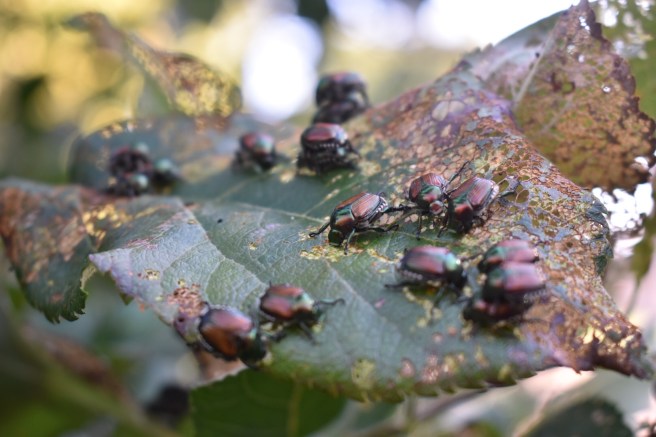
The beetles loved our apple leaves and made beautiful skeletons out of them.
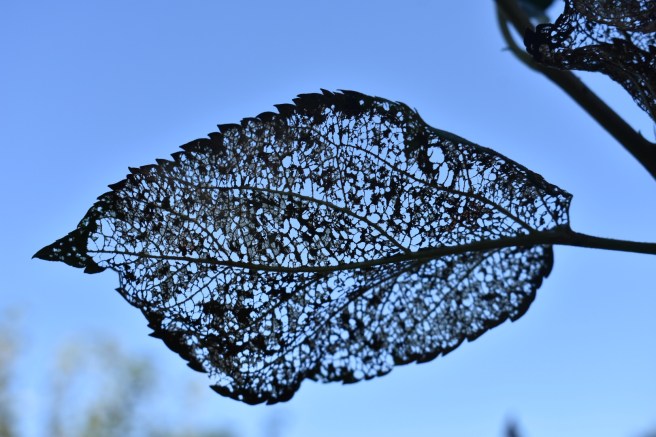
In an impressively short time, our trees were shadows of their former selves and this had aroused our ire. I wrote of this in a previous post with my proclamation of “woe to the Japanese beetles.” See: Woe To the Japanese Beetles
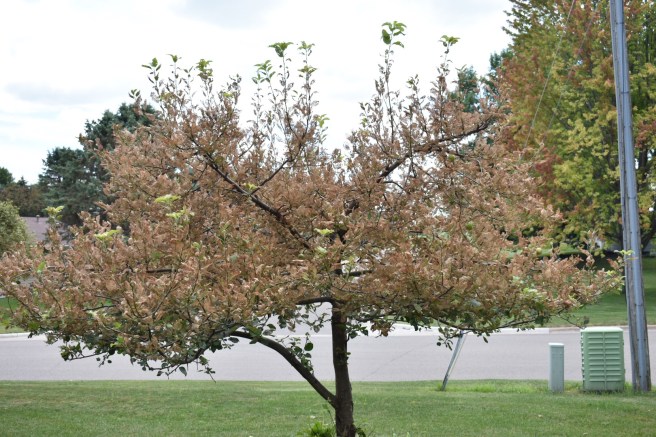
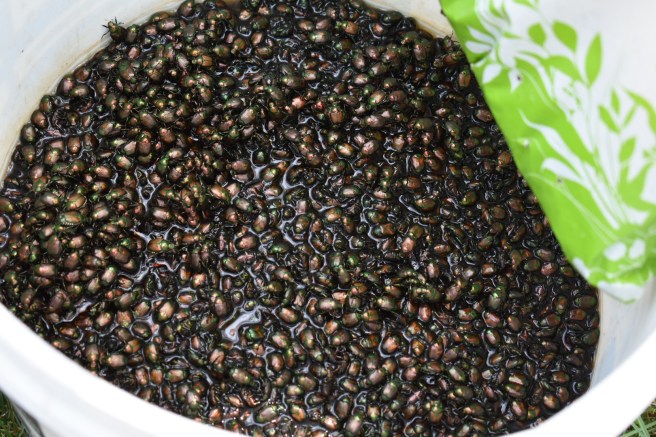
It might seem like closing the barn door after the horses have escaped, but we had to do something, so Kris put out a trap for the army of invaders, a pheromone trap (romance, right?). It was love at first smell and they’ve been coming to our trap in droves. Oh, sweet vengeance. Woe has come. No pity, no regrets (well, except that we should have done it earlier). I hope that doesn’t sound too callous.
There’s nary a beetle on the decimated trees now and some of the apples are hanging in there, so maybe we’ll have a crop after all. And in response to the devastation, the trees are putting out new leaves, a resurrection worthy of great songs and celebrations.
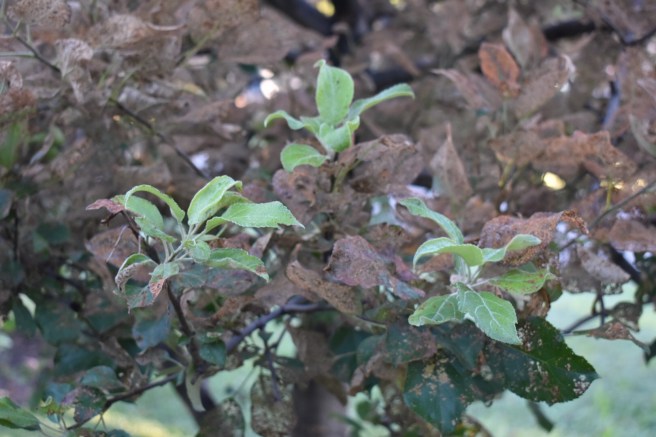
The apple tree has been brought low
Its leaves have been eaten as plunder.
But the morning after its nighttime of woe
Green leaves reappeared, to our wonder.
The memory of that awful invasion
Shall soon be completely forgot.
And the beetles of origin Asian
All lovesick in our compost shall rot.
That was off the cuff, but you get the idea. Happy ending, we hope!
I’ll probably delete a bucket of dead beetles in the morning.

