Thursday, June 18, 2020 Plodding Along

I just finished reading a book called Ploductivity by Douglas Wilson that was very thought-provoking for me in terms of how I approach “work,” and specifically creative work. I’m not a very exacting person. When I make a mistake, I laugh it off and call it “homespun charm,” instead of trying to fix it. Most of the time that works just fine, although my propensity to fudge and substitute when following a recipe has led to some notable failures.

But Wilson has a different approach:

“The idea of mastery is to develop genuine expertise within the radius or labor that God has given you…”

“Craft competence is a virtue to be cultivated.”

…the first step in achieving mastery is taking responsibility for the results. …Some want the results of mastery without all the tedious efforts that go into attaining to mastery.” (Ouch)

“Work for the work, not the reward.”

“Another key to mastery is realizing that the key to originality is imitation. …pick a good model to imitate… …it enables you to build on the good work that others have done…”

The third key to mastery is repetition. …When people do something over and over again – and this should not come as a surprise – they get good at it. But to some, this seems suspiciously like work.”

Again, ouch. Wilson is of course talking about any kind of work, whether it be the labors in the office, at the computer, on the farm, playing the piano…or watercolor painting.

I took up watercolor painting a few years ago and have dabbled, but not with any sort of systematic effort. As Wilson says, “…productive work requires a rhythm, a metronome.” He refers to this as “plodding,” or basically just plugging away at something a few minutes a day. I can always find reasons not to sit down and paint – I’ve got other things, easier things, effortless things to do (like watching a favorite show, checking Facebook, playing Spider Solitaire…). Another nugget from Wilson: “…an awful lot of us waste an awful lot of time.” Ouch for the third time!

I don’t expect to become a renowned “Watercolor Artiste,” but I do want to spend more time learning the craft. So to start out, I found an artist on YouTube who has put out 31 watercolor lessons that she calls “Jump Start.” My goal is to do one per day and see where it takes me. The first lesson was called “Selecting a Color Scheme.” This was mine:

Not too hard or tedious so far!! 😆

I also worked on the title page for my Grave Musings book, which is one of the reasons I decided to try to improve my skills. I worked really hard on those gravestones, but they don’t look anything like what I was seeing in terms of the shading and coloring. There’s a lot of homespun charm in this!

But we all have to work with what we’ve got, right? And I like how the letters turned out.

Thanks for coming along with me. I intend to subject you to future efforts.

I’ll probably delete this in the morning unless I decide that’s a waste of time that I could be spending working on the next lesson.

Fort Snelling: Easy on the Knees, Haunting History

We finally made it to Fort Snelling State Park, the state park of our home towns, the Twin Cities. Kris remembers visiting Fort Snelling back in the day; I don’t have specific memories of it, but it seems likely that my family went there at some point.

It was a relatively cool day when we started out mid-morning: 64 degrees, perfect for hiking. I was debuting my new lightweight hiking pants recommended by a friend (thanks, Lori!). The Fort Snelling hike is 3 miles and winds around the perimeter of Pike Island, the halfway point being the confluence of the Mississippi and Minnesota Rivers. We didn’t actually get anywhere near the fort of Fort Snelling. Maybe another time.

To get to Pike Island, you cross a nice foot bridge, which is almost directly under the Mendota Bridge. It is named for Zebulon Pike, who purchased the island from the Mdewakanton Dakota Indians in September 1805.

Unlike Myre Big Island SP, Fort Snelling had almost no maps or hiking club signs. You’d think this wouldn’t even be an issue on an island – how far wrong can you go? However, there are 3 hiking trails on the island and at the start it wasn’t completely clear which of the 3 paths we should take. We chose one and started off. Although we saw no Hiking Club signs, it soon became clear we were on the right track.

Fort Snelling has seen a lot of flooding and storm damage, the reason we weren’t able to do this hike last year. As you go along, it’s not uncommon to see downed trees and trees closer to the water’s edge with roots systems exposed by flood erosion.

There were a lot of people hiking at the park, not unusual for a park located in a large metropolitan area. What was unusual was the relatively unfriendliness of the hikers we passed. They seemed unwilling to return greetings if we said hello while passing. Some did, but not with any warmth or the sense of camaraderie that fellow hikers usually display. We wondered if this was due to big-city culture, virus paranoia, or a somberness due to the recent riots in Minneapolis. Maybe it was a combination of all three. Most people weren’t wearing masks (not needed outdoors), but one couple passed us in full mask regalia and practically walked into the brush on the side of the trail in their effort to make sure they were far enough away from us. Oh dear…

At any rate, the trail was well cleared and easy to walk. We saw a bald eagle flying close to us, but my camera was too late to catch it. I also spotted what I think was an indigo bunting. It’s not a very good photo, but it’s all I’ve got.

It was interesting to see several large trees with hollowed out bases. What causes this phenomenon? The trees still had lots of healthy leaf growth, so they didn’t appear to be dying.

The confluence of the two rivers was on a sandy point. This was apparently a sacred place for the Mdewakanton Dakota people. Sadly, this island is also the place where 1600 Dakota people were held in an internment camp over a harsh winter before being forcibly moved after the Dakota War of 1862. It’s a haunting history to contemplate while looking out on the place where the rivers meet and become one.

We stopped there for our Clif Bar break, sitting on a bench.

The hike back was over a narrower, sandy trail, but still easy to navigate. We passed by what we thought was some wild parsnip. This is an invasive plant which “can kill you or make you wish you were dead,” to quote something I read online. The roots are edible, but the plant produces a compound that causes “intense burning, rash, severe blistering and discoloration on contact with the skin on sunny days.” We gave it wide berth.

The usual noises of a park – the bird and insect sounds, the wind rustling through the trees, the river waters running – were punctuated by the noises of the city: trains, traffic on the highway, airplanes overhead. Two worlds colliding. Two rivers merging.

The three-mile hike took us 90 minutes to complete. I’d like to go back sometime to see the fort.

Knee Score: 1-2. Even terrain, nice paths.

I’ll probably delete this in the morning.

Next Hike: Minnesota Valley SRA

Tuesday, June 16, 2020 Closer than Ever

My brother-in-law lent his tele-extender to me. It’s a relatively inexpensive way to extend the focal length of the lens on the camera without buying a new lens. It goes between the camera body and the lens itself. Anyway, I got busy yesterday taking some photos with it. See what you think.

Bleeding Hearts are all bled out.
Glorious mini-petunias. I’m smitten! 🥰
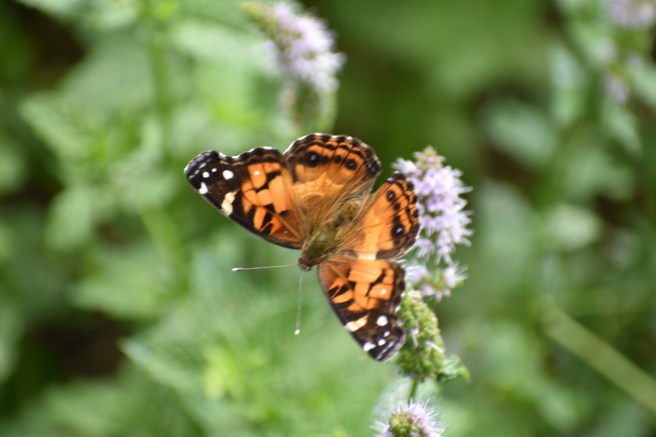
This was actually a really tiny little butterfly.
Ready, set…blow!!
Wish the focus was sharper on this one.
I didn’t even notice the teeny tiny bug on this until I saw the photo!

Gerbera Daisy.

So I also just figured out how to add captions to my photos after having used WordPress for over two years.

I’ll probably delete this in the morning. Or maybe just the photo that was a little out of focus. That one could go.

Monday, June 15, 2020 Beware the Animal…

The Raccoon
Beware the animal with blackened eyes
Though he be furry, child-like and small.
He is no friend, believe not his lies.

When he is nearby, be wise, oh be wise
His dear little hands slash and maul –
Beware the animal with blackened eyes.

Hear how he cries – but don’t sympathize,
If you feed him, he’ll dine in your hall.
He is no friend, believe not his lies.

He wears a mask and upon you he spies,
He smiles, but is eager for a brawl.
Beware the animal with blackened eyes.

He sleeps so sweetly, you’ll sing lullabies,
You’ll forget that he’s shot through with gall.
He is no friend, believe not his lies.

He’s ferocious for someone his size.
He’ll tear you apart, though you’re tall.
Beware the animal with blackened eyes.
He is no friend, believe not his lies.

This is my second attempt at a villanelle, inspired by my son’s discovery of a young raccoon wandering around in our yard. The little varmint was so appealing, that Sam even fed him some bacon. I took lots of photos, but was wary. He is no friend, believe not his lies.

I’ll probably delete this in the morning.

Friday, June 12, 2020 Grave Musings 1: Getting Off to a Rough Start

Yesterday was the Grand Inauguration of my Grave Musings Summer Program (heretofore abbreviated to Grave Musings). As you may recall, I’ve decided to visit all our local cemeteries this summer with each visit containing the following elements: picnic, camera, notebook, watercolor supplies, and a book. Also, maybe a playlist of nice music to accompany all of this. You are no doubt familiar with the phrase that starts out “The best-laid plans of mice and men oft go astray…”

Here’s how it went. First of all, it was a really gusty day. I’ve tried picnicking on windy days and if you don’t mind chasing napkins around or keeping a tight grip on everything at all times, it’s not bad. But I was aiming for a pleasant experience, so I tossed the picnic out of the plan and ate lunch at home in the comfort of our gazebo, whist watching an episode of Stargate.

Next I assembled all of the essential ingredients for the rest of the plan and packed them in my sparkling new carry bag.

My husband had suggested bringing a little folding table we bought for camping, so that went in the car with the rest. I’m all set!

Upon arrival at the Maple Lawn cemetery, I took one crappy photo of the entrance sign and then drove in and around the perimeter to get a good feel for the layout.

I decided to establish my command center near the grave marker for Taopi, a Native American chieftain who converted to Christianity. More on him in another post.

I made my way back to Taopi’s marker and while parking the car, realized that I had forgotten the one item upon which all the other plans would rest: a chair. In addition, I had hoped for a cozy and private experience; the five-acre cemetery was empty except for one other person, also parked near Taopi’s grave, and enjoying a lunch inside her car. It shouldn’t have made a difference… it shouldn’t have, but it did.

Thwarted at every turn, I decided to drive on and pull over occasionally to get out and look at gravestones. I spoke aloud the names that I read; when I saw a particularly old marker I made a special effort to read the engravings that had become encrusted with lichen and were marred by age.

I keep an eye out for epitaphs: poems, Bible verses, etc. I saw one done in Braille and wondered what it said. Others were in German.

I took a few photos, but hadn’t been there long when nature began to call and I am, alas, at an age where that’s a call that can’t be ignored. Farewell, Maple Lawn!

Grave Musings shall return to this wonderful old cemetery…with a chair. And another post shall ensue.

Next: Grave Musings 2 Maple Lawn II

I’ll probably delete this in the morning.

Thursday, June 11, 2020 Pollen Clouds

I had just taken a photo of this beautiful red protuberance on an evergreen tree when my husband pointed out that these release pollen. Say no more. My daughter and I lingered, taking photo after photo, me with camera in hand and her shaking the plump little pollen-stuffed pillows. It was harder than you might think to get a good photo of the phenomenon and the activity became quite addicting. The rest of our group wandered on without us, while we kept saying, “Let’s just take one more. Oh, that was a good one! Let’s do another!” The pollen even settled like glitter on a spider’s web. It was a good day.

Pollen Haiku
Billow’d pollen clouds
Catch the sun’s light, and ride on
Gossamer highways.

Could you bear to delete this in the morning?

P. S. It turns out that those are male cones that release pollen.

Wednesday, June 10, 2020 Out of Focus

I actually have really bad vision and am legally blind without my glasses/contacts. I remember one time when I was 17 or 18, walking to work early in the morning. I had been out late with friends and didn’t wake up in time to put in my contacts, so rather than wear my glasses (oh, how vain!), I just brought them with me and walked without any visual aids whatsoever. I can see big things like cars, and streets, so it didn’t seem like it should be a problem. As I was walking, however, I saw ahead of me a large person standing on the corner and felt a little uneasy. It was around 6:30 a.m. and no one else was around. I wasn’t sure if I should feel threatened or not by this person. Evidently not, since by the time I got close enough, I realized it was a mailbox. When I first got glasses back in 3rd grade, I amazed to find that I could see actual leaves on trees instead of just seeing big blobs of green. Those of you with 20/20 vision probably can’t relate to that.

I like taking photos occasionally of things in focus and then out of focus, just to see the effect. It’s often quite interesting, especially if there’s sunlight involved. It’s like revisiting my childhood, those days of unfocused and blurry vision. I’m so thankful for the technology that enables me to see things with clarity.

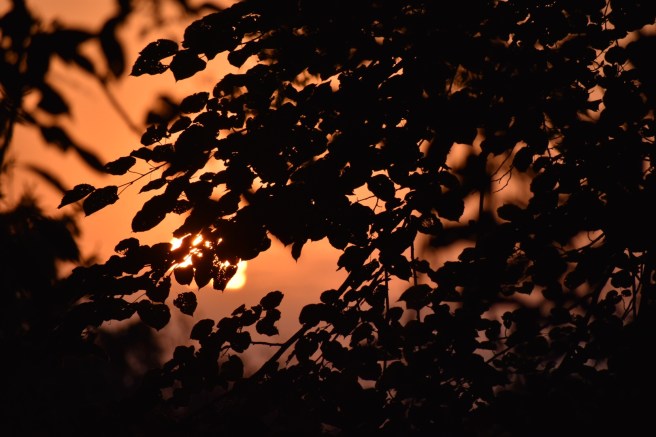
The last one is of sunlight coming through tree branches. I’m especially fond of the unfocused owl – those eyes!!

I’d like to blather on some more about this, but a FaceTime visit with our granddaughter awaits!

I’ll probably delete this very unfocused blog post in the morning. After I put my glasses on, though.

Tuesday, June 9, 2020 Historical Hosta

Meet Lois, the hosta with a history. I have to use the female pronoun with her, which I know will pain the more practical among you.

My Grandma Lois was fond of gardening. She died when I was 11, so I was unable to tap into her gardening wisdom by the time I got interested, which wasn’t for another 20+ years.

When we moved to our current house, I discovered the magical properties of hostas. We had an assortment of these around our property and when we needed more, we simply divided some of the ones we had and replanted the halflings elsewhere. One year I didn’t have much time for the re-planting part and the hosta halflings sat in buckets for a few days. No matter – when I finally got them in the ground, they thrived in spite of my abuse and neglect.

So where does Lois come into this meandering tale? About five years ago or so, my cousin Mitch came down for a visit, bearing a garden gift: Lois. It turns out that Mitch’s mother (Lois’s daughter) had taken this hosta from Lois’s yard and now this historical hosta had come to me! I don’t have much in the way of heirlooms passed down, so this was quite a thrill. I found a place for Lois among some of her brethren.

Cue the unhappy music. Sadly, I forgot about her. She was always a bit of a runt and the more muscular hostas around her quickly grew into her space. And then came The Spreading Ferns. Poor Lois was overshadowed, outcompeted for space and seemed destined for obscurity.

But last weekend, we needed more hosta halflings to put around our apple trees. I almost didn’t see her, but a happy Providence intervened. She’s still a runt, but she’s got plenty of room now to grow. Interestingly, we have about 4-5 different kinds of hosta on our property, but only one of this variety. Good old Lois. Cue the happy music.

I’ll probably delete this in the morning after checking on Lois to make sure she’s not being bullied yet by her neighbors.

(By the way, I’ve been putting titles on all my blog posts going back to the beginning of the year and I really, really hope that you don’t get email notifications of that kind of activity because I did a lot of them.)

Monday, June 8, 2020 A Dream and Guest Haiku

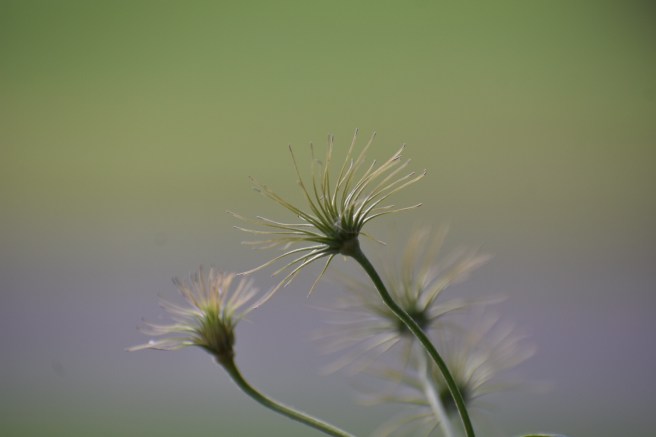
Last Friday I shared a photograph and challenged you to look at it for 5 minutes and think about it. I did that, too, and discovered that five minutes was a really long time. I spent my time thinking about the colors of the pansy and how I would paint it. You’ll see my unfinished effort below (if you promise not to laugh – it’s very….primitive). But aside from that, the interesting thing that happened as a result of my flower meditations was the dream that I had that night.

I dreamed that I was walking around with a young girl and we were looking for a particular kind of flower. As we looked, we spotted a bush filled with the most incredible flowers – each petal seemed to have an intricate design on it. I took a petal off of one of the flowers to look at it more closely and was stunned to see that each petal had an intricate drawing of a lighthouse on it. As we stood there marveling at it, a woman approached us. I showed her what we had found and she, too, was amazed. “How could that have happened?” she asked. “It was God!” I answered. She was uncomfortable with this answer and backed away.

Sometimes it seems that the whole world is an obvious parable that so many people do not have eyes to see and ears to hear. There, but for the grace of God, go I.

I told you it was primitive.

By the way, two of my faithful readers have contributed haikus in their comments. I asked them for permission to share the poems and they never responded, which I take to mean “Yes, you may share this.” So here we go.

From Julie (the fruit of her meditation on the pansy):
Dew dripping off leaves
Bright colors, contrasting veins
Joy in the morning.

From Cathy (in response to my “smitten” poem)
I am quite smitten
By your description; poets
ignite mental fires.

Bravo!

I’ll probably delete this in the morning, all except the haiku.

Friday, June 5, 2020 Assignment for You

I have an assignment for you. I can’t actually follow up and make sure you’ve done it, or give you a grade, but I’m counting on you to do it nevertheless.

In our modern lives, we don’t tend to linger on anything for long. So I’m asking you to linger on the photo below. Set a timer for 5 minutes and really give it a good look. Think about what you’re seeing – the detail, the precision, the beauty, the lighting, the contrast in colors, the textures, everything. Does five minutes seem too long?

I recently read a book written by Henri Nouwen. He had seen a painting by Rembrandt called “The Return of the Prodigal Son” and it struck him so forcibly that he got permission to stay in the museum for hours and hours just looking at it. He contemplated, he meditated, he paid attention to details, he thought about the clothing, the colors, the positioning of the characters, the light contrasted with darkness, the expressions on the faces, the emotions represented… I’ve been to museums – the longest I’ve ever given any particular painting is perhaps 2 minutes.

So here’s a painting that you might have given scant attention to, the kind of artwork that we see all the time, but never really SEE. Take a look. What do you see? What does it tell you? Take notes, write a poem, try drawing it, identify it, start your own nature journal… the possibilities are endless!

And then give glory to the Artist that made it.

I’ll probably delete this in the morning.

Thursday, June 4, 2020 Robins Aren’t Always the Good Guys

True story: a friend of mine recently witnessed two robins fluttering over a cardinal’s nest, which they then attacked and destroyed, eggs and all. Robins! All my fanciful ideas about them have been given a good dose in reality. As my husband said, “Red in tooth and claw.” That’s the truth about what happens out there in the animal world. It’s easy to anthropomorphize the creatures we see, attributing goodness and high moral character to some, while demonizing and attributing evil to others (killer sharks come to mind – we call them that as if the other sharks aren’t doing their share of killing). Animals always do precisely what they were created to do. And sometimes that isn’t pretty.

Well, I have been schooled. But restoring animals to their proper place in the universe, also means recognizing that they are not human in their response to these catastrophic events either. I might have painted an equally fanciful picture in my mind of the female cardinal going through the five stages of grieving, but in reality, she picked herself up and followed her mate to a different shrub in which to build her nest. Life goes on.

Her new location may be safe from robins, but there are squirrels that might find the nest and do the same thing. Red in tooth and claw.

Are not two sparrows sold for a cent? And yet not one of them will fall to the ground apart from your Father. Therefore do not fear. You are of more value than many sparrows.”

Therefore, do not fear.

I’ll probably delete this in the morning. But right now, I have to go make supper.